
Table of Contents
- What Is Newtonian Telescope Collimation?
- Why Collimation Matters: Sharpness, Contrast, and Coma
- Understanding the Newtonian Optical Geometry
- Essential Collimation Tools and When to Use Them
- Pre‑Collimation Checks: Mechanics, Center Marks, and Safety
- Aligning the Secondary Mirror (Step‑by‑Step)
- Aligning the Primary Mirror (Step‑by‑Step)
- Using Lasers and the Barlowed Laser Method
- Star Testing: Fine‑Tuning Collimation Under the Stars
- Special Considerations for Fast f/4–f/5 Newtonians
- Troubleshooting Common Collimation Problems
- Maintaining Collimation in the Field and at Home
- Frequently Asked Questions
- Final Thoughts on Mastering Newtonian Collimation
What Is Newtonian Telescope Collimation?
Collimation is the process of precisely aligning the optical elements of a Newtonian reflector—the primary mirror, secondary mirror, and focuser—so that light is brought to the sharpest possible focus. In a well‑collimated Newtonian, the optical axis of the primary mirror and the mechanical axis of the focuser intersect at the center of the field, producing crisp, high‑contrast images. Whether you have a compact 130 mm tabletop Newtonian or a 16‑inch Dobsonian light bucket, collimation is a basic skill that elevates every observation.

Artist: The original uploader was Tmoore at English Wikipedia.
For beginners, the word can sound intimidating, but the process is logical, repeatable, and quick once you understand it. There are two major steps: first, position and tilt the secondary mirror so it is centered and properly angled under the focuser; second, tilt the primary mirror so its optical axis points directly up the focuser. You can do this with simple tools like a collimation cap or with more advanced tools such as a Cheshire, sight tube, laser, and autocollimator. In this guide, you’ll learn multiple methods, when to use each, and how to verify your results with a simple star test.
Why Collimation Matters: Sharpness, Contrast, and Coma
Newtonians are prized for their light‑gathering power and versatility, but they are also sensitive to misalignment. Mis‑collimation can rob you of the fine detail that your mirror is capable of delivering.
- Sharper planetary and lunar views: Precise alignment ensures that high‑frequency detail—like Saturn’s Cassini Division or lunar rilles—snaps into focus.
- Higher usable magnification: A well‑collimated scope tolerates higher powers before the image becomes mushy or washed out.
- Improved contrast: Proper collimation keeps energy concentrated in the Airy disk instead of being smeared into rings and halos.
- Better star shapes across the field: Coma is an inherent off‑axis aberration in parabolic mirrors. Collimation doesn’t remove coma, but it keeps the coma‑free zone centered where you’re looking. This matters even more if you use a coma corrector.
- Reliable imaging performance: If you ever attach a camera, collimation becomes critical for tight stars and symmetrical point spread functions. Even for visual‑only use, the same principles apply.
Because collimation affects the core of your telescope’s performance, it should be part of your observing routine. Many observers quickly check collimation during twilight using a cap or laser, then fine‑tune on a star at high power once the optics have thermally stabilized, as described in the Star Testing section.
Understanding the Newtonian Optical Geometry
Before you adjust anything, it helps to visualize how light moves through a Newtonian reflector:

Artist: OpenStax.
- Light from a distant object reflects off the primary mirror (a concave parabolic mirror at the bottom of the tube).
- The converging beam hits the secondary mirror (a flat elliptical mirror) held by a spider near the top of the tube, redirecting the light sideways into the focuser.
- The focuser brings the light to focus at the eyepiece or camera sensor.
Three alignments matter:
- Secondary placement (centering and offset under the focuser). This is a mechanical placement issue plus a small intentional offset toward the primary and slightly away from the focuser to ensure even illumination. Many modern scopes implement this offset mechanically; visually, a correctly placed secondary looks slightly offset toward the primary mirror end.
- Focuser axial alignment (secondary tilt). The reflected primary center mark should land exactly at the focuser axis. This is adjusted with the secondary’s tilt screws.
- Primary axial alignment (primary tilt). The primary is tilted so its optical axis points exactly up the focuser. This is adjusted using the primary collimation knobs and verified with tools like a Cheshire or the Barlowed laser method.
Because the primary mirror is parabolic, it delivers the best image on‑axis. If your collimation is off, the sweet spot (coma‑limited area) is shifted, and everything looks slightly worse. Understanding this geometry helps you interpret what you see through collimation tools and why the secondary alignment comes before the primary alignment.
Essential Collimation Tools and When to Use Them
You can collimate a Newtonian with a simple cap, but specialized tools make the job faster and more precise. Here’s what each tool does and when to use it:
- Collimation cap: A plastic cap with a tiny peephole. It centers your eye in the focuser and shows the primary center mark and its reflection. Ideal for beginners and quick checks.
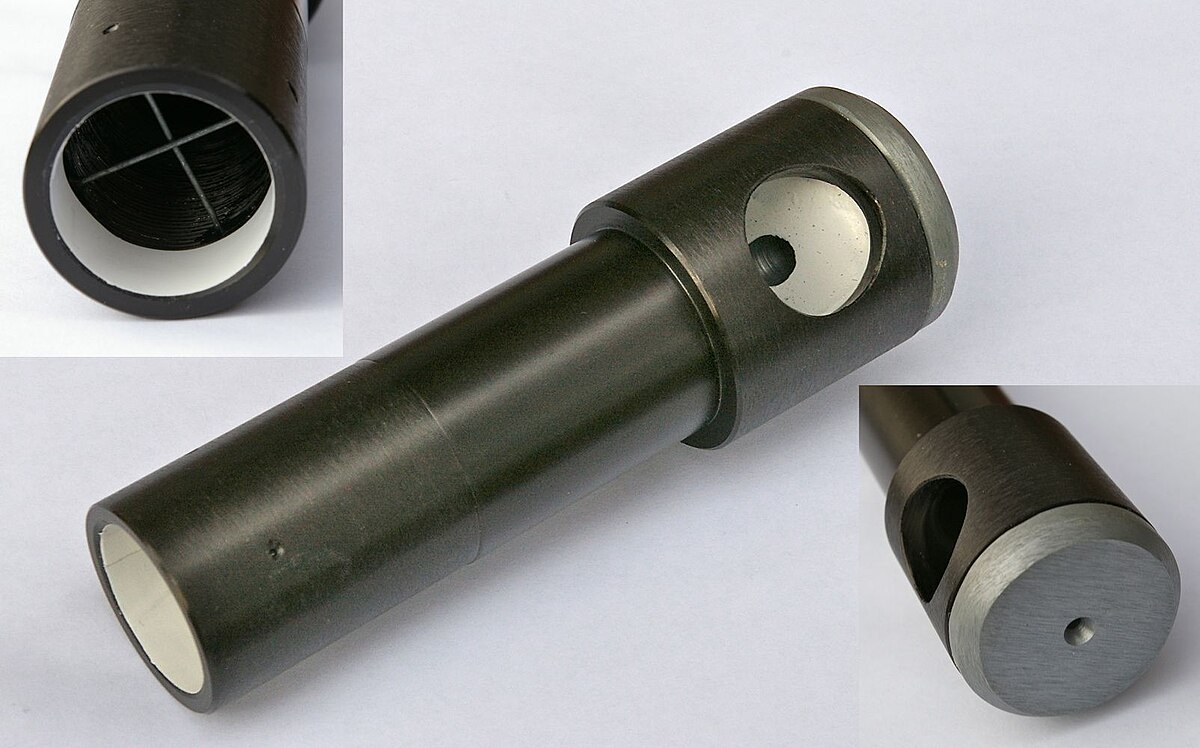
- Sight tube: A tube with crosshairs and a narrow opening. Useful for secondary placement under the focuser and adjusting secondary tilt so the crosshairs line up with the primary center mark.
- Cheshire eyepiece: A reflective tool that shows the primary center mark against a bright background. Excellent for adjusting the primary tilt.
- Laser collimator: Projects a beam onto the primary and back to a target on the laser. Fast for aligning the focuser axis (secondary tilt), but only if the laser itself is collimated.
- Barlowed laser: A laser inserted into a Barlow lens to project a diffuse shadow of the primary’s center mark back to the tool. This is one of the most robust ways to set the primary tilt because it is insensitive to laser miscollimation.
- Autocollimator: A precision tool with a mirror inside that amplifies residual errors by producing multiple reflections of the center mark. Used last for “polishing” the alignment, especially in fast systems.
Combining tools often gives the best results. For example, a sight tube or laser for the focuser axis, followed by a Cheshire or Barlowed laser for the primary axis, and an autocollimator to chase down small residuals. If you only have a cap, you can still get very close—see Aligning the Primary Mirror and Star Testing to fine‑tune.
Pre‑Collimation Checks: Mechanics, Center Marks, and Safety
Before turning any screws, take five minutes to inspect the telescope’s mechanical condition. Good mechanics make collimation stable and repeatable.
- Primary center mark: Most commercial mirrors are center‑spotted with a small ring or “donut”. If yours isn’t, many observers temporarily make a removable paper ring to mark the center (using a fold‑and‑punch method) during primary alignment. Center marking is standard practice because the mark is used by nearly every collimation tool.
- Secondary security: Make sure the secondary mirror is secure. Hold the mirror while loosening the center bolt so it cannot fall onto the primary. Never adjust the secondary over an unprotected primary—use a towel or cardboard to cover the primary as a safety precaution.
- Primary mirror springs/knobs: Ensure collimation screws and springs provide firm tension. Floppy springs or loose lock screws make collimation drift with altitude.
- Spider vanes: The spider should be tight enough to hold the secondary steady. Loose vanes allow the secondary to shift.
- Focuser play: Wiggle the focuser drawtube. Excess play can change alignment with heavy eyepieces. Tighten set screws if possible.
- Thermal equilibrium: For the star test, let the scope cool to ambient temperature to avoid tube currents and thermal plumes that mimic miscollimation.
Safety reminder: When working on the secondary, remove eyepieces and cover the primary. A dropped screwdriver or mirror is a heart‑stopping event you can easily prevent.
Aligning the Secondary Mirror (Step‑by‑Step)
This step ensures the focuser axis is aligned and the secondary is properly placed. Take your time—getting the secondary right makes the rest of collimation simple.

Artist: Fernly at English Wikibooks.
1) Center and round the secondary under the focuser
Insert a sight tube or your collimation cap and rack the focuser so the sight tube’s inner edge just circumscribes the secondary. You want the secondary to look centered and round relative to the sight tube edge.
- Use the secondary center bolt to move the secondary up/down the tube (toward/away from the primary).
- Use the spider vane screws to shift the secondary sideways if necessary.
- Rotate the secondary holder so the secondary’s long axis points toward the primary mirror center.
When correctly placed, the secondary appears slightly offset toward the primary mirror end. This is normal and ensures even field illumination.
2) Adjust secondary tilt to aim at the primary center mark
With the secondary centered, use the secondary tilt screws to steer the reflection of the crosshairs (sight tube) or laser dot onto the primary’s center mark. Small, even adjustments are best—loosen one screw slightly while tightening another to maintain tension.
- Using a sight tube: Place the crosshairs exactly over the primary center spot.
- Using a laser: Move the laser dot onto the primary center mark. If the dot won’t stay put as you rotate the laser, your laser may be out of collimation—either collimate the laser or use the sight tube method. You’ll validate the primary tilt later with a Barlowed laser or Cheshire.
3) Confirm secondary centering and edge alignment
Re‑check that the secondary still looks centered and round under the focuser. It should show a uniform sliver of the primary mirror edge all the way around, with the primary clips (if visible) evenly distributed. If not, repeat small placement tweaks and then re‑aim the tilt. Expect a few iterations the first time; it becomes second nature quickly.
Aligning the Primary Mirror (Step‑by‑Step)
Now that the focuser axis is dialed in via the secondary, it’s time to aim the primary’s optical axis up the focuser. This is the most critical step for image sharpness.
1) Choose your tool
Artist: M. Tewes.
- Cheshire eyepiece: Look for the reflection of the bright Cheshire wedge and center the primary’s “donut” around it using the primary collimation knobs.
- Barlowed laser: Center the shadow of the primary’s donut on the Barlowed laser target. This is robust against laser miscollimation.
- Collimation cap: Use the peephole to center the primary donut around the peephole reflection. Slightly less precise but effective for visual observing.
2) Adjust the primary tilt
At the back of the scope, you’ll find three collimation knobs (and sometimes three lock screws). While looking through your chosen tool:
- Turn one knob slowly to move the donut shadow or Cheshire reflection.
- If the motion goes the wrong way, back up and select a different knob. Many observers place a small piece of tape on the tube corresponding to each knob to learn which way the image moves.
- Keep modest tension on all three knobs. If your scope has lock screws, tighten them gently after you’re satisfied, then re‑check the alignment from the focuser.
3) Verify the stack of reflections
In a cap or Cheshire, you’ll see a “stack” of circles—the primary donut, its reflections, and the edges of the secondary and sight tube. When collimation is close, the circles appear concentric. Don’t obsess over making every edge perfectly concentric; the key result is that the primary’s optical axis is centered as verified by the Cheshire wedge or Barlowed laser shadow. You can refine residuals with an autocollimator or a star test.
Using Lasers and the Barlowed Laser Method
Lasers make alignment fast, but they come with caveats. Understanding their strengths and limitations will save you frustration.
Collimating with a simple laser
A standard laser helps align the focuser axis by steering the beam to the primary’s center mark using the secondary tilt screws. To complete collimation, you would then use the laser’s return beam to center on the laser target by adjusting the primary tilt. However, this return‑beam method is sensitive to laser collimation errors and can lead to a false sense of precision if the laser itself isn’t perfectly aligned.
- Check the laser: Rotate the laser in the focuser. If the dot scribes a circle on the primary instead of staying put, the laser is miscollimated.
- Prefer the Barlowed method for primary tilt: It uses a diffuse beam and reads the shadow of the primary donut, effectively canceling most laser alignment errors.
The Barlowed laser technique
This technique is widely recommended for setting the primary tilt because it is both sensitive and robust. Here’s how:
- Insert the laser into a Barlow lens and place the assembly in the focuser.
- Point the scope at a safe, dim surface. The Barlow expands the beam and projects a bright field back onto a target screen on the laser, where you will see the shadow of the primary’s center mark.
- Use the primary collimation knobs to center the shadowed donut on the target. Small tweaks bring the shadow into perfect concentricity with the reference circle on the target.
Because the reading comes from the return beam’s shadow of the primary center mark, the method is largely insensitive to where the laser dot initially hits the primary, making it one of the most reliable ways to set the primary axis.
Star Testing: Fine‑Tuning Collimation Under the Stars
A star test is the practical way to validate and fine‑tune collimation at nighttime focus. It also reveals other issues such as thermal currents and seeing limitations.
Choosing a star and magnification
- Select a bright star near the zenith to minimize atmospheric dispersion. Polaris is a convenient choice for beginners because it moves slowly, but any bright star high in the sky works.
- Use high magnification—at least 25–30× per inch of aperture if seeing permits. For a 200 mm (8‑inch) scope, start around 200–250×.
What to look for
Center the star and slightly defocus inside and outside of focus:
- In good collimation with steady seeing, you’ll see a circular diffraction pattern with concentric rings centered on the airy disk.
- If the pattern is skewed or the bright spot is offset, the primary axis may not be centered. Make a very small tweak to the primary collimation screw that moves the star toward the center and re‑check.
- If the star moves out of the center when you adjust focus, or if the pattern looks clipped, the secondary alignment or focuser axis may need refinement.
Be patient—bad seeing can masquerade as miscollimation by smearing rings. Averaging the view over time helps reveal underlying alignment.
Special Considerations for Fast f/4–f/5 Newtonians
Fast focal ratio Newtonians (f/4–f/5 and below) are fantastic for wide fields and deep‑sky observing, but their tighter optical tolerances demand more careful collimation. Here’s what to keep in mind:
- Tool choice matters: Use a good sight tube or well‑collimated laser for the focuser axis, and a Cheshire or Barlowed laser for the primary axis. An autocollimator can help clean up residual errors.
- Secondary offset is expected: The geometric offset is slightly larger in fast systems. Don’t try to force the secondary to look “perfectly centered” without regard to offset; a slight visual offset toward the primary is correct.
- Coma correctors: If you use a coma corrector (e.g., for wide‑field imaging), the focuser axis and spacing become more critical. Collimate without the corrector first, then insert it and verify star shapes in a short exposure or live view if imaging.
- Mechanical stiffness: Ensure the primary springs are firm, the spider is taut, and the focuser is square to the tube. Small flexures show up more readily at f/4–f/5.
Fast dobs reward a methodical approach. Once dialed in, they deliver stunning, immersive fields with pinpoint stars across the center and crisp planetary detail when the air steadies.
Troubleshooting Common Collimation Problems
Even with a careful approach, a few recurring issues can confuse beginners. Use this guide to diagnose and resolve them.
Problem: The laser dot won’t stay on the primary center mark when I rotate the laser
Cause: The laser itself is out of collimation or the focuser fit is sloppy.
Fix: Collimate the laser per the manufacturer’s instructions or switch to a sight tube for the focuser axis step. For the primary tilt, use a Barlowed laser or Cheshire.
Problem: The secondary looks “not round” or shifted
Cause: Normal secondary offset, or the secondary is not properly centered and rotated under the focuser.
Fix: Revisit secondary placement. Remember that a small offset toward the primary is expected. Adjust the center bolt to set distance, rotate for symmetry, then set tilt to aim at the primary center mark.
Problem: Star images look triangular or show spikes that rotate with focus
Cause: Pinched optics or stress on the primary or secondary.
Fix: Loosen mirror clips slightly so they don’t touch the primary surface. Ensure the secondary holder isn’t clamping the glass. Check that the primary retaining clips have a tiny gap over the mirror edge.
Problem: Collimation changes when pointing high vs. low
Cause: Mirror cell slop, weak primary springs, or a shifting secondary.
Fix: Strengthen primary springs, snug lock screws minimally, and tighten spider vanes. Verify that the primary mirror is properly supported and not rocking in the cell.
Problem: Cheshire shows good collimation, but star test still off
Cause: Seeing, thermal issues, or residual focuser axis error.
Fix: Allow more cool‑down, collimate again, and if possible, refine secondary tilt with a sight tube or laser. Use short, gentle tweaks to the primary during the star test only after the pattern is stable.
Problem: I can’t see the entire primary in the secondary
Cause: Secondary too close/far from the primary, or focuser not racked to the appropriate position.
Fix: With a sight tube in place, adjust the secondary center bolt (distance) until the primary edge is evenly visible. Then set tilt so the crosshairs hit the primary center.
Maintaining Collimation in the Field and at Home
Once you’ve achieved good collimation, a little routine care keeps it locked in, session after session.
- Transport with care: Cushion the tube or truss structure. Avoid sharp impacts, which can shift the secondary or primary.
- Pre‑session check: Do a quick check with a cap or laser as you set up. Nightly tweaks are normal for large or fast scopes.
- Temperature changes: As the scope cools, structures settle. A mid‑session check can improve high‑power views on nights of excellent seeing.
- Primary locking screws: If your scope has them, use them with a light touch. Over‑tightening can introduce stress.
- Keep tools handy: Store your Cheshire, cap, or laser in the accessory case so collimation takes two minutes, not twenty.
- Periodic deep‑check: Every few months, revisit secondary placement using a sight tube to ensure nothing has drifted.
Collimation is not a one‑time ordeal—it’s a quick, rewarding part of Newtonian ownership that pays dividends every clear night.
Frequently Asked Questions
Do I need to re‑collimate every time I observe?
Most solid‑tube Newtonians hold collimation well if they aren’t banged around. A quick check with a cap or laser before observing is usually enough. Large truss dobs and fast optics benefit from frequent checks because their tolerances are tighter and their structures can flex a bit more.
Is a laser required, or can I collimate without one?
You can achieve excellent collimation without a laser using a collimation cap, sight tube, and Cheshire. Lasers are convenient for the focuser axis step, and the Barlowed laser is superb for primary tilt, but they are not mandatory. Choose the approach that fits your budget and comfort level; then verify on a star as described in the Star Testing section.
Final Thoughts on Mastering Newtonian Collimation
Newtonian collimation sounds technical, but it follows a simple narrative: place and tilt the secondary so the focuser axis points at the primary center, then tilt the primary so its optical axis points back up the focuser. With a few affordable tools—a cap, sight tube, Cheshire, or a Barlowed laser—you can repeat the process in minutes. The payoff is immediate: tighter stars, higher contrast, and the confidence to push magnification when seeing allows.
If you’re new to this, bookmark the steps and practice on a cloudy night indoors with good lighting. On your next clear evening, validate the result with a star test. Over time, your hands will remember which knob to touch, and collimation becomes quick and satisfying.
For more practical observing tips and deep‑dive guides, explore our related topics and subscribe to our newsletter so you don’t miss future articles on telescope tuning, optical accessories, and night‑sky challenges you can tackle from your backyard.