
Table of Contents
- What Is a 6–8 Inch Dobsonian Telescope?
- Aperture, Focal Length, and Optical Performance
- Rocker Box Mounts, Portability, and Ergonomics
- Collimation: Keeping a Dobsonian Sharp
- Eyepieces, Finders, and Essential Accessories
- Step-by-Step Setup and First Light Checklist
- What You Can See: Solar System and Deep-Sky Targets
- Light Pollution, Filters, and Maximizing Contrast
- Care, Cleaning, and Long-Term Maintenance
- Common Beginner Mistakes and How to Avoid Them
- Buying Guide: New vs Used, Features, and Value
- Frequently Asked Questions
- Final Thoughts on Choosing the Right Dobsonian Telescope
What Is a 6–8 Inch Dobsonian Telescope?
A 6–8 inch Dobsonian telescope is a Newtonian reflector mounted on a simple alt-azimuth base designed for smooth, intuitive pointing. The “6–8 inch” describes the diameter of the primary mirror (roughly 150–200 mm), which gathers light to form images. Dobsonians became popular because they deliver a lot of aperture for the money, are easy to set up, and are mechanically stable for visual observing. For many beginners—and a surprising number of seasoned observers—this class of telescope represents the best balance of performance, cost, and convenience.

At their heart, Dobsonians use a parabolic primary mirror and a flat secondary mirror to redirect light to a focuser on the side of the tube. The base is a low-profile rocker box that lets you move the telescope up-down (altitude) and left-right (azimuth). There are no gears or hand controllers to learn—just push gently and the scope tracks your target manually. This simplicity is precisely why a 6 or 8 inch “Dob” is often recommended as a first serious telescope: you spend more time observing and less time troubleshooting.
In this size range, 6 inch models are commonly around f/8 focal ratio, while 8 inch models are often around f/6. That means a 6 inch might have a focal length near 1200–1250 mm and an 8 inch near 1200 mm, though designs vary by manufacturer. The focal ratio influences eyepiece selection, magnification, field of view, and the appearance of optical aberrations. We’ll unpack these practical implications in Aperture, Focal Length, and Optical Performance.
What can you see with a 6–8 inch Dobsonian? Under steady atmospheric conditions and with good collimation, these instruments can show striking planetary detail—Saturn’s rings and the Cassini Division when seeing allows, Jupiter’s belts and zones, Mars’ polar cap in season, the Moon’s craters in razor-sharp relief. In darker skies, they open the door to dozens of star clusters, nebulae, and galaxies from classic Messier targets to more challenging deep-sky objects. We’ll set realistic expectations in What You Can See: Solar System and Deep-Sky Targets.
Because the Dobsonian mount is not motorized, it is not optimized for long-exposure astrophotography. However, it excels at visual astronomy: casual scanning, methodical deep-sky observing, and outreach events. If imaging is a goal, you can still do afocal or short-exposure planetary captures with a smartphone or planetary camera, but the sweet spot for these scopes is visually soaking in the night sky. If your interests lean heavily toward imaging, that’s a different category; here, we focus on how to get the most from this quintessential visual instrument.
Aperture, Focal Length, and Optical Performance
Aperture determines how much light the telescope gathers and how fine a detail it can resolve. Moving from 6 inches (150 mm) to 8 inches (200 mm) increases the light-gathering area by about 78%—a noticeable difference on dim deep-sky objects and fine texture in bright objects when the atmosphere cooperates. Resolution improves with aperture as well; fine features like the Cassini Division, small rilles on the Moon, or subtle planetary detail become easier to tease out at the eyepiece.
Focal length and focal ratio influence magnification and field of view (FOV). Magnification is the telescope focal length divided by the eyepiece focal length. For example, an 8 inch f/6 with a 1200 mm focal length paired with a 10 mm eyepiece yields 120×. A 6 inch f/8 around 1200 mm gives the same magnification with the same eyepiece, but the slower f/8 beam is more forgiving of eyepiece aberrations and collimation, making it friendly for beginners.
Important optical considerations for 6–8 inch Dobsonians include:
- Coma: A Newtonian aberration that causes off-axis stars to look like little comets. It’s more apparent at faster focal ratios (f/5 and below). At f/6–f/8 typical of 6–8 inch Dobs, coma is present but generally mild, especially with well-corrected eyepieces. A coma corrector is optional for visual use at these focal ratios. We explore this trade-off in the FAQ.
- Collimation sensitivity: Faster telescopes (lower f-number) require tighter collimation to deliver sharp images. An 8 inch f/6 is still manageable; a 6 inch f/8 is forgiving. See Collimation: Keeping a Dobsonian Sharp for practical tools and steps.
- Cooling and thermal equilibrium: Primary mirrors and tubes need time to match ambient temperatures. Warm optics create currents that blur the view. A small cooling fan behind the primary mirror reduces this time and improves planetary performance. We include a simple routine in Step-by-Step Setup.
- Secondary obstruction: The Newtonian secondary mirror slightly reduces contrast compared with unobstructed refractors, but a well-made 6–8 inch Newtonian still delivers excellent contrast for planetary and lunar viewing, especially once cooled and collimated.
Exit pupil—a key concept for eyepiece choice—is the diameter of the light beam leaving the eyepiece. It equals eyepiece focal length divided by telescope focal ratio. Typical useful exit pupils for visual astronomy range from about 0.7 mm (high power for planets) to ~5–6 mm (low power, widest fields). For an 8 inch f/6, a 30 mm eyepiece gives a 5 mm exit pupil, great for sweeping star fields, while a 6 mm eyepiece gives a 1 mm exit pupil, suitable for modest planetary magnification. We will map eyepiece choices to exit pupil in Eyepieces, Finders, and Essential Accessories.
Finally, mirror quality and coatings matter, but most modern commercial mirrors in this size range perform well for visual use. Proper maintenance and realistic expectations help you achieve crisp, satisfying views within the capabilities of your telescope and sky conditions.
Rocker Box Mounts, Portability, and Ergonomics
The Dobsonian mount is a simple, sturdy platform that allows smooth movement without counterweights, tripods, or complicated controls. Understanding how the base is built and how it feels in use can make or break your experience.
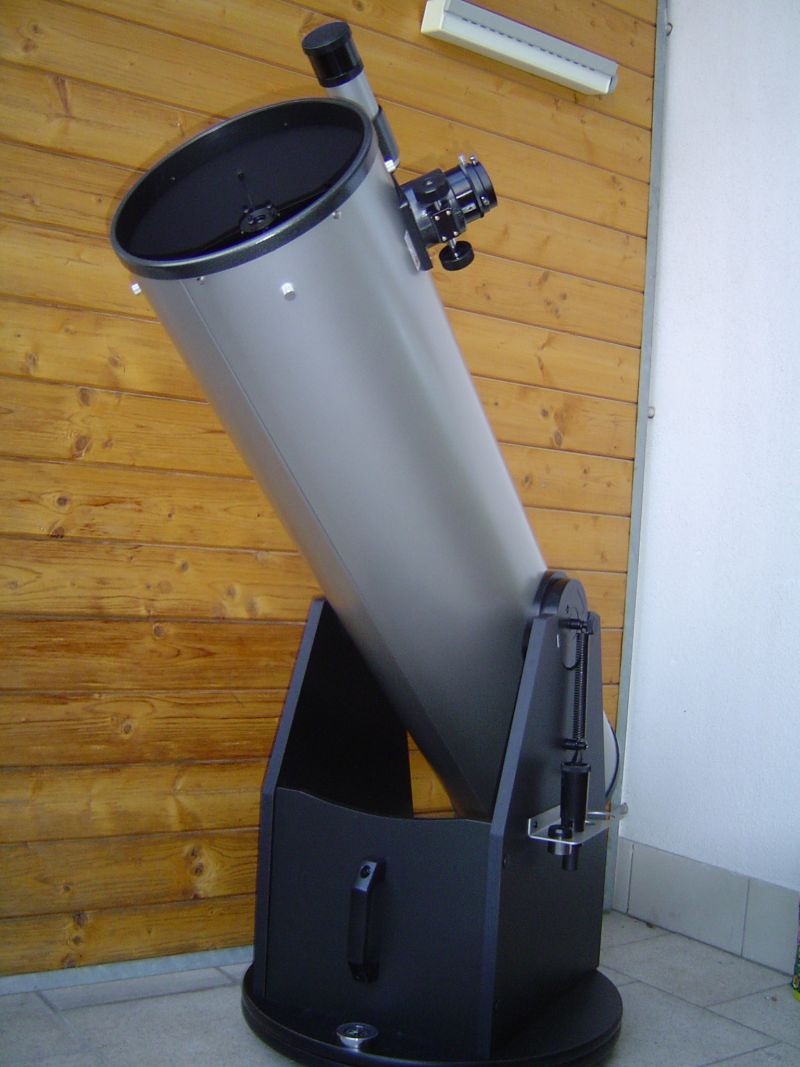
Key features of typical 6–8 inch Dobsonian mounts:
- Rocker box: A low-slung box with semicircular altitude bearings that cradle the optical tube assembly (OTA). The box sits on a round azimuth board that rotates on Teflon pads or similar low-friction surfaces.
- Altitude bearings: Large bearings reduce stiction and stick-slip. Many modern designs use spring-tension systems or adjustable friction to balance different eyepiece weights without counterweights.
- Azimuth motion: Smooth rotation is critical for tracking at high magnification. If your base feels jerky, a bit of gentle wax on the bearing surfaces or switched material pads (within manufacturer guidelines) can make motion more fluid.
- Portability: A 6 inch Dob is usually light enough to carry as one piece for short distances, while an 8 inch is commonly moved as two pieces: OTA and base. Factor your storage space, doorways, and vehicle when choosing. See practical transport tips in Step-by-Step Setup.
- Ergonomics: Eye-height matters. Many 6–8 inch Dobs place the eyepiece at a comfortable seated height for most observers when the scope is angled mid-sky. An adjustable observing chair increases comfort and steadiness, improving what you can see.
Because Dobsonians are manually aimed, the ergonomics of pointing matter. A right-angle, correct-image (RACI) finder or a reflex red-dot finder, aligned with the main scope, makes target acquisition far easier. Smooth mounts allow small, precise nudges; this is crucial when tracking a planet at high power. Many users find that a gentle “push with two fingers” becomes intuitive after just a few sessions.
Dobsonian bases are usually made from wood or laminated particle board. Keep them dry and avoid setting them on wet ground. Ground boards can benefit from a simple tarp or mat to reduce dirt and moisture. Handle the OTA by solid parts of the tube or altitude bearings; avoid grabbing control cables or the focuser drawtube when lifting.
Most 6–8 inch Dobs work great right out of the box, but small tweaks can enhance performance: adding felt pads to damp vibrations, ensuring the tube tension is snug but not tight, or adding a cooling fan behind the primary mirror. These small improvements are covered where relevant in Care, Cleaning, and Long-Term Maintenance.
Collimation: Keeping a Dobsonian Sharp
Collimation aligns the telescope’s mirrors so light converges precisely at the focal plane. Good collimation makes the difference between soft, fuzzy images and crisp, high-contrast views. While it may seem intimidating at first, routine collimation on a 6–8 inch Dobsonian is straightforward with the right tools.
Common tools:
- Collimation cap: A simple peep-hole cap that fits the focuser; many telescopes include one. Good for rough alignment.
- Cheshire/sight tube combination: Provides a more precise optical reference for aligning primary and secondary mirrors.
- Laser collimator: Projects a beam for alignment; convenient but requires the laser itself to be collimated to be trustworthy.

Most primary mirrors come with a center spot (often a small paper “donut”) to make alignment obvious. If yours lacks one, many experienced users add a non-adhesive center mark (using a reinforcement ring) for easier collimation. Follow manufacturer guidelines to avoid damaging coatings.
Basic procedure for a Newtonian:
- Center the secondary under the focuser: Look through the sight tube and adjust the secondary’s position and rotation so the primary mirror looks centered and circular.
- Align the secondary tilt: Tilt the secondary so that the focuser sees the primary’s center spot centered in the sight tube’s crosshairs.
- Adjust the primary tilt: Using the primary collimation knobs, adjust until the center spot is centered in the Cheshire. Tighten locking screws gently if present.
Finish with a quick star test on a bright star at high magnification: defocus slightly inside and outside focus and compare the diffraction rings. If the pattern is symmetric, you’re close. If not, tweak the primary very slightly. Make adjustments patiently—go slowly and avoid over-tightening screws.
For convenience, here is a concise collimation-and-cooling routine you can print or save:
Collimation & Cooling Routine
1) Place scope outside 30–60 minutes before observing.
2) Turn on rear fan (if equipped) to reach ambient temperature.
3) Use a Cheshire or collimation cap to check alignment.
4) Adjust secondary only if needed; primary tilt last.
5) Perform a star test at high power; make tiny primary tweaks.
6) Re-check after a large temperature drop during the night.
Good collimation is especially important if you plan to push magnification, as you will on planetary targets. The link between collimation and visible detail is immediate; a well-collimated scope will show finer features at the same magnification than a misaligned one. Refer back to Aperture, Focal Length, and Optical Performance for how focal ratio relates to collimation tolerance.
Eyepieces, Finders, and Essential Accessories
Eyepieces shape your experience at the eyepiece—literally. A smart kit covers low, medium, and high magnifications with comfortable eye relief and a field of view that’s easy to navigate. In parallel, a good finder makes target acquisition effortless.
Eyepiece basics for f/6–f/8 Dobs:
- Low power, wide field (25–32 mm): For star hopping and large nebulae. On an 8 inch f/6, a 30 mm eyepiece gives a ~5 mm exit pupil and a sweeping field. On a 6 inch f/8, a 32 mm eyepiece provides a ~4 mm exit pupil and generous FOV.
- Medium power (10–12 mm): Versatile for many clusters and nebulae, and a great starting point for planets when seeing is average. Often the most-used focal length.
- High power (6–7 mm): For fine lunar detail and planetary work in steady air. Exit pupils near 1 mm are a sweet spot for sharpness and contrast.
- Optional Barlow (2×): Doubles your eyepiece set. A 2× Barlow turns a 12 mm into a 6 mm, and a 10 mm into a 5 mm, handy when seeing supports it.
Eyepiece designs:
- Plössl: Affordable, sharp on-axis, but eye relief gets tight at short focal lengths.
- Wide-angle eyepieces: 60–82° apparent fields make manual tracking easier and provide a more immersive view. Many mid-priced designs perform well at f/6–f/8.
- Long eye relief eyepieces: Comfortable with glasses; consider 60–70° apparent fields for a balance of comfort and correction.
Finders and aiming aids:
- Red-dot or reflex finder: Projects a dot or circle that aligns with the sky. Great for initial pointing and star hopping.
- RACI finder (e.g., 8×40 or 9×50): Right-angle, correct-image finderscopes show stars in a correct orientation. Ideal for matching with starcharts.
- Combination approach: Use a reflex finder for the initial point, then switch to the RACI to refine and center. This two-step method is fast and accurate.
Other useful accessories:
- Observing chair: Comfort is a performance enhancer. A stable, adjustable-height chair reduces fatigue and steadies your view.
- Filters: A neutral density or variable polarizing filter tames the Moon’s brightness. Narrowband or OIII filters can boost nebula contrast under light pollution. We cover filter use in Light Pollution, Filters, and Maximizing Contrast.
- Dew control: Dew shields or gentle heat for the secondary mirror/finder keep optics clear on damp nights.
- Collimation tools: A Cheshire and a simple collimation cap are inexpensive and effective; see Collimation for workflow.
- Star charts and apps: Paper atlases or reputable apps help you plan and find targets efficiently.
Start simple. A two- or three-eyepiece set plus a Barlow covers nearly everything you’ll observe with a 6–8 inch Dobsonian. Build out your kit based on the targets you enjoy most. For planetary work, prioritize comfortable, sharp high-power eyepieces; for sweeping the Milky Way, consider a wider low-power eyepiece that still provides pinpoint stars toward the edge at f/6–f/8.
Step-by-Step Setup and First Light Checklist
Setting up a 6–8 inch Dobsonian is quick, but a deliberate routine ensures best performance from the first target. This sequence assumes your base is assembled per manufacturer instructions and that you are observing in your yard or at a nearby dark site.
- Choose your observing spot: Level, stable ground with an unobstructed view of your target area. Avoid heat sources (rooftops, asphalt) that create shimmering air.
- Carry the base and OTA: For an 8 inch, transport the base and tube separately. Keep one hand under the mirror cell end and the other on a solid tube point; avoid grabbing the focuser or finder. Set the base down gently, then seat the OTA in the cradle.
- Power and accessories: If you have a cooling fan, connect a battery pack. Lay out eyepieces, finder, and charts in a soft case or small table. Keep lens caps handy.
- Balance and tension: With your heaviest eyepiece installed, check altitude motion. Adjust spring tension or friction knobs to keep motion smooth without droop.
- Cool down: Turn on the rear fan (if present) and leave the scope to reach ambient temperature for 20–60 minutes depending on the temperature difference. See the routine under Collimation.
- Align the finder: In daylight, center a distant object (antenna, tree) in a low-power eyepiece and adjust your finder to match. Re-check at night on a bright star.
- Collimate: Verify alignment with a Cheshire or cap. Make small adjustments—don’t force screws.
- Set observing plan: Pick a few early targets based on current sky position and conditions. Start with easy objects low magnification to settle in and test seeing.
- Dark adapt: Give your eyes 20–30 minutes in dim light. Use a red flashlight to preserve night vision.
- Track gently: At the eyepiece, use two-finger nudges to track. At high power, anticipate the drift and apply small, smooth pushes.
Quick tips for comfort and safety:
- Dress warmly—even in summer, late-night sessions cool off.
- Bring bug protection if needed; biting insects are distractors and can ruin patient observing.
- Keep optical caps and dew solutions handy; protect optics from falling dew or pollen.
With a short, consistent routine you’ll reduce setup friction and spend more time observing. If you’re unsure where to start, consider the Moon at first quarter and bright clusters like the Pleiades or the Double Cluster—these are forgiving, beautiful, and easy to find with a new Dob.
What You Can See: Solar System and Deep-Sky Targets
A 6–8 inch Dobsonian opens a universe of targets for visual observing. What you’ll actually see depends on atmospheric seeing, transparency, light pollution, and collimation. Here’s a realistic, experience-based guide to set expectations and help you choose appropriate magnifications.
Solar System
- The Moon: Razor-sharp views at modest power (80–150×) reveal craters, mountain ranges, rilles, and lava plains. Use higher power (150–250×) in steady air for subtle features along the terminator. A neutral density or variable polarizing filter reduces glare.
- Jupiter: Even in average seeing, expect to see the two main equatorial belts and several others at times, the Great Red Spot when visible, and the four Galilean moons as tiny disks at higher power. 120–200× is a productive range; wait for moments of steady air to capture finer detail.
- Saturn: The rings are unmistakable. The Cassini Division is often visible when seeing is good, as are several moons. 150–250× can be rewarding when the atmosphere allows.
- Mars: Near opposition, look for the polar cap and dark surface markings at 150–250× in steady seeing. Dust storms can occasionally obscure detail.
- Venus and Mercury: Phases are evident; surface detail is not visible through standard visual filters, though a violet/UV filter can increase contrast of cloud-top features slightly, subject to seeing and optics.
- Uranus and Neptune: Small bluish disks; moons are challenging. Higher power can help separate the disks from the starfield.

Deep-Sky Objects (DSOs)
- Open clusters: The Pleiades (M45), Double Cluster, Beehive (M44), and many others are showpieces in a 6–8 inch Dob. Low to medium power frames them beautifully.
- Globular clusters: In an 8 inch, many globulars begin to resolve into stars, especially in darker skies. A 6 inch still shows bright cores and some granularity. Try M13, M3, M5 as starting points.
- Nebulae: Emission nebulae (e.g., Orion Nebula, Lagoon Nebula) are impressive, particularly with a narrowband or OIII filter. Planetary nebulae like the Ring (M57) and Dumbbell (M27) respond well to medium power and filters.
- Galaxies: Under dark skies, a 6–8 inch reveals dozens of Messier galaxies as faint smudges with brighter cores. Spiral structure is subtle and dependent on conditions and experience. The Andromeda Galaxy (M31) is bright and extended; use low power.
- Double stars: A rich quarry that’s less affected by light pollution. Try Albireo, Epsilon Lyrae, and many cataloged pairs. Fine splits test collimation and seeing.
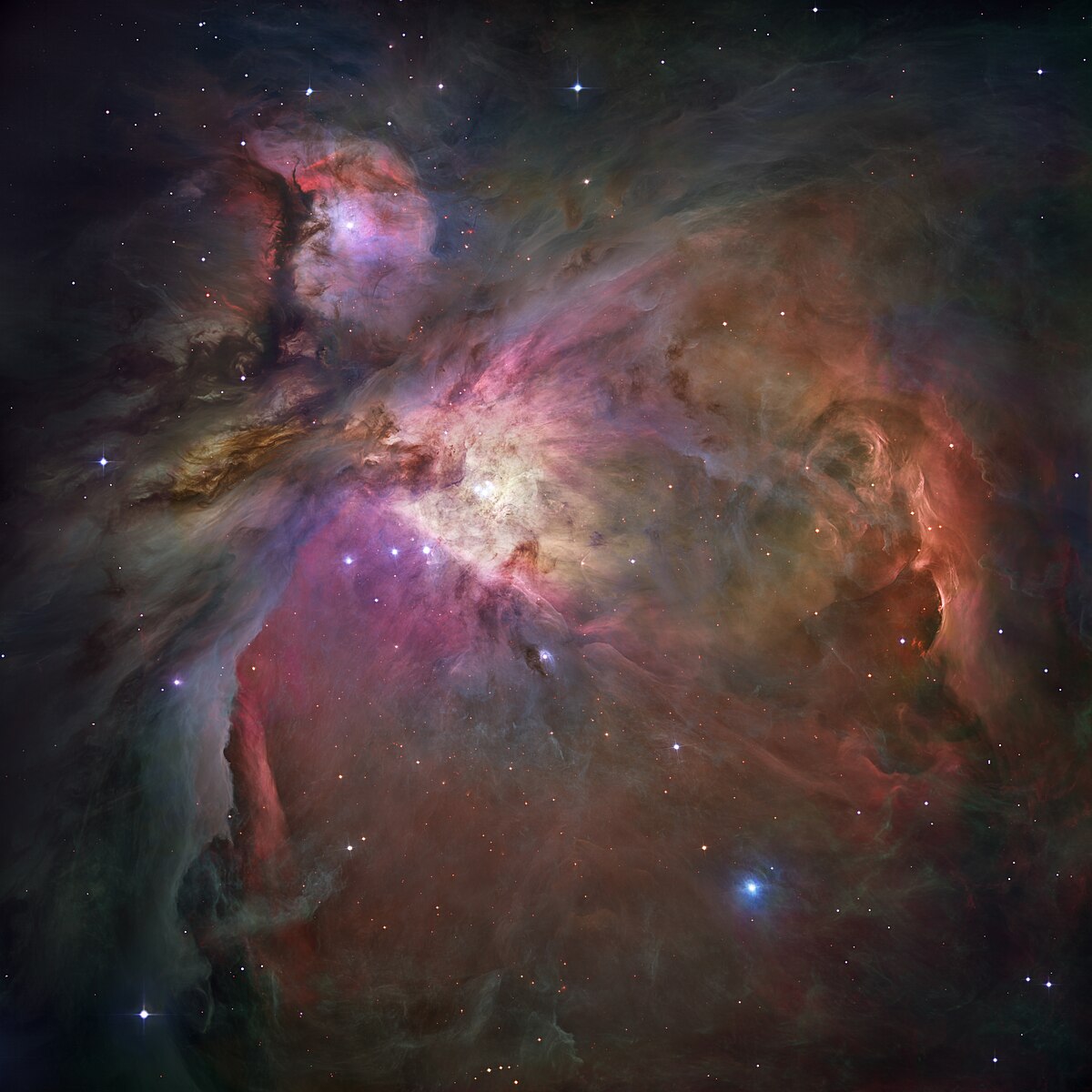
Remember that much of deep-sky observing is about training your eye. Averted vision, patience, and gentle tapping of the tube to stimulate motion can reveal subtle details. Over time, what looked like a faint smudge becomes a textured object with structure.
Conditions rule everything. Poor seeing blurs planetary detail; poor transparency mutes galaxies and nebulae. Use your first target as a gauge: if a bright star twinkles like a sparkler at high altitude, seeing is likely poor; if it’s steady, you can push magnification. For strategies to beat light pollution and increase contrast, see Light Pollution, Filters, and Maximizing Contrast.
Light Pollution, Filters, and Maximizing Contrast
Light pollution reduces the contrast of faint objects against the sky background. While darker skies are the ultimate upgrade, smart tactics and selective filtering can significantly improve what you see from suburban locations.
Strategies to manage light pollution:
- Shield your eyes: Use a dark observing hood or shield stray light with your hand. Keep nearby lights off or blocked.
- Observe when targets are high: Objects near the zenith suffer less atmospheric extinction, haze, and horizon glow.
- Dark adaptation: Give your eyes time. Avoid bright screens and use dim red light.
- Choose appropriate magnification: Slightly higher magnification can darken the background sky (reducing exit pupil) and improve perceived contrast up to a point. Don’t over-magnify; dim targets disappear if spread too thin.
Filters and their best uses:
- Narrowband (UHC-type): Transmits key nebular emission lines (e.g., OIII, Hβ) while rejecting much of the background skyglow. Enhances many emission nebulae.
- OIII: Strongly isolates doubly ionized oxygen lines; very effective on certain nebulae (e.g., planetary nebulae, Veil Nebula), but can dim the starfield significantly.
- Hβ: More specialized; enhances objects with strong hydrogen-beta emission like the Horsehead and California Nebulae, which are challenging under light pollution.
- Moon filters: Neutral density or variable polarizers reduce glare on the Moon, improving comfort and visible detail.
What filters don’t do: they don’t help galaxies, reflection nebulae, or star clusters much because these objects emit broadband light. For galaxies, darker skies, careful shielding, and patient observation are more effective than filters.
Picking targets that punch through skyglow helps morale. From city backyards, try bright open clusters and double stars. In suburban skies, add planetary nebulae and the brighter emission nebulae with a narrowband filter. Under darker skies, your 6–8 inch Dob will reveal a richer tapestry of galaxies and faint nebulae. For a sense of what to expect on different classes of objects, revisit What You Can See.
Care, Cleaning, and Long-Term Maintenance
Dobs are rugged, but a little care goes a long way. Most issues are preventable: keep optics capped, keep bases dry, and don’t clean mirrors unless truly necessary.
Routine care:
- Dust management: Cap the OTA and eyepieces when not in use. A small amount of dust on mirrors has negligible impact on visual performance—don’t obsess.
- Dew control: If dew is common, use a secondary heater or dew shield, and keep a small battery-powered hair dryer handy to gently dry optics. Avoid blowing hot air on cold mirrors for long; gentle warmth is sufficient.
- Storage: Store the telescope in a dry, temperature-stable place. Avoid garages that swing from hot to cold if possible, or allow extra cool-down time.
- Base care: Keep the rocker box off wet grass. A simple mat or tarp helps. Tighten hardware occasionally to maintain smooth motion.
Cleaning mirrors (only when needed):
- Inspect mirrors under diffuse light. If you see fine dust or a few spots, leave them. Clean only if debris is clearly affecting views (e.g., pollen film, sap droplets, stubborn stains).
- Follow manufacturer guidance to remove the primary safely. Support the mirror evenly—avoid edge pressure and fingerprints.
- Rinse with distilled water; for stubborn films, use a mild solution of distilled water with a small amount of gentle dish soap, and drag rinse with clean cotton balls lightly—no rubbing. Rinse thoroughly with distilled water and tilt dry.
- Never use household glass cleaners or abrasive materials on optical surfaces.
Collimation maintenance: Check alignment before each session or after transport. Small tweaks are normal. Learn the gentle feel of properly engaged screws; avoid over-tightening locking bolts that can warp the mirror cell.
Long-term considerations: Over years, mirror coatings eventually age. Recoating is a specialized service and typically only considered after many seasons if reflectivity declines noticeably. Many observers use their mirrors for a decade or more before recoating, depending on environment and care.
Finally, periodically assess your motion. If altitude or azimuth feels sticky or too loose, small adjustments to tension knobs, friction surfaces, or pad condition can restore the Dobsonian’s signature buttery movement. For ergonomics and motion, see Rocker Box Mounts, Portability, and Ergonomics.
Common Beginner Mistakes and How to Avoid Them
Avoiding a few common pitfalls will make your time at the eyepiece more enjoyable and productive.
- Skipping cool-down: Thermal currents inside a warm tube blur images. Put the scope out early and use a fan if available. This step is essential for planetary detail.
- Neglecting collimation: Misalignment softens views at all magnifications. Check collimation every session; it becomes quick with practice. See Collimation.
- Over-magnifying: High power isn’t always better. Use magnification that matches seeing; details pop at lower power when the air is unsteady.
- Chasing dim targets in heavy light pollution: Choose bright, rewarding objects or use filters for nebulae. For galaxies, plan trips to darker skies. See Light Pollution, Filters, and Maximizing Contrast.
- Ignoring ergonomics: An observing chair boosts steadiness and detail. Comfortable posture reduces fatigue and increases observing time.
- Not aligning the finder: A misaligned finder wastes time. Align in daylight, then fine-tune on a star at night. Refer to Step-by-Step Setup.
- Forcing adjustments: If a screw resists, stop and reassess. Overtightening can strip threads or warp components.
If you resolve to work methodically—cool, collimate, choose targets wisely—you’ll have success with your Dobsonian even under less-than-ideal skies. Good habits compound into better observing nights.
Buying Guide: New vs Used, Features, and Value
When choosing a 6–8 inch Dobsonian, you’re weighing aperture, portability, features, and budget. Both 6 and 8 inch models can serve as lifetime visual instruments; the right choice depends on your circumstances.
6 Inch vs 8 Inch
- 6 inch: Lighter and more compact; typically f/8; very forgiving of collimation and eyepiece performance. Excellent for lunar/planetary, doubles, and brighter DSOs. Easy to carry in one piece for short distances.
- 8 inch: Noticeably brighter with finer resolution; typically f/6; slightly larger base and tube. Often transported in two pieces. The sweet spot for many observers balancing capability and manageability.
Essential Features
- 2-inch focuser: Allows wider-field 2-inch eyepieces for sweeping views. Many models include a 2" to 1.25" adapter.
- Finder configuration: A RACI finder plus a reflex sight simplifies navigation. Upgrading later is easy if your scope includes a standard finder shoe.
- Cooling fan: Speeds thermal equilibration; inexpensive and effective.
- Altitude tension or clutch: Helps balance heavy eyepieces and maintain smooth motion.
- Primary mirror cell access: Tool-free collimation knobs and accessible mirror cell simplify alignment.
New vs Used
- Buying new: Warranty support and a known baseline. Good if you prefer a clean start and current features.
- Buying used: Significant savings possible. Inspect carefully: check mirror condition (no significant scratches, pinholes are usually okay), smooth motion, intact base, and focuser function. Ensure accessories are included as advertised.
Budget Allocation
- Prioritize the telescope and mount. A solid, smooth mount and well-figured primary mirror matter more than a large collection of eyepieces.
- Start with two eyepieces plus a Barlow; add more after you learn your preferences.
- Consider a narrowband filter if your observing site is light-polluted and you enjoy nebulae.
Make a realistic plan for storage and transport. Measure doorways, car trunk openings, and storage closets. It’s easy to underestimate the space an 8 inch Dob takes when turned sideways in a compact car. Folding hand trucks, soft blankets, and simple straps can make transport easy and protect the base and tube.
If you are torn between sizes, ask yourself where you’ll observe most often. If you can only observe from a small balcony or must carry the scope up several flights of stairs, a 6 inch is a friendlier companion. If you have easy access to a yard or vehicle and want deeper reach on faint DSOs, the 8 inch’s extra light grasp pays dividends. For a nuanced take on capabilities, revisit What You Can See.
Frequently Asked Questions
Is a 6 or 8 inch Dobsonian better for beginners?
Both are excellent beginner choices, but the “better” option depends on your priorities. A 6 inch is lighter, usually at f/8, and is more forgiving of collimation and eyepiece limitations. It’s easy to carry in one piece and store in tight spaces. An 8 inch provides a substantial boost in light gathering and resolution, making faint nebulae and globular clusters more satisfying and showing more planetary detail when seeing allows. The trade-off is a larger base and tube, typically moved as two pieces. If you have the space and can manage the size, many observers find an 8 inch to be the ideal first and last telescope for visual observing. If portability is critical, the 6 inch shines.
Do I need a coma corrector for an 8 inch f/6 Dobsonian?
Most visual observers do not consider a coma corrector essential at f/6, especially with modern eyepieces that handle off-axis aberrations well. Coma is intrinsic to Newtonian reflectors and is more prominent at faster focal ratios (f/5 and below). At f/6–f/8, coma is present but mild and often not bothersome for visual use. If you are sensitive to edge performance, use wide-angle eyepieces, and spend a lot of time sweeping star fields, you might appreciate a corrector. Otherwise, you can prioritize eyepiece quality and good collimation for sharp, pleasing views without additional optical elements.
Final Thoughts on Choosing the Right Dobsonian Telescope
Six- and eight-inch Dobsonian telescopes hit a rare sweet spot: enough aperture to unlock rich lunar, planetary, and deep-sky observing; simple mechanics that invite frequent use; and affordability that puts serious astronomy within reach. If you set realistic expectations, cultivate a reliable setup routine, and invest in a handful of well-chosen accessories, your Dobsonian can be a lifetime companion.
As you decide between 6 and 8 inches, weigh portability against performance. If your observing habit will flourish with a quick, one-piece carry, a 6 inch will serve you brilliantly. If you want the extra light and resolution and don’t mind two short trips to carry base and tube, an 8 inch rewards you every clear night. In either case, put a premium on smooth mount motion, basic collimation tools, and a small set of eyepieces covering low, medium, and high power. Use filters selectively, and remember that dark skies are an upgrade no accessory can fully replace.
Above all, spend time at the eyepiece. The sky changes with the seasons, and your observing skills will grow with each session. Keep notes, revisit objects, and share the view with friends or at local astronomy club events. If you enjoyed this guide, explore more of our practical telescope articles and consider subscribing to our newsletter for future deep dives on gear, observing technique, and night-sky highlights.