
Table of Contents
- What Is the Best Telescope for Beginners and How Do You Choose?
- Refractors vs Reflectors vs Compound Telescopes: Key Differences
- Aperture, Focal Length, and Magnification: What Really Matters
- Mounts and Stability: Alt-Az, Dobsonian, and Equatorial Compared
- Eyepieces and Essential Accessories for Beginners
- Matching Your Telescope to Planets, Moon, and Deep-Sky Targets
- Astrophotography Reality Check: What to Expect from a First Scope
- Setup, Transport, and Care: Collimation, Cooldown, and Dew Control
- Budget and Value: What You Get at Different Price Points
- Sample Kits and Real-World Scenarios for New Observers
- Common Beginner Mistakes and How to Avoid Them
- Your First Night Under the Stars: A Step-by-Step Plan
- Frequently Asked Questions
- Final Thoughts on Choosing the Right Beginner Telescope
What Is the Best Telescope for Beginners and How Do You Choose?
If you are buying your first telescope, you have likely encountered a blizzard of specifications: aperture, focal length, f/ratio, magnification, coatings, GoTo, ED glass, and more. The most important truth is simple: the “best beginner telescope” is the one that you will use often. That means it must fit your observing goals, local sky conditions, storage space, and ease-of-use preferences. This guide explains every major decision—from telescope type to mount and stability—so you can make an informed, confident choice.
To expand the core search intent behind “best beginner telescope,” we focus on practical, testable criteria:

Artist: Morn
- What you want to see: Moon and planets require steady optics and moderate aperture; faint galaxies and nebulae benefit from larger apertures and dark skies.
- Where you observe: Light pollution dims faint targets; portability matters if you travel to darker sites.
- How you learn: Star-hopping builds sky knowledge; GoTo provides convenience but adds setup complexity.
- Budget vs. longevity: Spending on quality optics and a stable mount often outlasts gimmicks and excessive accessories.
Throughout this article, you will find internal cross-references to help you dig deeper. For example, if you are wrestling with the “magnification myth,” jump to Aperture, Focal Length, and Magnification. If you are deciding between a Dobsonian and an equatorial mount, see Mounts and Stability. If you are curious whether a first telescope and astrophotography mix well, read the Astrophotography Reality Check section.
Refractors vs Reflectors vs Compound Telescopes: Key Differences
Most beginner telescopes fall into three broad optical designs. Each has distinct strengths, trade-offs, and best use-cases. Understanding these will clarify which path fits your observing goals and constraints.
Refractors (Lens-Based)
Refractors use a front lens to gather and focus light. They are prized for ease of use, generally sharp images, and low maintenance.

Artist: University College London Faculty of Mathematical and Physical Science
- Pros: Quick setup; sealed tube resists dust; excellent for the Moon, planets, double stars, and terrestrial viewing.
- Cons: Cost rises quickly with aperture; chromatic aberration (false color fringing) can be noticeable in achromatic models, especially at fast focal ratios (low f/numbers).
- Best for: Beginners wanting low maintenance and crisp views, especially for Lunar/planetary use and bright deep-sky objects under light-polluted skies.
Terminology you may see:
- Achromatic (achromat): Standard glass, more affordable; some color fringing on bright targets.
- ED/APO (extra-low dispersion / apochromatic): Reduced chromatic aberration; sharper, color-accurate images; higher price.
Reflectors (Mirror-Based)
Reflectors use mirrors to collect light, offering the most aperture per dollar. The most common beginner reflector is the Newtonian, often in a Dobsonian mount.
- Pros: Excellent value in larger apertures (e.g., 150–200 mm); great for faint deep-sky objects; no chromatic aberration.
- Cons: Requires periodic collimation; open tube is more susceptible to dust and dew; bulkier than small refractors.
- Best for: Observers who prioritize deep-sky brightness and resolution, are comfortable with light maintenance, and want the most “faint fuzzies” for their money.
Catadioptric (Compound) Telescopes
Compound telescopes combine lenses and mirrors to fold the light path, creating a compact tube with longer effective focal length. Common designs include Schmidt-Cassegrain (SCT) and Maksutov-Cassegrain (Mak).
- Pros: Compact and portable for their aperture; versatile; good for planets and many deep-sky objects; typically compatible with computerized mounts.
- Cons: More expensive than equivalent-aperture Newtonians; longer cooldown time; narrower field of view at a given eyepiece focal length compared to short refractors.
- Best for: Observers wanting a versatile, portable system with good planetary performance and the option to add tracking or GoTo later.
If you’re picking between a 130 mm Newtonian and a 90 mm Mak, consider not just optical type but also how you observe. The 130 mm Newtonian may excel on diffuse nebulae under dark skies, while the 90 mm Mak can be a planetary specialist with tack-sharp star images and compact form factor. For how mounts alter this decision, see Mounts and Stability.
Aperture, Focal Length, and Magnification: What Really Matters
Marketing often touts magnification as the primary measure of performance. In practice, aperture—the diameter of the lens or mirror—matters more for most astronomical targets.
Aperture: The Light Bucket
A larger aperture gathers more light and increases resolution. In simple terms:
- Light-gathering: Scales with the square of the aperture. A 200 mm scope collects roughly 4 times the light of a 100 mm scope.
- Resolution: Improves with aperture, allowing finer detail on planets and tighter double stars, within the limit of atmospheric seeing.
Aperture guidelines for common goals:
- Planets and Moon: 80–102 mm refractor or 127–150 mm reflector/Mak provides engaging detail.
- Deep-sky (galaxies/nebulae): 150–200 mm reflector or 127–150 mm SCT/Mak shows more structure, especially from darker skies.
- All-around: 130–150 mm Newtonian on a stable mount is a strong balance of capability and cost.
Focal Length and f/ratio
Focal length (in mm) and the f/ratio (focal length divided by aperture) affect image scale and field of view. Lower f/ratios (e.g., f/5) yield wider fields at a given eyepiece, useful for large nebulae and star clusters. Higher f/ratios (e.g., f/10–f/12) provide higher native image scale, often favored for planetary detail.
- Fast systems (f/5 to f/6): Wider fields, short tubes, brighter views at a given exit pupil; achromat refractors may show more chromatic aberration.
- Moderate systems (f/7 to f/8): Good all-around performance; many ED refractors live here.
- Slow systems (f/9 to f/15): Narrower fields, easier to reach high magnifications with common eyepieces; common in Maks and some SCTs.
Magnification and Exit Pupil
Magnification = telescope focal length / eyepiece focal length. But there’s a practical ceiling: magnification is limited by seeing, optical quality, and aperture. A widely used rule of thumb is a maximum useful magnification of roughly 2x per mm of aperture under very good conditions, but most nights will support less.
The exit pupil (eyepiece focal length / f/ratio) describes how big the light beam entering your eye will be. Typical ranges:
- Low power, wide field: 4–6 mm exit pupil for scanning the Milky Way and large nebulae (under dark skies).
- Medium power: 2–3 mm exit pupil for galaxies, globular clusters, and general purpose viewing.
- High power: 0.5–1 mm exit pupil for lunar/planetary detail and splitting close double stars.
Before buying a “600x” telescope, read the Common Beginner Mistakes section and remember that good optics at reasonable magnifications will show more real detail than an overstated number on a box.
Mounts and Stability: Alt-Az, Dobsonian, and Equatorial Compared
A rock-solid, smoothly moving mount is as important as the optics. Blurry or jittery views from an underbuilt mount can ruin the experience. Here’s how the main categories compare.
Alt-Azimuth (Alt-Az) Mounts
Alt-az mounts move up-down (altitude) and left-right (azimuth). They’re intuitive and quick to set up.
- Pros: Simple; lightweight; ideal for grab-and-go refractors and small reflectors.
- Cons: Manual tracking requires coordinated motion in two axes; high-power tracking can be fussy without slow-motion controls.
- Best for: Casual viewing, wide-field scanning, educational settings, and travel scopes.
Dobsonian Mounts
The Dobsonian is a specific type of alt-az mount made of a box-like base and Teflon bearings, commonly paired with Newtonian reflectors. It offers exceptional stability per dollar.
- Pros: Extremely stable; easy manual tracking; supports larger apertures affordably; low setup time.
- Cons: Bulky bases; transporting large apertures may require a car and extra storage; pointing straight up can be awkward at times on smaller bases.
- Best for: Deep-sky hunters, backyard observers, and anyone who wants the most aperture for their budget.
If you’re tempted by aperture-for-dollar, a Dobsonian is often the go-to choice. For those in apartments or with limited storage, check the Sample Kits and Real-World Scenarios section for compact alternatives.
Equatorial (EQ) Mounts

Artist: Gn842
Equatorial mounts have one axis aligned with Earth’s rotation (the right ascension axis). Once polar aligned, they track celestial objects with a single-axis motion.
- Pros: Convenient tracking at high magnification; essential for long-exposure astrophotography; easy to add motorized tracking.
- Cons: Heavier; steeper learning curve; requires polar alignment; can be intimidating for brand-new users.
- Best for: Observers who prioritize planetary detail at high power, double star work, or plan to explore astrophotography later.
Computerized GoTo vs. Manual
GoTo mounts automatically slew to targets and track them once aligned (typically via a multi-star alignment procedure). Manual mounts rely on the user to point and track.
- GoTo pros: Rapid acquisition of targets; great in light-polluted skies where star-hopping is challenging.
- GoTo cons: More setup and power requirements; calibration learning curve; cost premium.
- Manual pros: Teaches the sky; simpler and often more reliable; no power needed.
- Manual cons: Requires practice to find targets; tracking at high power can be more hands-on.
Many newcomers enjoy starting manual to learn the sky, then adding tracking or upgrading later. For accessories that make manual navigation easier, see Eyepieces and Essential Accessories.
Eyepieces and Essential Accessories for Beginners
The right accessories can transform your observing sessions. Rather than buying a large kit up front, prioritize a few high-quality items you will use repeatedly.
Eyepieces: Building a Useful Set
Start with two or three eyepieces that yield low, medium, and high magnification. For a 650–1000 mm focal length telescope, common choices are around:
- Low power: 24–32 mm for wide-field scanning and large objects.
- Medium power: 10–14 mm for open clusters, globulars, and the Moon.
- High power: 5–7 mm for planetary detail and double stars, as seeing allows.
Consider apparent field of view (AFOV). Wider AFOV (e.g., 68–82°) provides more immersive views and more drift time at high magnification on a non-tracking mount, but can be heavier and costlier. Narrower AFOV (e.g., 50–60°) is typically more affordable and lightweight.
Barlow Lenses and Focal Extenders
A 2x Barlow effectively doubles your eyepiece options by halving their effective focal lengths. This is a cost-effective way to expand magnifications without buying many eyepieces. Ensure it is compatible with your diagonal and focuser size (1.25″ vs 2″).
Finder Scopes and Red Dots
Locating targets is easier with a quality finder. Common options:
- Red-dot finder: Projects a red dot onto a transparent window; great for initial alignment and bright targets.
- RACI finder: Right-angle, correct-image optical finder that shows a magnified, upright view; excellent for star-hopping.
Many observers pair a red dot for coarse pointing with a RACI for fine star-hopping. To practice navigation, see Your First Night Under the Stars.
Filters: Useful, with Realistic Expectations
- Lunar neutral density (ND): Reduces glare for comfortable Moon viewing.
- Color filters: Can enhance certain planetary details; benefits are subtle and vary.
- UHC/nebula filters: Improve contrast on emission nebulae by passing select wavelengths; transformative under dark skies, helpful even in moderate light pollution.
Diagonals, Focusers, and Collimation Tools
- Star diagonals (for refractors/SCTs): A quality dielectric mirror diagonal can improve contrast and durability.
- Focusers: Single- or dual-speed Crayford or rack-and-pinion. Dual-speed helps at high power.
- Collimation tools (for Newtonians): A simple collimation cap or Cheshire/sight tube is inexpensive and effective. Laser collimators are handy but require calibration.
Matching Your Telescope to Planets, Moon, and Deep-Sky Targets
Different targets reward different designs and apertures. Clarify your priorities and choose accordingly.
Moon and Planets
For crisp lunar and planetary views, stable optics, precise focusing, and high usable magnification are key.
- Good choices: 80–102 mm refractors (ED preferred), 127–150 mm Maksutov-Cassegrains, and 150–200 mm Newtonians with quality mirrors.
- Mount: A steady alt-az with slow-motion or equatorial mount assists high-power tracking.
- Seeing: Atmospheric turbulence often limits detail; patience and moments of steady air (“seeing windows”) reveal the best views.
Deep-Sky Objects (DSOs)
Galaxies, nebulae, and star clusters are typically faint. Aperture and dark skies dominate here.
- Good choices: 150–250 mm Dobsonians offer dramatic DSO performance per dollar; short refractors (70–100 mm) excel at wide-field sweeping of open clusters and large nebulae.
- Filters: A UHC filter can significantly increase nebula contrast, especially on emission nebulae.
- Light pollution: Limits galaxies and diffuse nebulae most; globular clusters and open clusters remain rewarding even in cities.
Double Stars and Variable Stars
For double stars, tight optics and good seeing matter as much as aperture. Refractors are commonly favored for their pinpoint stars, but well-collimated reflectors also perform well. Variable star observing is a fruitful pursuit for small scopes thanks to comparative visual estimates and accessible targets.
Astrophotography Reality Check: What to Expect from a First Scope
Many beginners hope to photograph what they see. It’s important to separate visual astronomy from astrophotography because equipment demands differ significantly. Visual observing tolerates small tracking errors and intermittent vibrations that photography does not.
Planetary and Lunar Imaging
Short exposures and high frame-rate video (lucky imaging) make planetary and lunar capturing feasible with modest gear. A stable mount and a camera capable of recording video frames (often via a dedicated planetary camera or a DSLR/mirrorless in video mode) can yield satisfying results.
- Ideal scopes: Maksutov-Cassegrains and SCTs with longer focal lengths; Newtonians with good collimation.
- Mount: Tracking helps but isn’t strictly mandatory for very short exposures.
- Software: Stacking programs align and combine best frames to reduce noise and enhance detail.
Deep-Sky Astrophotography
Long-exposure imaging of galaxies and nebulae places high demands on the mount and guiding accuracy. For beginners, the simplest entry point is often a star tracker with a camera lens or a small refractor, rather than a large telescope.
- Mount first: A precise equatorial mount with good polar alignment is critical for exposures of minutes without star trails.

A cheap electric equatorial mount (aka \”sky tracker\”), model iOptron SkyTracker Pro, with a camera attached and a lens (Canon EOS R50 + Canon RF 100–400 mm F5.6–8 IS USM)
Artist: HiyoriX - Scope choice: Short, fast refractors (e.g., 60–80 mm at f/5–f/6) are forgiving and frame large nebulae well.
- Alternative path: Electronically Assisted Astronomy (EAA) uses short, stacked exposures to display live images; it’s less demanding than traditional long-exposure astrophotography.
If deep-sky imaging is your primary goal, consider starting with a camera and tracker rather than a large Dobsonian. For visual-first observers, it’s fine to choose a scope for live views and explore imaging later. For mount considerations, revisit Mounts and Stability.
Setup, Transport, and Care: Collimation, Cooldown, and Dew Control
Practical ownership details shape how often you use your telescope. A scope that cools quickly, stores easily, and resists dew is more likely to see regular use.
Collimation Basics (Newtonians and SCTs/Maks)
Collimation is the alignment of optical elements. Newtonians require it occasionally; Maks and SCTs less often. Good collimation restores image sharpness and contrast.
- Newtonians: Use a collimation cap or Cheshire. Align secondary under the focuser, then center the primary mirror’s reflection using the primary adjustment screws.
- SCTs/Maks: Typically adjusted via secondary mirror screws; sensitivities vary. Only adjust when necessary.
- Refractors: Usually collimation-free; factory alignment holds unless jarred.
Thermal Equilibrium and Cooldown
Optics perform best when near ambient temperature. Large mirrors and closed-tube designs can take longer to equilibrate.
- Set the telescope outside 30–60 minutes before high-power viewing, especially for larger apertures.
- Fans on Newtonian primaries help speed equilibration.
- Heat plumes and tube currents reduce contrast; patience pays dividends.
Dew Control
Dew forms when optics cool below the ambient dew point. To mitigate:
- Use a simple dew shield on refractors and SCTs/Maks.
- Keep lens caps handy when not observing; consider gentle heat strips for longer sessions.
- Store in a dry place; allow equipment to dry before sealing in a case to avoid trapped moisture.
Transport and Storage
- Portability: If you need to carry your scope down stairs or into a car, prioritize manageable weight and size.
- Storage: Keep the telescope accessible to encourage spontaneous use; a closet near an exit is better than a basement behind boxes.
- Protection: Padded cases or foam-lined bins reduce knocks; avoid extreme heat or cold.
Budget and Value: What You Get at Different Price Points
Pricing varies by region and brand, but general patterns hold. The goal is to balance aperture, optical quality, and mount stability within your budget.
Entry-Level (Budget-Conscious)

Artist: Wutthichai Charoenburi
- Small refractors (70–90 mm) on alt-az mounts: Portable and simple; great for the Moon, planets, and bright clusters. Look for sturdy tripods and avoid overly flimsy mounts.
- Tabletop reflectors (114–130 mm): Surprising capability in compact packages; require a steady surface. Offer wide-field views and good DSO performance for size.
Core Beginner Sweet Spot
- 130–150 mm Newtonians on stable alt-az or EQ mounts: Versatile all-around performance for both planets and DSOs.
- 6–8 inch Dobsonians (150–200 mm): Aperture-rich, simple to use, stable, and highly recommended for deep-sky viewing.
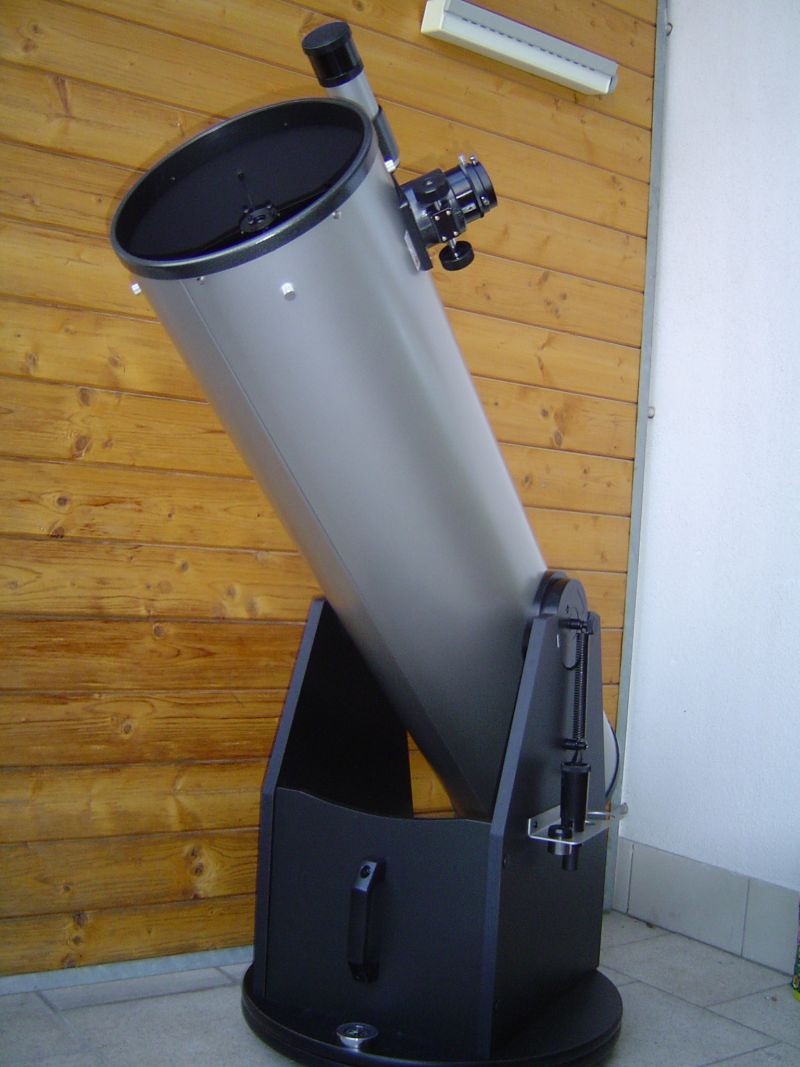
10" Newton telescope on dobson mount.
Artist: Unknown - 90–102 mm refractors (achromats or ED) on robust alt-az: Great lunar/planetary and wide-field views; portable and low maintenance.
Premium Entry and Long-Term Platforms
- ED/APO refractors (80–100 mm) on quality alt-az or EQ mounts: Outstanding optics, compact, double as travel and imaging platforms.
- 127–150 mm Maks/SCTs on tracking mounts: Planet specialists with compact tubes; strong visual performance; easy to store and transport.
- 8–10 inch Dobsonians with upgraded bearings and dual-speed focusers: Serious light buckets for visually rich deep-sky experiences.
Whatever the price range, prioritize a stable mount and realistic optical specifications over flashy magnification claims or excessive low-quality accessories.
Sample Kits and Real-World Scenarios for New Observers
Below are illustrative configurations that match typical living situations and observing goals. Adjust based on local availability, specific models, and your budget.
Apartment-Dweller, Light-Polluted City
- Scope: 80–100 mm refractor or 90 mm Mak; compact and quick to deploy on a balcony or rooftop.
- Mount: Solid alt-az with slow-motion controls to simplify high-power tracking.
- Targets: Moon, planets, bright double stars, open clusters, and the brightest nebulae with a UHC filter.
- Tip: Keep the rig assembled and capped for spontaneous 20–30 minute sessions.
Family Backyard, Suburban Skies
- Scope: 150–200 mm Dobsonian for shared views and showpiece DSOs.
- Mount: Included Dobsonian base; consider a RACI finder for easier star-hopping with kids.
- Targets: Bright nebulae, globular clusters, planetary nebulae, Moon, and planets.
- Tip: Prepare a short tour list to keep attention and momentum; see Your First Night Plan.
Travel to Dark Sites, Compact Car
- Scope: 100 mm ED refractor or 5–6 inch SCT; strikes a balance between portability and performance.
- Mount: Lightweight alt-az head on a carbon or aluminum tripod; or compact EQ if tracking is desired.
- Targets: Wide-field Milky Way star clouds, large nebulae with filters, and galaxies.
- Tip: Use a checklist for components to avoid forgotten parts (diagonals, finders, dovetails, power).
Student or Educator Outreach
- Scope: 130–150 mm Newtonian on a sturdy alt-az or a 6–8 inch Dobsonian.
- Mount: Simple manual mount reduces complexity in group settings.
- Targets: The Moon’s terminator, Saturn’s rings when visible, Jupiter’s bands and moons, bright clusters.
- Tip: Prepare laminated finder charts; set eyepiece heights for varied ages; use a step stool safely.
Child-Friendly First Scope
- Scope: Tabletop 114–130 mm reflector or 70–80 mm refractor.
- Mount: Low center of gravity; simple motions; use a stable table for tabletop units.
- Targets: Moon, bright clusters, and the brightest planets.
- Tip: Keep sessions short and celebratory; build success early with easy targets.
Common Beginner Mistakes and How to Avoid Them
Steering around a few common pitfalls can save money and frustration.
- Chasing magnification: High “600x” claims are often marketing. Detail depends on aperture, seeing, and optical quality, not just magnification.
- Underestimating the mount: A flimsy mount ruins otherwise good optics. Prioritize stability; it’s as important as the scope.
- Neglecting cooldown and collimation: Rushing high-power views before thermal equilibrium or proper alignment yields mushy images.
- Buying too many accessories at once: Start with a few quality eyepieces and a good finder; add as your needs clarify.
- Ignoring light pollution: Faint galaxies may disappoint from the city; aim for open clusters and planets until you can reach darker skies.
- Overcomplicating first nights: Begin with easy, bright objects to build confidence; see First Night Plan.
Your First Night Under the Stars: A Step-by-Step Plan
Here’s a realistic, low-stress plan for your first session. It assumes a manual mount, but the flow helps even with GoTo systems.
Before You Go Outside
- Charge and pack: If using GoTo, ensure power. For manual mounts, pack a red flashlight, finder charts, and a chair.
- Align the finder: In daylight, point the scope at a distant landmark and align the red dot or RACI so it matches the main scope’s center.
- Print a mini target list: Moon phase permitting, plan 4–6 bright objects like the Moon, Jupiter/Saturn (if visible), a bright open cluster, a double star, and a nebula with a filter.
At the Site
- Setup: Level the tripod or base, attach the scope, balance if necessary (for EQ), and check that all screws are snug—but not overtightened.
- Cooldown: Let the optics adjust while you review the sky.
- Dark adaptation: Give your eyes 20–30 minutes in darkness; avoid white light.
Finding Your First Targets
- Start with the Moon (if up): Use low power first, then step to medium for the terminator region. Note shadows and crater chains.
- Planets: Center at low power, then increase magnification gradually, watching for moments of steady seeing.
- Star-hopping: Use your red dot to point to a bright star near your target, then switch to the RACI finder and follow the charted path. Practice on a bright cluster like the Pleiades or a nearby open cluster visible in your season.
Observing Technique
- Averted vision: Look slightly to the side of a faint target to engage more sensitive rods in your retina.
- Jiggle the scope gently: Motion can reveal faint objects by stimulating contrast detection.
- Keep notes: Record magnifications, filters, seeing conditions, and impressions. This enhances learning and appreciation.
Sample observing log template:
Date/Time:
Location (Bortle/sky quality):
Temperature / Transparency / Seeing:
Instrument & Eyepieces:
Targets:
1) Object:  Magnification:  Notes:
2) Object:  Magnification:  Notes:
3) Object:  Magnification:  Notes:
Sketch (optional):
If you use a GoTo mount, the flow is similar: complete a careful alignment with well-separated stars, then select your targets from the controller. Still plan to observe bright showpieces first and refine tracking with centered, focused stars at medium power.
Frequently Asked Questions
Do I need a GoTo telescope as a beginner?
No. GoTo is convenient, especially under light pollution, but not required. Manual scopes on stable mounts are simple, reliable, and teach the sky. If you often observe under city lights and prefer rapid target acquisition, a GoTo system can be helpful. Focus first on optical quality and mount stability, then consider GoTo as an add-on or future upgrade.
How much magnification can I really use?
On most nights, useful planetary magnification tops out around 150–250x depending on seeing, aperture, and target elevation. The theoretical maximum is about 2x per mm of aperture under excellent conditions, but that is rarely sustained. Better to have a range of magnifications and step up slowly while assessing image steadiness and contrast. Revisit Aperture, Focal Length, and Magnification for the full context.
Final Thoughts on Choosing the Right Beginner Telescope
Choosing your first telescope is less about chasing a single spec and more about assembling a balanced system you’ll use often. The most successful beginners match realistic goals to practical equipment:
- Prioritize aperture and mount stability over extreme magnification claims.
- Select an optical design aligned with your interests: refractors for simplicity and planetary sharpness, reflectors/Dobsonians for deep-sky aperture, or compact Mak/SCTs for portability and versatility.
- Build a small, high-quality eyepiece set and a reliable finder system before expanding accessories.
- Respect the fundamentals: collimation, cooldown, and dew control make or break high-power detail.
- Start with a clear observing plan and easy, bright targets to build skill and enjoyment.
A telescope can open a lifetime of discovery—from lunar crater rims to distant galaxies shimmering at the edge of vision. If this guide helped clarify your choices, explore more of our in-depth articles linked throughout and consider subscribing to our newsletter for future practical guides, equipment tips, and seasonal observing highlights. Clear skies!