
Table of Contents
- What Is a Telescope Mount and Why It Matters
- How Alt-Azimuth Telescope Mounts Work (Pros, Cons)
- How Equatorial Telescope Mounts Work (GEM, Fork, Pros, Cons)
- Best Use-Cases: Visual Observing vs Astrophotography
- Payload, Balance, and Tracking Accuracy Explained
- Polar Alignment Methods: From Rough to Precision
- GoTo, Push-To, Encoders, and Tracking Modes
- Field Rotation, Guiding, and Exposure Limits
- Budget Tiers and Notable Mount Types
- Setup Workflow and Time: What to Expect
- Common Mount Issues and How to Fix Them
- Frequently Asked Questions
- Final Thoughts on Choosing the Right Telescope Mount
What Is a Telescope Mount and Why It Matters
A telescope mount is the mechanical system that supports your optical tube and allows you to point and track celestial targets. While the telescope’s aperture gets most of the attention, the mount is the quiet workhorse: it determines whether your view is steady, whether objects remain centered, and whether long-exposure astrophotography is feasible. In other words, a mount is not just a tripod and a head—it is the foundation of your entire observing or imaging experience.
The sky appears to rotate because Earth spins at a near-constant rate of roughly 15 degrees per hour (about 15 arcseconds per second) relative to the stars. A good mount compensates for this motion so your target doesn’t drift out of the field of view. Visual observers can tolerate some drift and make manual corrections, but imagers need continuous, precise tracking to keep stars sharp during long exposures. Consequently, choosing between an alt-azimuth mount and an equatorial mount is one of the most consequential early decisions you will make in astronomy.

Artist: Gustaaf Prins from Haarlem, The Netherlands
This guide explains how both mount classes work, why one might suit you better than the other, and how practical factors—payload, balance, polar alignment, field rotation, periodic error, and guiding—shape real-world performance. Along the way, we’ll link to deeper sections such as payload and tracking accuracy, polar alignment methods, and field rotation and exposure limits so you can follow threads relevant to your goals.
How Alt-Azimuth Telescope Mounts Work (Pros, Cons)
An alt-azimuth (alt-az) mount moves the telescope in two axes: altitude (up and down) and azimuth (left and right). Think of a camera pan-and-tilt head, a Dobsonian base, or compact motorized GoTo mounts with a fork or single-arm design. Because alt-az motion maps intuitively to the horizon, newbies often find it the easiest to understand and operate.
Artist: Not specified
Strengths of Alt-Az Mounts
- Simplicity and speed: No polar alignment is required, so setup is quick. You can be observing within minutes.
- Ergonomics: Alt-az motions feel natural, making manual sweeping comfortable for star-hopping and terrestrial viewing.
- Weight and portability: Many alt-az mounts are compact and lighter than comparable equatorials, ideal for grab-and-go nights.
- Dobsonian advantage: Large Newtonian reflectors mounted on Dobsonian alt-az bases offer maximum aperture per dollar for visual observing.
Limitations of Alt-Az Mounts
- Field rotation: Even if an alt-az mount tracks an object by moving in altitude and azimuth, the field will rotate relative to the camera or eyepiece. Over minutes, stars appear to rotate around the center of the frame. This is tolerable visually but problematic for long-exposure imaging. See Field Rotation.
- Short exposure astrophotography only (without de-rotator): You can capture planets (short, high-frame-rate video), the Moon, and bright deep-sky objects with stacks of short subs. But deep integration long subs are limited unless an optical or mechanical field de-rotator is used.
- High-altitude and meridian zones: Near the zenith, tracking can require faster azimuth motion, stressing cheaper drive systems. Some GoTo alt-az mounts handle this well; others struggle.
For many observers—especially those focused on visual astronomy—an alt-az mount is the definition of convenience. A manual Dobsonian lets you spend money on mirror diameter instead of mechanics, and a small motorized alt-az with GoTo can turn a compact refractor into a city-friendly, weeknight stargazing rig.
How Equatorial Telescope Mounts Work (GEM, Fork, Pros, Cons)
An equatorial mount tilts one of its axes—the right ascension (RA) axis—so it is parallel to Earth’s axis of rotation. If you align this axis with the celestial pole (North or South), the mount can track the sky’s apparent motion by driving the RA axis at the sidereal rate. This is what makes equatorial mounts the backbone of long-exposure astrophotography.

Artist: Gn842
There are two common equatorial families:
- German Equatorial Mounts (GEMs): A counterweight balances the telescope on the declination (DEC) axis. GEMs are widely used because they scale from portable star trackers to heavy observatory-class mounts.
- Equatorial Fork Mounts: The optical tube sits between fork arms on a tilted wedge. These are common with larger Schmidt-Cassegrain telescopes (SCTs) and can be very stable, though the wedge adds setup complexity.
Strengths of Equatorial Mounts
- True continuous tracking for imaging: With good polar alignment, an equatorial mount follows targets without field rotation, enabling long exposures limited mainly by periodic error, wind, flexure, and guiding quality.
- Astrophotography scalability: From lightweight star trackers to high-capacity GEMs, the equatorial ecosystem accommodates different payloads and focal lengths.
- Precise pointing with practice: GoTo and plate solving on equatorials can put targets dead-center repeatedly, which is especially valuable under light-polluted skies.
Limitations of Equatorial Mounts
- Setup complexity: Polar alignment is mandatory. While tools and software have simplified the process, it adds time compared to alt-az setups. See Polar Alignment Methods.
- Meridian flips (GEMs): When a target crosses the local meridian, the mount may need to flip to the other side to avoid collisions, interrupting a sequence unless automated.
- Weight and cost: For equivalent stability, equatorial mounts generally cost more and weigh more than alt-az designs, especially as payload needs grow.
For imagers or anyone planning to capture faint deep-sky objects with multi-minute exposures, an equatorial mount is usually the decisive choice. For visual observers who occasionally image the Moon or planets, an alt-az may suffice; for everything else, equatorials rule.
Best Use-Cases: Visual Observing vs Astrophotography
How do you translate your goals into a mount choice? Start by being honest about your primary activity most nights. The best mount is the one you will actually use frequently.
Visual Observing Priorities
- Speed to first light: If setup time kills your motivation, a manual or motorized alt-az mount is hard to beat.
- Comfort and eyepiece placement: Refractors and SCTs on alt-az mounts are ergonomic for scanning. Dobsonians excel for comfortable seated observing with large apertures.
- Stability over bells and whistles: A steady view in a breeze, low vibration, and smooth manual motions matter more than drive complexity.

Artist: Morn
Planetary and Lunar Imaging
- Alt-az can work well: High-frame-rate video (short exposures per frame) freezes seeing, and stacking software rejects blurred frames. Field rotation over a few minutes is minimal for small sensors and can be corrected in software.
- Equatorial advantages: For longer captures or mosaics, EQ tracking keeps the target centered and simplifies alignment in processing.
Deep-Sky Astrophotography
- Equatorial strongly preferred: Without field rotation, you can take longer sub-exposures and total integration. Guiding on RA (and DEC as needed) refines star shapes.
- Short-sub alt-az approach: If you must use alt-az, stick to bright targets, very short subs (seconds), and consider a field de-rotator. Expect more complex processing and limitations at longer focal lengths. See Field Rotation.
If you are genuinely split—some nights visual, some nights imaging—a portable GEM or a hybrid approach (an alt-az for quick visual sessions and a separate imaging rig later) often makes sense. The key is matching your patience for setup to your ambitions for the result. See Setup Workflow and Time for what to expect.
Payload, Balance, and Tracking Accuracy Explained
Mount specifications list a payload capacity, but interpreting that number requires context. Manufacturers often quote a maximum load for visual use under calm conditions. Imaging imposes higher demands on stability and tracking accuracy, so a common rule of thumb is to stay comfortably below the stated capacity for astrophotography.
What Counts Toward Payload
- Optical tube assembly (OTA): Refractor, reflector, or SCT weight.
- Accessories: Finder, guide scope or off-axis guider, camera, filter wheel, diagonal, dew heaters, and cables.
- Counterweights (GEM): Not counted as payload but part of the total system mass you carry and balance.
Why Balance Matters
Perfect balance reduces strain on gears and motors, minimizing backlash and helping the drive run smoothly. For GEMs, balance in RA and DEC determines how consistently the worm meshes with the ring gear. Slightly east-heavy balance in RA is often recommended so the worm always drives against a consistent load, reducing gear lash.
Tracking Accuracy and Periodic Error
Even at the correct sidereal speed, tiny imperfections in gears produce a cyclical error called periodic error (PE), usually measured in arcseconds peak-to-peak over one worm rotation. Typical entry-level mounts might have PE on the order of a few tens of arcseconds; premium mounts can be under several arcseconds. Guiding with a sensitive camera and corrections can tame PE, but minimizing mechanical error at the source is always beneficial.
Tip: If your stars elongate in RA on unguided exposures, try shorter subs first to characterize the mount’s inherent periodic error. Then add guiding to extend exposure times as needed.
Stiffness, Damping, and Resonance
A rigid mount and tripod resist wind and handling. Long moment arms—like a long refractor—magnify vibrations, so a mount that handles a short SCT might struggle with a longer, lighter OTA. Upgrading the tripod, spreading legs, using vibration suppression pads, and mindful cable management all help. When troubleshooting star shape issues, consider the entire system from ground to sensor. See Common Mount Issues for diagnostics.
Polar Alignment Methods: From Rough to Precision
Polar alignment lines the mount’s RA axis with the celestial pole. Better alignment means less DEC drift during tracking and fewer guiding corrections. Methods vary from quick-and-dirty to sub-arcminute precision suitable for long focal length imaging.
Common Polar Alignment Methods
- Rough compass-and-level: Use a compass (corrected for magnetic declination) to aim the RA axis north/south and set your latitude on the mount. Good enough for quick visual use.
- Polar scope: A small reticle telescope built into the RA axis (common on many GEMs) helps place Polaris or Sigma Octantis relative to the true pole. Requires knowing the current position of the pole star on the reticle (often via an app).
- Software-assisted alignment: Modern tools use plate solving to measure sky alignment errors and guide you through azimuth/altitude adjustments. Widely used by imagers because it is fast and precise.
- Drift alignment: Monitor star drift near the meridian and celestial equator to refine azimuth, and near the eastern or western horizon to refine altitude. Accurate but slower, and especially educational.
Practical Workflow Example
# Typical quick polar alignment routine on a GEM
1. Level the tripod roughly; set mount to your latitude.
2. Roughly point the RA axis toward the pole.
3. Use a polar scope or software-assisted routine to refine alignment.
4. Lock down azimuth/altitude; verify with a short test exposure or drift.
5. Start guiding and run a calibration if imaging.
Perfect leveling is less critical than hitting the correct pole position, but it simplifies adjustments because altitude and azimuth knobs do what you expect. After alignment, check that all clamps are snug yet not overtightened; slop can reintroduce drift. If you plan to image across the meridian, anticipate the flip and ensure cables won’t snag during slews (see Setup Workflow and Time).
GoTo, Push-To, Encoders, and Tracking Modes
Modern mounts range from fully manual to computer-controlled. Features like GoTo, encoders, and various tracking modes influence accuracy, convenience, and power consumption.
Manual, Push-To, and GoTo
- Manual: You move the scope by hand and use slow-motion controls. It’s quiet, reliable, and promotes star-hopping skills.
- Push-To: You push the scope while a digital setting circle or app shows where to go based on encoders on the axes. Keeps you involved while aiding accuracy.
- GoTo: Motors slew to targets autonomously after alignment. Great under light pollution when star-hopping is tough. Requires a power source and alignment routine.
Encoders and Tracking
- Basic motorized alt-az: Tracks in both axes to keep objects centered. Good for visual use and planetary imaging sessions.
- GEM with stepper/servo drives: Tracks in RA, makes guided corrections in RA/DEC for long exposures.
- Absolute encoders: High-resolution encoders on axes can dramatically improve pointing and tracking, reduce reliance on periodic error correction, and enable error modeling.
Whether you choose manual or GoTo, a well-tuned mount and good balance go farther than extra features alone. Plate solving—a software technique that matches a camera frame to star catalogs—can elevate even modest GoTo mounts by providing near-perfect pointing corrections without complex hand controller alignment steps.
Field Rotation, Guiding, and Exposure Limits
Field rotation is the primary reason alt-az mounts are limited for long-exposure astrophotography. As the mount tracks in altitude and azimuth, the camera’s orientation relative to the celestial coordinate grid slowly twists. Over time, stars away from the frame center trace arcs, causing radial smearing. No amount of RA/DEC guiding can fix field rotation on an alt-az mount; the cure is to align the tracking axis with Earth’s rotation (i.e., use an equatorial configuration) or mechanically de-rotate the field.
How Fast Does Field Rotation Accumulate?
The rate depends on your latitude, the target’s position (altitude and azimuth), and time. Rotation is usually slow near the meridian and the celestial equator and faster near the zenith or at extreme azimuths. In practical terms, alt-az imagers can often get away with very short sub-exposures and then stack many frames. The wider the field (shorter focal length), the more forgiving the setup.
Guiding and Periodic Error
On equatorial mounts, guiding cameras watch a star and issue tiny corrections to RA and DEC to compensate for wind, flexure, and gear error. A well-tuned guiding setup dramatically increases the length of usable subs and the consistency of round stars. Guiding can also help tame high-frequency components of periodic error from certain gear systems. However, guiding cannot compensate for flexure between the guide scope and imaging scope; an off-axis guider that picks off light from the main optical path reduces this risk.
Exposure Strategy Takeaways
- Alt-az without de-rotation: Short subs (seconds, not minutes). Stack many frames. Favor bright, wide-field targets or planetary video.
- Equatorial unguided: Match exposure to your mount’s periodic error and focal length. Start with modest subs and test star shapes.
- Equatorial guided: Longer subs become feasible. Use dithering between subs to reduce pattern noise and improve stacking.
For deeper dives on drivetrains and tracking accuracy, revisit Payload, Balance, and Tracking Accuracy. For practical setup timelines with and without guiding, see Setup Workflow and Time.
Budget Tiers and Notable Mount Types
Mount ecosystems cover a wide spectrum. While model names change and new technologies emerge, the core categories remain stable. Below is a high-level tour of common types, along with considerations that remain relevant regardless of brand or year.
Manual Alt-Az and Dobsonian Bases
- Manual alt-az heads: Lightweight, smooth pan-and-tilt style heads suit small refractors and spotting scopes for quick sessions.
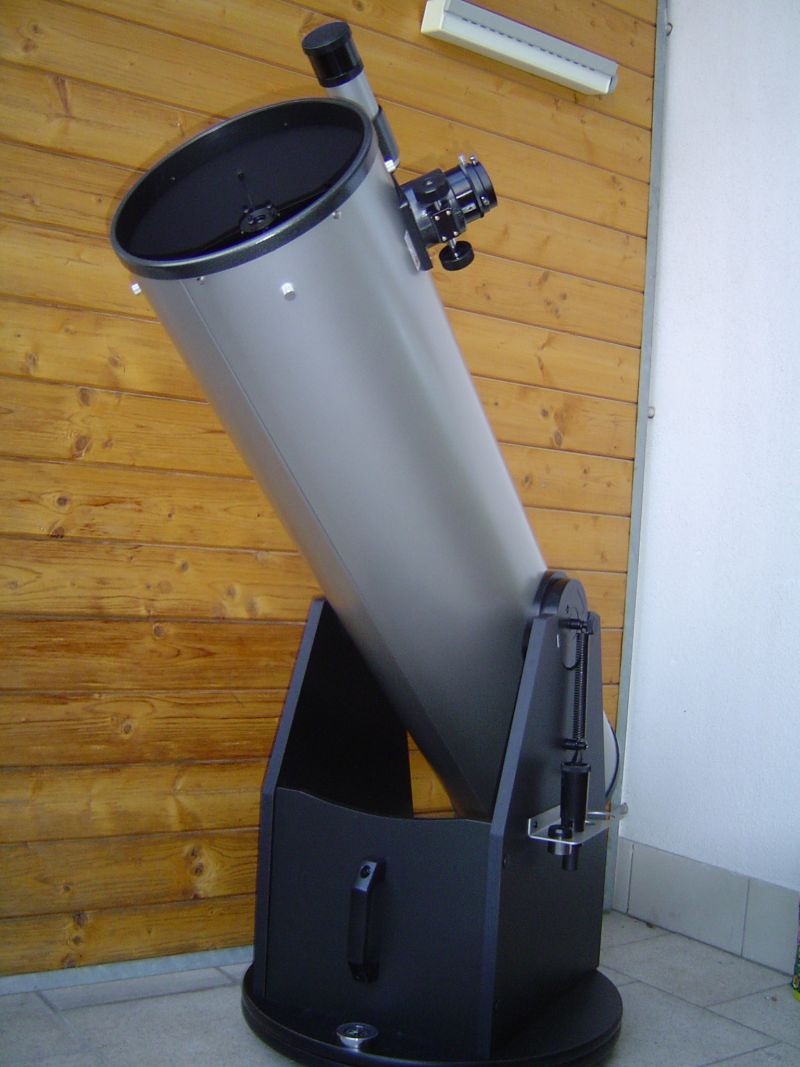
- Dobsonian mounts: A classic for large Newtonian reflectors: simple plywood or composite bases with Teflon bearings. Stability and ease of use make them ideal for visual deep-sky observing.
Cost per inch of aperture is unbeatable with Dobsonians. If your plan is to see faint galaxies and nebulae visually from dark sites, a big Dob on an alt-az base is a perennial best bet.

Note: this telescope has been slightly customized in the following ways:
The upper tube assembly has been installed 180 degrees from its normal orientation. The owner of the telescope has done so to make it easier to look through the Telrad red dot finder (not present in this photo, but its mounting is). Focuser has been rotated to accommodate this.
The internal light baffle of the upper tube assembly was originally a thin black plastic that was susceptible to warping in direct sunlight; it was replaced with a thin carbon-fiber sheet.
The light shroud is not original and was manufactured by a third party. Obsession Telescopes originally provided a shroud made of black rip-stop nylon with the company logo on it.
Artist: NathanScientific
Motorized Alt-Az with GoTo
- Single-arm or dual-fork designs: Compact and easy to set up; excellent for visual use and outreach.
- Wedge option: Some fork-mounted SCTs can be placed on an equatorial wedge, converting them into equatorial systems for imaging at the expense of additional complexity.
Motorized alt-az mounts offer the delightful convenience of tapping a target on a handset or app and watching the scope slew there. Under light pollution, this can be transformative for beginners.
Star Trackers and Portable GEMs
- Camera-focused mounts: Small equatorial trackers for DSLR/mirrorless setups and small refractors. Designed for travel astrophotography and wide-field imaging.
- Pros: Very portable; enough for short focal lengths; learning-friendly. Cons: Limited payload; require careful balance and polar alignment for best results.
Star trackers are a gateway to equatorial imaging. With good polar alignment and a modest lens, you can take beautiful wide-field photos of the Milky Way and constellations. Pair with software-assisted polar alignment to speed up setup.
Mid-Range GEMs
- Workhorses of amateur astrophotography capable of carrying small to medium optical tubes.
- Feature set: GoTo, autoguiding ports, periodic error correction training, and sometimes improved bearings for smoother performance.
For most imagers who want to grow into longer focal lengths and heavier gear, a solid mid-range GEM represents a long-term investment. Prioritize stiffness and tracking over extra accessories.
Premium GEMs and Harmonic Drive Mounts
- Premium GEMs: Precision machining, low periodic error, absolute encoders in some models, and superior support. Designed for long focal length imaging and heavy payloads.
- Harmonic drive (strain wave) mounts: High torque density with compact form factors and often no counterweights for moderate payloads. Portable, with characteristic high-frequency error that guiding can address.
Harmonic drive mounts have surged in popularity for their portability and capacity-to-weight ratio. They trade classic worm drive behavior for a different error spectrum, but with guiding and well-managed balance, they can produce excellent imaging results. As always, match your focal length and seeing conditions to the mount’s performance envelope.
Setup Workflow and Time: What to Expect
Time to first exposure or first view is crucial. A realistic sense of setup time helps you pick a mount you will use often, not just admire in the daytime.
Alt-Az Visual Workflow
# Typical alt-az visual session
1. Set down tripod or base; level roughly.
2. Attach OTA and accessories; balance if applicable.
3. If GoTo: run a simple alignment (bright star or two-star routine).
4. Observe. Total time: 2–10 minutes, depending on alignment method.
For outreach or spontaneous backyard sessions, the minimal friction of alt-az is unbeatable. If you are keen on catching a planet between clouds, this workflow shines.
Equatorial Imaging Workflow
# Typical portable EQ imaging session
1. Place tripod; level approximately and orient RA axis toward the pole.
2. Mount head, counterweight bar, counterweights; attach OTA; balance RA and DEC.
3. Connect power, hand controller, cameras, and cables; check for snag points.
4. Perform polar alignment (polar scope or software-assisted routine).
5. Slew to a bright star; focus; run plate solving/sync.
6. Calibrate guiding; start imaging plan.
Total time: 20–45 minutes once practiced.

The system is powered by an ALLWEI 256 Wh lithium iron phosphate battery set up below the tripod, which is lit up in red by the mount’s power adapter. In the background is a wagon filled with extra accessories and the west facade of Memorial Library at UW-Madison.
Artist: Brainandforce
Practice, checklists, and cable management reduce setup time more than any single accessory. Consider semi-permanent setups—like leaving the mount polar-aligned on a patio pier and carrying out only the OTA and camera—to strike a balance between performance and convenience.
Common Mount Issues and How to Fix Them
Most mount hiccups have straightforward causes. A methodical approach speeds diagnosis and gets you back under the stars quickly.
Star Trails or Elongation
- Alt-az long exposures: Likely field rotation; shorten subs or switch to equatorial mode (wedge) or add a de-rotator. See Field Rotation.
- GEM unguided: Periodic error or polar misalignment. Shorten subs, improve polar alignment, or add guiding. See Polar Alignment and Tracking Accuracy.
- GEM guided: Flexure between scopes or poor calibration. Try an off-axis guider and recalibrate guiding near the target.
Vibration or Wind Shake
- Tripod flex: Lower leg extensions, spread legs wide, or upgrade the tripod.
- Moment arm: Heavier but shorter OTAs damp faster than long, light ones; consider tube rings closer together or a longer dovetail for better support.
- Cables: Secure cables to avoid tugging during slews, especially around the meridian.
GoTo Misses the Target
- Poor alignment: Re-do star alignment or rely on plate solving to sync the mount model.
- Backlash: Balance carefully, add slight east-heavy bias in RA, and verify gears are meshed per manufacturer guidance.
- Time/location: Double-check time zone, daylight saving setting, and GPS coordinates.
Meridian Flip Surprises
- Unplanned flips: Set slew limits and flip behavior in software or handset.
- Cable snags: Route cables with slack, use a strain relief, and simulate a flip before the session.
Remember: Most problems present as star shape issues. Diagnose direction (RA-only elongation, DEC drift, radial rotation) to narrow root causes quickly.
Frequently Asked Questions
Can I do deep-sky astrophotography on an alt-az mount?
You can capture bright deep-sky objects on an alt-az mount using very short sub-exposures and stacking. Wide-field targets and compact sensors are more forgiving. However, for multi-minute exposures without star rotation, you need an equatorial configuration or a field de-rotator. If imaging is a primary goal, an equatorial mount is the more straightforward path. See Field Rotation, Guiding, and Exposure Limits and Best Use-Cases.
How much payload headroom do I need for astrophotography?
Imaging is less tolerant of vibration and tracking error than visual use. While exact numbers depend on the mount’s engineering and your focal length, many imagers leave generous headroom below the stated maximum visual payload. Focus on total system weight (including cameras and accessories), moment arm (tube length), and stiffness. Prioritize mechanical stability over gadgets. For related considerations, revisit Payload, Balance, and Tracking Accuracy.
Final Thoughts on Choosing the Right Telescope Mount
Choosing a mount is about matching your ambitions to your patience for setup and your observing environment. If you want immediate views with minimal fuss, alt-az systems—especially Dobsonians and compact GoTo mounts—deliver rewarding visual experiences. If your heart is set on deep-sky astrophotography with multi-minute exposures, an equatorial mount with solid mechanics, careful polar alignment, and guiding is the dependable route.
In practice, many enthusiasts own more than one solution: a grab-and-go alt-az for weeknights and a carefully tuned equatorial rig for imaging weekends. Whatever path you choose, build around a foundation of mechanical stability, good balance, thoughtful cable management, and realistic expectations for payload and focal length. From there, everything else—optics, cameras, filters, and software—has a stable platform to shine.
If you enjoyed this deep dive into mounts, explore our other guides on observing technique, sky targets, and equipment best practices. To stay on top of future articles, tips, and field-tested workflows, subscribe to our newsletter and never miss an update.