
Table of Contents
- What Is Titan’s Methane Cycle and Why It Matters?
- Titan’s Atmosphere: Composition, Structure, and Chemistry
- Lakes, Seas, and Dunes: Surface Features Across Titan
- Weather, Climate, and Seasonal Dynamics on Titan
- Evidence for a Subsurface Ocean and Interior Structure
- Habitability and Prebiotic Chemistry on Titan
- From Voyager to Cassini–Huygens: What We’ve Learned
- Future Missions: Dragonfly and the Next Decade of Titan Science
- How to Observe Titan from Earth and with Backyard Gear
- Frequently Asked Questions
- Final Thoughts on Choosing the Right Titan Exploration Strategy
What Is Titan’s Methane Cycle and Why It Matters?
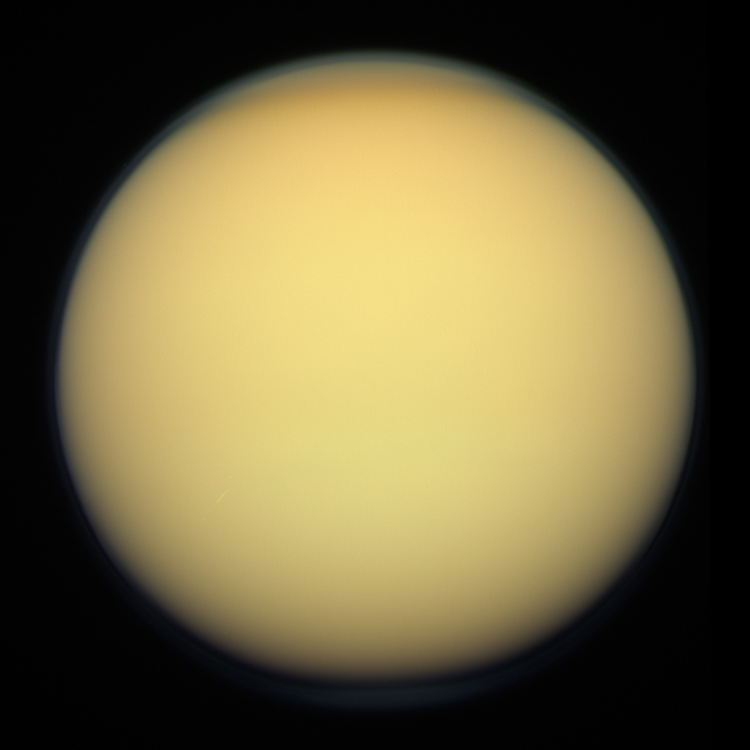
Titan, Saturn’s largest moon, hosts a climate system powered not by liquid water but by liquid hydrocarbons—primarily methane and ethane. At surface temperatures near 94 K (−179 °C), methane can exist as a liquid, a gas, and in clouds. The result is a methane cycle that mirrors Earth’s hydrological cycle: evaporation, transport, condensation, cloud formation, rainfall, surface runoff, and accumulation in lakes and seas. Understanding this cycle is central to modern planetary science because it offers a second natural experiment in planetary climatology and surface–atmosphere interactions.
Why it matters scientifically:
- Comparative climate science: Titan demonstrates how planetary climate can be structured without liquid water, highlighting the role of radiative balance, aerosols, and seasonal forcing in an exotic regime.
- Surface evolution: Rain, rivers, and waves sculpt Titan’s landscape, forming valleys, shorelines, and dunes. This helps us decode how sedimentary processes work in low-gravity, cryogenic environments.
- Organic chemistry: Titan’s atmosphere manufactures complex organic molecules (tholins) that settle onto the surface, interact with liquids, and possibly exchange with a subsurface ocean. These processes are discussed in Habitability and Prebiotic Chemistry.
- Habitability: Titan’s cold surface is inhospitable to liquid water chemistry, but the moon likely hides a global subsurface ocean. The interface between organics and liquid water could be a crucible for prebiotic reactions, as explored in Evidence for a Subsurface Ocean and Interior Structure.
In short, Titan’s methane cycle extends our expectations for what a “climate” can be. It reshapes our understanding of planetary habitability by demonstrating that complex, weather-driven landscapes are not unique to Earth.
Titan’s Atmosphere: Composition, Structure, and Chemistry
Titan’s atmosphere is unique among moons: dense, hazy, and dominated by nitrogen. This dense envelope varies with altitude and season, and it is the factory that keeps the methane cycle going.

Core facts about the atmosphere:
- Surface pressure: ~1.45 bar—about 50% greater than Earth’s sea-level pressure.
- Bulk composition: Mostly nitrogen (N2) with methane (CH4) as the major minor constituent.
- Methane abundance: Varies with altitude and season, roughly a few percent near the surface and around ~1–2% in the stratosphere; trace hydrogen and a zoo of hydrocarbons and nitriles (e.g., ethane, acetylene, propane, HCN) are produced photochemically.
- Temperature structure: A cold tropopause overlain by a warmer stratosphere, with complex seasonal inversions driven by Titan’s 29.5-year Saturnian year and axial tilt.
- Haze layers: An orange-brown haze of complex organic particles (often called tholins) pervades the atmosphere and strongly influences radiation and climate.
High in the atmosphere, ultraviolet sunlight and energetic particles break apart methane and nitrogen, initiating photochemistry that builds progressively larger molecules. The byproducts aggregate into aerosols and fall out—gradually “snowing” organic particles onto the surface. This supply of organics is essential for Titan’s geomorphology and potential prebiotic chemistry, as described in Habitability and Prebiotic Chemistry.
Key processes shaping the atmosphere:
- Photolysis: Solar UV splits CH4 and N2, enabling the formation of radicals that recombine into ethane (C2H6), acetylene (C2H2), hydrogen cyanide (HCN), and heavier organics.
- Aerosol microphysics: Small particles form in the upper atmosphere and grow by coagulation and condensation, eventually settling downward.
- Radiative forcing: Methane bands and haze particles strongly modulate Titan’s energy budget, cooling the surface and affecting temperature gradients that drive winds.
- Seasonality: Because Titan orbits the Sun with Saturn, its seasons last over 7 Earth years each. The circulation flips between hemispheres around equinoxes, reorganizing cloud patterns and trace-gas distributions. See Weather, Climate, and Seasonal Dynamics.
Titan’s atmosphere is both a screen and a canvas: it conceals the surface from visible light yet records, in its chemistry and aerosols, a running history of solar and magnetospheric input.
Lakes, Seas, and Dunes: Surface Features Across Titan
Despite the perpetual haze, radar and near-infrared instruments have mapped Titan’s surface in detail. The world that emerges is Earth-like in shape but alien in substance—river channels, lake basins, dunes, and dissected terrains, all formed from water ice bedrock and organic sediment.
Polar seas and lakes
The most spectacular features are Titan’s northern seas—Kraken Mare (the largest), Ligeia Mare, and Punga Mare—connected to extensive lacustrine networks. These liquid bodies are mostly hydrocarbons, with methane and ethane the principal components. Smaller lakes and “hydrocarbon tarns” dot high northern latitudes. The southern hemisphere hosts fewer lakes at present, consistent with Titan’s long seasonal cycle and orbital configuration.

- Kraken Mare: Titan’s largest sea; complex coastline, multiple basins, and inlets likely carved by long-term fluvial processes.
- Ligeia Mare: Radar soundings and shoreline monitoring suggest significant depth (hundreds of meters in places) and variable composition.
- Punga Mare: A high-latitude sea with indications of seasonal changes and intriguing shoreline features.
Observational highlights include transient “magic island” features—radar-bright patches that appear and disappear. Hypotheses for these features include floating or suspended solids, wave activity, bubbles (e.g., nitrogen exsolution), or instrument geometry effects. Regardless of mechanism, their presence underscores that Titan’s seas are dynamic.
Fluvial networks and deltas
River channels carved into the landscape radiate toward seas and lakes. These channels, imaged by radar and near-infrared instruments, have dendritic patterns and meanders reminiscent of terrestrial drainage systems. They likely carry liquid methane and ethane during rain events and rainy seasons. At some sea margins, the geomorphology resembles drowned river valleys and deltaic deposits, implying long-lived shoreline processes. The climatic context for these cycles is covered in Weather, Climate, and Seasonal Dynamics.
Equatorial dune fields
Stretching across Titan’s equatorial regions are vast fields of longitudinal dunes—hundreds of kilometers long, hundreds of meters wide—composed of organic sand-sized particles. These dunes align with prevailing near-surface winds and record both current and paleoclimate. Their grain source likely includes photochemical aerosols and reworked organics that have undergone sintering or other aggregation processes at the surface. The dunes interleave with brighter “islands” of water ice, suggesting bedrock highs poking through sedimentary mantles.
Candidate cryovolcanic terrains
Features like Sotra Patera and surrounding lobate flows have been interpreted as candidate cryovolcanic constructs—eruption-like morphologies with possible source vents and flow fronts. The evidence is still debated: some signatures can resemble erosion or mass wasting. If cryovolcanism is active, it could provide a route for interior–surface exchange, discussed in Evidence for a Subsurface Ocean and Interior Structure.
Impact craters and erosional maturity
Titan’s surface has relatively few obvious impact craters compared to other outer Solar System moons. This scarcity implies a geologically young or at least actively resurfaced surface, owing to sediment transport, atmospheric deposition of organics, and possible tectonism or cryovolcanism. Where craters exist, they often appear subdued, infilled, or dissected.
Weather, Climate, and Seasonal Dynamics on Titan
The most Earth-like aspect of Titan is its weather. Clouds form, move, rain falls, and winds shape dunes and waves. Yet the forcing and the fluids differ radically from Earth’s.
Clouds and storms
Clouds on Titan cluster in specific bands and seasons. Near equinoxes and during summer in each hemisphere, convective methane clouds can form, producing downpours that darken the surface before evaporation and infiltration. Observations have captured large cloud outbreaks and subsequent albedo changes consistent with rainfall. Rain rates and drop sizes are consistent with methane’s physical properties; droplets are expected to be larger and fall more slowly than raindrops on Earth due to low gravity and methane’s lower density.
Winds and waves
Near-surface winds, inferred from dune orientations and in-situ measurements, are typically gentle but can strengthen during storm events. Over the seas, waves are usually small due to high viscosity and surface tension of cold hydrocarbons. Nonetheless, wave activity has been detected or inferred at times, demonstrating that Titan’s seas are capable of dynamic surface processes. The appearance of transient radar-bright features in seas (see Lakes, Seas, and Dunes) may in part reflect wave fields or bubble plumes.
Seasonal cycles and pole-to-pole transport

Titan’s seasons last years, and the global circulation migrates accordingly. During each season, cross-equatorial cells and a stratospheric polar vortex organize aerosol and trace-gas distributions. This shifting engine transports methane-laden air to favored cloud latitudes, modulates lake levels, and redistributes haze. These processes are key to understanding why Titan’s northern hemisphere currently hosts larger seas while the south appears relatively empty—an outcome of orbital and seasonal asymmetries during the Cassini era.
Energy balance and radiative effects
Methane bands and haze aerosols dominate the radiative budget, limiting solar flux at the surface and promoting a strongly cooled lower atmosphere. Radiative timescales are long—seasonal adjustments are sluggish, which partly explains why climatic transitions near equinox extend over years.
Evidence for a Subsurface Ocean and Interior Structure
While Titan’s surface is sculpted by methane weather, its interior likely hosts a very different liquid: water. Multiple lines of evidence indicate a global subsurface ocean beneath an ice shell.
Key indicators:
- Tidal response: Measurements of Titan’s tidal Love number (k2) imply that the outer shell is decoupled from the deep interior—consistent with a layer of low-viscosity material (a liquid water ocean, possibly with ammonia) between the ice crust and the rocky core.
- Gravity and rotation: Gravity-field data and observations of Titan’s rotation suggest internal differentiation and a relatively flexible shell.
- Induced magnetism: Though Titan lacks a core dynamo field, signatures consistent with an electrically conductive subsurface layer (such as a salty ocean) have been reported in analogous icy worlds and are plausible for Titan given its overall context.
The ocean’s properties remain uncertain: thickness, salinity, ammonia content, and temperature profile are all active areas of research. Nevertheless, the presence of a liquid water ocean carries profound implications for chemical cycling and potential habitability. If exchange occurs via fractures, diapirs, or cryovolcanic conduits, materials from the surface (e.g., organics produced in the atmosphere) could reach the ocean and vice versa, creating a feedback between the methane cycle above and aqueous chemistry below.
Habitability and Prebiotic Chemistry on Titan
Titan’s surface is far too cold for liquid water to be stable, so traditional “habitable zone” criteria do not apply at the surface. Yet Titan is one of the most chemically rich environments in the Solar System, making it a prime target for studies of prebiotic chemistry and the origins of life.
Surface and near-surface chemistry: hydrocarbons as solvents
In Titan’s lakes and seas, the solvent is primarily methane and ethane. These liquids can dissolve certain organic molecules, though their chemistry is fundamentally different from water-based biochemistry. Speculative pathways for hydrocarbon-solvent life have been proposed in the scientific literature, but no evidence for life on Titan exists. Importantly, Titan gives us a planetary-scale laboratory to study what kinds of complex organics accumulate and how they organize in non-aqueous environments.
Photochemical aerosols (tholins) settle onto Titan’s surface in a global drizzle. When these organics interact with liquid hydrocarbons—especially around lake margins—they may sort, deposit, and potentially form structured materials. Evaporite-like deposits around shrinking lakes hint at cycles of precipitation and evaporation that concentrate solutes, generating environments where complex organics can accumulate.
Subsurface ocean: aqueous chemistry and energy sources
The suspected subsurface ocean opens a different wing of the habitability discussion. In an ocean of water (possibly with ammonia and salts), classic prebiotic chemistry becomes more plausible. If the ocean interacts with a rocky core, geochemical energy sources—such as serpentinization reactions—could provide redox gradients. Whether and how materials exchange between the ocean and surface remains one of Titan’s most compelling open questions, with potential pathways discussed in Evidence for a Subsurface Ocean and Interior Structure.
Radiation and catalysis
Titan’s thick atmosphere shields the surface from harsh solar ultraviolet radiation, but cosmic rays and secondary particles can still drive chemistry, especially in the upper atmosphere. In addition, mineral surfaces (water ice grains, potential clathrates) and trace metals or salts transported from the interior could catalyze reactions. Laboratory experiments on Earth, designed to emulate Titan-like conditions, have shown that complex organics readily form from simple gases under energy input—reaffirming Titan’s status as a chemical crucible.
Why Titan matters for origins-of-life research
- Parallel pathways: Titan allows us to study how complexity emerges both in hydrocarbon solvents and in water-based environments (if ocean–surface coupling exists), providing comparative insight for prebiotic chemistry.
- Time capsule: With limited biological interference (as far as we know), Titan preserves chemical intermediates that on early Earth may have been rapidly consumed by nascent life.
- Testable predictions: Upcoming mission concepts aim to measure molecular distributions, isotopic ratios, and environmental context to test hypotheses about chemical evolution and possible energy sources.
From Voyager to Cassini–Huygens: What We’ve Learned
Titan moved from enigmatic smudge to richly detailed world thanks to a sequence of missions and observations that each peeled back a layer of mystery.
Voyager era: the hazy discovery
The Voyager flybys in the early 1980s confirmed a thick, opaque atmosphere around Titan, frustrating visible-light imaging but igniting questions about its composition and origin. Spectroscopy hinted at methane and more complex molecules, setting the stage for deeper investigation.
Cassini orbiter and Huygens lander: the definitive leap
The joint NASA/ESA Cassini–Huygens mission transformed Titan studies. Cassini orbited Saturn from 2004 to 2017, conducting numerous Titan flybys. Its radar imager (SAR), near-infrared spectrometer, and other instruments mapped the surface, seas, and atmosphere. The Huygens probe performed the first and, to date, only landing on Titan in 2005, descending by parachute through the haze and sending back direct measurements and panoramic images of a fluvial landscape with rounded pebbles of water ice and organic-laden ground.

Cassini’s contributions include:
- Global mapping of lakes and seas: Discovery and characterization of Kraken Mare, Ligeia Mare, and Punga Mare, plus many smaller lakes.
- River channels and rain: Identification of dendritic drainage systems; evidence for rainfall and subsequent darkening of the surface.
- Seasonal change: Monitoring of cloud fields, haze distributions, and lake/shoreline evolution across equinox and solstice transitions.
- Interior clues: Gravity and rotational dynamics consistent with a subsurface ocean.
- Organic inventory: Detection of numerous hydrocarbons and nitriles, both gaseous and condensed.
Huygens revealed a world that looks familiar: drainage channels, floodplains, and a firm surface underfoot—yet sculpted by methane and ethane instead of water.
These results underpin the discussions of surface geomorphology, weather and seasonality, and habitability elsewhere in this article.
Future Missions: Dragonfly and the Next Decade of Titan Science
The next major step in Titan exploration is NASA’s Dragonfly mission, a rotorcraft lander designed to fly between scientifically interesting sites on Titan. Unlike a fixed lander, Dragonfly can sample different terrains—dunes, interdunes, and impact ejecta—making it a mobile laboratory for surface chemistry and meteorology.
Key mission concepts and goals:
- Mobility: A multi-rotor craft capable of aerial hops across tens of kilometers, leveraging Titan’s dense air and low gravity.
- Science focus: Analyze organic chemistry, search for prebiotic building blocks, characterize surface materials, investigate meteorology, and assess geologic context near and within an impact feature (planned target region includes dune fields such as Shangri-La and an impact structure such as Selk).
- Environmental context: In-situ measurements of atmospheric conditions, wind, and possibly seismic activity, giving insight into Titan’s weather and interior.
Dragonfly has been planned for a late-2020s launch window with arrival in the mid-2030s, according to publicly available NASA documentation prior to 2024. For the latest schedule and instrument details, consult official mission updates. Regardless of exact timing, Dragonfly’s architecture is tailored to test hypotheses outlined in Habitability and Prebiotic Chemistry and to provide ground truth for global patterns seen from orbit and Earth-based telescopes.
Beyond Dragonfly, mission studies have discussed concepts like long-lived lake landers or floating probes and orbiters that could probe Titan’s seas, monitor weather, and refine measurements of the interior structure. These studies, while not committed missions, map a pathway to link the methane cycle at the surface with ocean dynamics at depth.
How to Observe Titan from Earth and with Backyard Gear
Titan is accessible to amateur astronomers as a starlike companion to Saturn, and with modest equipment you can track its motion and brightness changes. Observing Titan can enrich your understanding of the discussions in Weather, Climate, and Seasonal Dynamics and Surface Features, even if you cannot see details directly.

Naked-eye and binocular views
- Naked eye: Titan is not visible without optical aid; Saturn is, but Titan requires magnification.
- Binoculars (10×50 or larger): You may glimpse Titan as a faint point near Saturn under dark skies, but steady mounting helps. Better results come from a small telescope.
Small telescopes (60–130 mm)
With a small refractor or reflector, Titan appears as a magnitude ~8–9 point of light offset from Saturn. Tracking Titan over several nights reveals its orbital motion. While you will not resolve the disk (Titan’s apparent diameter is typically under 1 arcsecond), the detection is straightforward.
Medium to large amateur telescopes (150–300+ mm)
Under excellent seeing, you might detect Titan’s disk-like appearance at high magnification, though details remain beyond visual reach. Photometric and spectroscopic techniques, however, allow amateurs with advanced setups to contribute data:
- Photometry: Measure Titan’s brightness relative to comparison stars; long-term monitoring can probe geometry-driven changes.
- Near-IR imaging: With appropriate filters and sensitive cameras, it is possible to differentiate Titan from stars and sometimes hint at limb darkening or haze scattering effects as a subtle signature.
Observation log template
Keep a log to connect backyard observations with professional findings. A simple template:
# Titan Observation Log (Example)
Date (UTC): 2026-01-10
Instrument: 200 mm Newtonian + 2x Barlow
Location: 45.0 N, 93.0 W (Bortle 5)
Seeing/Transparency: 3/5, 4/5
Saturn Altitude: 38 deg
Filters: IR-pass 685 nm; methane band 889 nm (if available)
Notes:
- Titan observed ~3' east of Saturn, magnitude ~8.5 (est.)
- Verified motion over 1.5 hours relative to background stars
- Attempted photometry with 60-second exposures; SNR adequate
These observations, while basic, foster intuition about Titan’s orbital geometry and encourage deeper reading of the science in What Is Titan’s Methane Cycle and Titan’s Atmosphere.
Frequently Asked Questions
Is there liquid water on Titan’s surface?
No. Titan’s surface is far too cold for liquid water, which would be rock-hard ice under Titan conditions. However, multiple lines of evidence indicate a subsurface ocean of liquid water, potentially mixed with ammonia and salts. The liquids at the surface today are predominantly methane and ethane, which form lakes, seas, and rivers as detailed in Lakes, Seas, and Dunes.
Could life exist on Titan?
There is no evidence for life on Titan. Nonetheless, Titan is compelling for prebiotic chemistry. In hydrocarbon lakes, unusual non-aqueous chemistry may occur; in the subsurface ocean, water-based chemistry becomes more plausible. If materials exchange between surface and ocean, Titan could host environments that test how complex organic molecules form and evolve. This topic is explored in Habitability and Prebiotic Chemistry.
Final Thoughts on Choosing the Right Titan Exploration Strategy
Titan’s allure lies in its dual identity: a methane-rain world above and, likely, a water ocean world below. The scientific payoffs range from climate physics and geomorphology to organic chemistry and potential habitability. As the community prioritizes new missions, “choosing the right Titan exploration strategy” means balancing complementary approaches:
- Local mobility with in-situ sampling: Aircraft-like platforms such as Dragonfly can traverse multiple terrains, sampling a diversity of organics and surface textures.
- Global context from orbit: A dedicated orbiter could refine climate models, monitor seasonal change, and provide high-resolution topography and gravimetry for interior studies.
- Liquid interface studies: Future lake or sea probes could directly assay solvent composition, stratification, and wave/bubble dynamics—critical to understanding the methane cycle’s reservoirs.
- Interior exploration: Geophysical packages or radar sounders could constrain ice shell thickness, ocean properties, and pathways of surface–ocean exchange.
Right now, the most impactful step is to tie high-fidelity surface chemistry to global atmospheric and climatic context. In practice, that suggests pursuing a combined portfolio: a mobile in-situ explorer to ground-truth surface processes, and remote sensing to watch Titan’s weather engine turn. For readers, the next best step is to continue exploring planetary science. If you found this deep-dive useful, consider subscribing to our newsletter for future articles on planetary moons, outer Solar System climate, and mission updates.