Neutron stars are the ultra-dense remnants of massive stars that exploded as supernovae. After a massive star exhausts its nuclear fuel, its core collapses under gravity until protons and electrons are squeezed together to form neutrons. The result is a compact object typically around 1.1–2.3 times the mass of the Sun packed into a sphere only about 20–28 kilometers across (a radius of roughly 10–14 km). That means a neutron star compresses more mass than our Sun into a city-sized volume, achieving densities comparable to atomic nuclei.
n
n nThis is a mosaic image, one of the largest ever taken by NASA’s Hubble Space Telescope, of the Crab Nebula, a six-light-year-wide expanding remnant of a star’s supernova explosion. Japanese and Chinese astronomers recorded this violent event in 1054 CE. The orange filaments are the tattered remains of the star and consist mostly of hydrogen. The rapidly spinning neutron star embedded in the center of the nebula is the dynamo powering the nebula’s eerie interior bluish glow. The blue light comes from electrons whirling at nearly the speed of light around magnetic field lines from the neutron star. The neutron star, like a lighthouse, ejects twin beams of radiation that appear to pulse 30 times a second due to the neutron star’s rotation. A neutron star is the crushed ultra-dense core of the exploded star. The Crab Nebula derived its name from its appearance in a drawing made by Irish astronomer Lord Rosse in 1844, using a 36-inch telescope. When viewed by Hubble, as well as by large ground-based telescopes such as the European Southern Observatory’s Very Large Telescope, the Crab Nebula takes on a more detailed appearance that yields clues into the spectacular demise of a star, 6,500 light-years away. The newly composed image was assembled from 24 individual Wide Field and Planetary Camera 2 exposures taken in October 1999, January 2000, and December 2000. The colors in the image indicate the different elements that were expelled during the explosion. Blue in the filaments in the outer part of the nebula represents neutral oxygen, green is singly-ionized sulfur, and red indicates doubly-ionized oxygen. Attribution: NASA, ESA, J. Hester and A. Loll (Arizona State University)n
n
n
Many neutron stars emit beams of electromagnetic radiation from their magnetic poles. If these sweeping beams cross our line of sight as the star rotates, we detect precisely timed flashes—this phenomenon defines a pulsar. In the classic “lighthouse” picture, a misalignment between the neutron star’s rotation axis and its magnetic axis creates the sweeping beam effect. Pulsars rotate from fractions of a second per turn to thousands of turns per second (millisecond pulsars), maintaining timing regularity rivaling atomic clocks when averaged over long periods. This extraordinary regularity makes pulsars outstanding tools for testing fundamental physics and probing the interstellar medium.
n
Pulsars are not solely radio objects. While many were discovered in radio wavelengths, others shine in X-rays or gamma rays, and some are detectable across multiple bands. In fact, examining pulsars at different wavelengths delivers a more complete picture of how their magnetospheres accelerate particles and convert rotational energy into radiation—connections we revisit in Multiwavelength Observations and Magnetic Fields and Magnetospheres.
n
Why are neutron stars and pulsars so central to modern astrophysics?
Their interiors likely contain exotic states of matter beyond ordinary nuclei, constraining the equation of state of ultra-dense matter.
n
As precise clocks in space, pulsars enable stringent tests of general relativity and the detection of gravitational waves across frequency bands.
n
Binary neutron star mergers are sources of gravitational waves and heavy-element nucleosynthesis, as shown by the landmark event GW170817.
n
nn
Core-Collapse Origins and Supernova Pathways
n
Neutron stars originate from the cores of massive stars that end their lives as supernovae. During their lifetimes, stars fuse progressively heavier elements in their cores, building up a layered structure like an onion: hydrogen, helium, carbon, oxygen, neon, magnesium, and silicon. Eventually, the core accumulates iron-group elements that cannot release energy through fusion. Without a power source to counteract gravity, the core undergoes catastrophic collapse.
n
As the core compresses, densities soar to nuclear scales. Electrons and protons merge to form neutrons and neutrinos in a process called electron capture and inverse beta decay. Neutrinos stream out prodigiously, eventually playing a pivotal role in driving the supernova explosion once the collapse bounces at nuclear densities and a shock wave forms. The details of how the shock revives—neutrino heating, convection, and instabilities—are active areas of research involving sophisticated multidimensional simulations.
n
Whether the collapsed core becomes a neutron star or a black hole depends on the progenitor mass, rotation, composition, and the details of the fallback accretion onto the remnant. Roughly speaking:
n
n
Core-collapse of stars with initial masses of about 8–20–25 solar masses often yields neutron stars.
n
More massive progenitors or those with substantial fallback accretion may form black holes.
n
Rapid rotation and strong magnetic fields in the collapsing core can shape the explosion geometry and, in rare cases, produce magnetars (discussed in Magnetars and Magnetospheres).
n
n
The remnant neutron star emerges extraordinarily hot and rapidly spinning, with a powerful magnetic field. Over time it cools by neutrino emission and, later, photon emission, while rotational energy powers pulsed radiation and winds. The rotational clock gradually slows because the star loses energy via electromagnetic radiation and particle outflows—behavior we quantify in Pulsar Timing and Spin-Down.
n
n
Key insight: The same collapse that creates the neutron star also compresses and amplifies magnetic fields, seeds the rotation rate, and releases a flood of neutrinos that shape the explosion.
n
nn
Inside a Neutron Star: Layers, Matter, and State
n
The internal structure of a neutron star is layered, reflecting the balance between density, composition, and pressure support. There is no single direct probe of these layers, so our understanding arises from theory constrained by equation-of-state measurements and observations across the electromagnetic spectrum and gravitational waves.
n
Crust: Ions, Electrons, and Nuclear Pasta
n
The outermost layers form the crust, where densities range from that of ordinary matter up to about nuclear saturation. In the outer crust, heavy nuclei form a lattice embedded in a sea of degenerate electrons. Moving inward, neutrons drip out of nuclei into a neutron-rich fluid, and at even higher densities, complex “nuclear pasta” phases—lasagna- and spaghetti-like arrangements of nucleons—may appear as matter organizes to minimize energy.
n
The elastic crust participates in phenomena like pulsar glitches—sudden increases in rotation rate—where the coupling between the superfluid interior and the lattice-like crust can lead to abrupt angular momentum exchange. The crust’s properties influence the thermal emission of young cooling neutron stars and the quasi-periodic oscillations observed in magnetar flares (see Magnetars).
n
Outer Core: Superfluids and Superconductors
n
Below the crust lies the outer core, where neutrons dominate but protons and electrons (and muons) are present. In many models, neutrons form a superfluid and protons a superconductor. These quantum states allow for vortex lines and magnetic flux tubes that affect rotational dynamics and magnetic field evolution. The coupling between superfluid vortices and the crust is one proposed trigger for rotational glitches.
n
Inner Core: Exotic Possibilities
n
The nature of the inner core—where densities exceed those in atomic nuclei—remains one of the most compelling open questions in astrophysics. Candidates include hyperons (particles containing strange quarks), meson condensates, or deconfined quark matter. Distinguishing among these possibilities requires connecting microphysical models to macroscopic observables: maximum mass, radii, tidal deformability in mergers, and cooling behavior. The combination of precise mass measurements, NICER-driven radius estimates, and gravitational-wave constraints is tightening the allowed space for the dense-matter equation of state, but the ultimate composition of the inner core is still under investigation.
n
What we can say confidently is that the pressure support in neutron stars is provided by nuclear forces and degeneracy pressures, not by thermal pressure. This is why they remain stable long after cooling. Eventually, adding mass beyond a critical threshold collapses the star into a black hole, setting an empirical limit on possible equations of state.
nn
Magnetic Fields, Magnetars, and Pulsar Magnetospheres
n
Neutron stars possess intense magnetic fields. Typical radio pulsars have surface magnetic fields around 10^8 to 10^12 gauss, while magnetars—an extreme subclass—reach about 10^14 to 10^15 gauss. For context, Earth’s field is roughly 0.5 gauss, and laboratory fields rarely exceed tens of thousands of gauss for any sustained period.
n
The Lighthouse Model and Particle Acceleration
n
The lighthouse effect arises because the magnetic axis is not perfectly aligned with the spin axis. Electric fields induced by the rapid rotation and strong magnetization accelerate particles along magnetic field lines. These particles emit radiation via curvature radiation, synchrotron radiation, and inverse Compton scattering. Pair cascades can populate magnetospheres with electrons and positrons, shaping the observed pulse profiles and spectra. The details depend on magnetospheric geometry and plasma supply, motivating global magnetohydrodynamic and particle-in-cell simulations.
n
n nThe Vela Pulsar, a neutron star corpse left from a titanic stellar supernova explosion, shoots through space powered by a jet emitted from one of the neutron star’s rotational poles. Now a counter jet in front of the neutron star has been imaged by the Chandra X-ray observatory. The Chandra image above shows the Vela Pulsar as a bright white spot in the middle of the picture, surrounded by hot gas shown in yellow and orange. The counter jet can be seen wiggling from the hot gas in the upper right. Chandra has been studying this jet so long that it’s been able to create a movie of the jet’s motion. The jet moves through space like a firehose, wiggling to the left and right and up and down, but staying collimated: the “hose” around the stream is, in this case, composed of a tightly bound magnetic field. Attribution: NASA/CXC/PSU/G.Pavlov et al.n
n
n
n
Magnetars: Flares and X-ray Emission
n
Magnetars are powered primarily by magnetic energy rather than rotational energy. Their fields can twist and tangle, occasionally rearranging catastrophically. These reconfigurations manifest as powerful X-ray and soft gamma-ray flares, including rare “giant flares” releasing enormous energy in seconds. Magnetar activity is linked to crustal stresses and magnetic field evolution, offering a window into the coupling between the crust and magnetosphere. Observationally, magnetars are bright in X-rays, often variable, and can show bursts, persistent emission, and timing irregularities.
n
Interestingly, some fast radio bursts (FRBs) have been associated with magnetar-like activity in our galaxy, although the exact relationship between FRBs and magnetars is an active area of research rather than a settled conclusion. The presence of extremely strong magnetic fields, however, makes magnetars natural laboratories for studying radiation processes in the quantum electrodynamics regime.
n
The physics summarized here feeds directly into timing behavior and emission in Pulsar Timing and observational signatures across the spectrum in Multiwavelength Observations.
nn
Pulsar Timing, Spin-Down, and Relativity Tests
n
Pulsar timing is the art and science of measuring the arrival times of pulses and modeling the rotation, position, and, when applicable, orbital motion of a pulsar to extraordinary precision. By folding many pulses together, astronomers construct high signal-to-noise templates that can be cross-correlated with observations to yield arrival times with microsecond or better precision for bright millisecond pulsars.
n
Spin-Down and the Braking Index
n
Isolated pulsars gradually lose rotational energy. The simplest model assumes that the spin-down is dominated by a magnetic dipole radiating in a vacuum, leading to a relationship between spin frequency and its derivative characterized by a “braking index.” Real pulsars often deviate from this simple model due to magnetospheric currents, evolving magnetic fields, and particle winds. Accurate spin-down modeling informs magnetic field strength estimates and age approximations (characteristic ages).
n
Orbital Dynamics and Relativistic Effects
n
In binary systems, pulsar timing provides exquisite tests of general relativity (GR). The timing solution includes parameters for Keplerian motion and relativistic corrections such as periastron advance, gravitational redshift/time dilation, Shapiro delay (light travel time through the companion’s gravitational potential), and orbital decay from gravitational wave emission. Landmark systems like the Hulse–Taylor binary pulsar and the “double pulsar” have validated GR predictions in strong-field regimes and measured the rate of orbital energy loss consistent with gravitational waves.
n
Pulsar Timing Arrays and Low-Frequency Gravitational Waves
n
At the opposite end of the gravitational-wave spectrum from merging neutron stars, networks of millisecond pulsars across the sky form pulsar timing arrays (PTAs). By monitoring correlated timing deviations among many stable pulsars, PTAs probe nanohertz-frequency gravitational waves, expected primarily from supermassive black hole binaries in galaxies. In recent years, collaborations have reported evidence for a common-spectrum stochastic signal with characteristics consistent with a gravitational-wave background. The method leverages the timing precision described above and complements the merger detections discussed in Binary Mergers.
n
In practice, timing requires careful modeling of dispersion from the interstellar medium, clock standards, observatory locations, and pulse profile evolution. After these calibrations, residuals (the differences between observed and predicted arrival times) encode physics: orbital dynamics, gravitational waves, and magnetospheric phenomena.
nn
Binary Neutron Star Mergers and Gravitational Waves
n
When two neutron stars in a binary system lose energy to gravitational radiation, their orbit shrinks and eventually leads to a merger. These cataclysmic events are prime sources of high-frequency gravitational waves. The first observed binary neutron star merger, GW170817, opened a new era of multi-messenger astrophysics: gravitational waves detected by a global network of interferometers, a short gamma-ray burst observed seconds later, and a rapidly evolving optical/infrared transient (a kilonova) powered by the radioactive decay of freshly synthesized heavy elements.
n
n nThis composite shows images of the galaxy NGC 4993 and a kilonova explosion resulting from the merger of two neutron stars. Attribution: ESO/N.R. Tanvir, A.J. Levan and the VIN-ROUGE collaborationn
n
n
From gravitational waves, astronomers extracted the masses and tidal deformability of the merging neutron stars. Tidal deformability measures how easily a star’s shape is distorted by its companion’s gravity—a property controlled by the equation of state. The electromagnetic counterparts revealed that at least some of the universe’s heavy elements (such as gold and platinum) are synthesized in these mergers via rapid neutron capture (r-process) nucleosynthesis.
n
Key outcomes of binary mergers include:
n
n
Remnant formation: The merger may produce a hypermassive neutron star that survives briefly before collapsing to a black hole, or it may form a black hole promptly. The fate depends on the total mass and the stiffness of the equation of state.
n
Outflows and kilonova: Neutron-rich matter ejected during the merger emits thermal radiation as heavy elements form and decay, creating a kilonova with characteristic color and luminosity evolution.
n
Jet formation: A relativistic jet can power a short gamma-ray burst, whose afterglow—in radio to X-ray bands—probes the environment and energy budget.
n
n
Post-merger signals also include gravitational-wave emission at higher frequencies from the remnant’s oscillations, though these are challenging to detect with current instruments. Future detectors aim to better capture this regime, sharpening constraints on the dense-matter properties discussed in Equation of State.
nn
Multiwavelength Observations: Radio to Gamma Rays
n
A complete picture of neutron stars and pulsars requires observations across the electromagnetic spectrum. Each band probes different physical processes and regions in and around the star:
n
n nLooking through the Chandra Open FITS image album, I picked out the Vela pulsar because it was interesting but it also confused me. I’ve been wanting to combine datasets from other observatories with Hubble’s but until now have had difficulty finding the FITS files. Turns out it’s actually not that hard, especially with resources like Open FITS. North is up. Attribution: geckzillan
n
n
n
Radio: Pulse trains from coherent emission mechanisms in the magnetosphere. Radio surveys discover large populations of pulsars and provide the backbone for timing studies.
n
Optical/Infrared: Kilonovae following mergers, thermal emission from young neutron stars in some cases, and counterparts of pulsars in rare circumstances (often faint).
n
X-rays: Thermal emission from hot surfaces of young neutron stars, non-thermal magnetospheric emission, and magnetar bursts. Instruments on the International Space Station and other observatories have measured pulse profiles and spectra that inform radii constraints (see Equation of State).
n
Gamma rays: High-energy emission from curvature radiation and particle cascades in the outer magnetosphere. Space-based gamma-ray telescopes have detected many pulsars directly in this band.
n
n
Polarization (the orientation of the electric field) offers another diagnostic of magnetic field geometry and emission regions. Radio polarization angle swings across the pulse can map field lines, while X-ray polarization—now measured by dedicated missions—adds constraints on magnetar and pulsar emission models. Joint analysis helps distinguish between competing geometries and acceleration sites.
n
Multiwavelength campaigns also enable time-domain astrophysics. For example, coordinated radio and X-ray observations of magnetars during outbursts reveal how magnetospheric and crustal processes interact. Similarly, cross-checking the spin evolution of pulsars in radio and X-rays can highlight torque changes and intermittent emission states.
nn
Constraining the Equation of State with Observations
n
The equation of state (EoS) of dense matter links pressure to density and temperature. In neutron stars, the EoS determines the mass–radius relation, the maximum mass a star can support, and the tidal deformability measured in binary mergers. Because we cannot replicate neutron star conditions in terrestrial laboratories, astrophysical inference is essential.
n
Mass and Radius Measurements
n
Precision mass measurements arise from pulsar timing when general-relativistic effects like Shapiro delay are visible. For example, some millisecond pulsars in edge-on binaries show time delays as pulses pass through the companion’s gravitational potential, enabling accurate mass estimates of both stars. The discovery of neutron stars with masses around two solar masses provides a crucial lower bound on the maximum mass, ruling out very soft EoS that cannot support such heavy stars.
n
Radius constraints come from modeling thermal X-ray pulse profiles of rotating neutron stars. Light bending in the strong gravitational field affects the observed pulse shape: photons emitted from the far side can still reach us. By fitting models that include realistic atmospheres, spacetime curvature, and hotspot geometry, observers infer radii at given masses. Results to date suggest canonical radii in the rough range of about 12–14 km for stars near 1.4 solar masses, though the exact values and uncertainties depend on the source and modeling assumptions.
n
Tidal Deformability and Gravitational Waves
n
In a binary merger, each neutron star deforms under the gravitational field of its partner. This deformation leaves an imprint on the gravitational waveform, especially in the late stages of inspiral. By comparing observed waveforms with theoretical templates, researchers extract tidal deformability parameters that favor neither extremely stiff nor extremely soft EoS. Combined with mass and radius data, these gravitational-wave constraints have significantly narrowed the viable EoS landscape.
n
Cooling and Neutrino Emission
n
Young neutron stars cool predominantly by neutrino emission from the core. The cooling rate depends on whether fast processes (like direct Urca) are allowed by the composition and EoS. Surface temperature measurements of young neutron stars, and potential temperature declines observed over time, provide complementary probes. While interpretation requires careful modeling of superfluidity, envelope composition, and magnetic fields, cooling observations offer a valuable cross-check on dense matter physics.
n
Tying these threads together—timing-based masses, X-ray radii, and gravitational-wave tidal signatures—builds a multi-messenger constraint set that we revisit in Final Thoughts as guidance for choosing resources for deeper study.
nn
Discovery History, Notable Pulsars, and Surveys
n
Pulsars were discovered in 1967 via regular radio pulses that did not match known terrestrial or celestial phenomena. The initially mysterious “LGM” source—tongue-in-cheek for “little green men”—soon multiplied as additional sources were found, revealing their astrophysical nature. The pulsar population has grown steadily through large-scale radio surveys with increasingly sensitive receivers and digital backends capable of fast sampling and sophisticated data processing.
n
Notable Pulsars and Systems
n
n
Crab Pulsar: Embedded in the Crab Nebula, the remnant of a supernova recorded in 1054 CE, it emits across the spectrum from radio to gamma rays and is a cornerstone of pulsar emission modeling.n n nA combination of optical and X-ray images of the Crab Nebula. The X-ray image reveals evidence of a spinning disc of super-hot gas with high-speed jets shooting out in opposite directions of it. Full image width represents 16 light-years or 3.70 parsec or 6.33 minutes of the celestial sphere. Optical image credits: NASA, ESA, J. Hester and A. Loll (Arizona State University). X-Ray Image credits: NASA/CXC/SAO/F.Seward et al. Attribution: Pablo Carlos Budassin
n
n
n
Vela Pulsar: A nearby young pulsar known for glitches, providing insights into crust–superfluid coupling.
n
Hulse–Taylor Binary Pulsar: The first binary pulsar discovered, its orbital decay matched general relativity’s prediction for gravitational wave emission.
n
Double Pulsar: A system in which both neutron stars are detectable as pulsars, enabling precision tests of relativistic gravity.
n
Millisecond Pulsars (MSPs): Rapid rotators thought to be “recycled” by accretion from a companion that spins the neutron star up to millisecond periods—core anchors for PTAs.
n
Pulsar Planets: The first confirmed exoplanets were found around a pulsar, demonstrating timing’s sensitivity; these systems are rare but highlight the method’s precision.
n
n
Survey Strategies and Challenges
n
Modern pulsar surveys balance sky coverage, observing frequency, and time resolution. Lower radio frequencies favor detecting steep-spectrum pulsars but suffer from dispersion and scattering by the ionized interstellar medium; higher frequencies reduce scattering but may miss faint, steep-spectrum sources. Survey pipelines perform real-time or offline de-dispersion to correct for frequency-dependent pulse delays and apply Fourier and single-pulse searches to uncover periodic signals and rare bursts.
n
RFI (radio-frequency interference) mitigation is critical. Machine learning techniques now assist in candidate classification, separating astrophysical signals from terrestrial contamination. New arrays and wideband receivers have expanded the discovery space, and targeted searches in globular clusters and supernova remnants continue to pay dividends.
nn
Amateur Observation: How to Explore Pulsars Indirectly
n
While optical telescopes cannot directly reveal pulsar pulses, amateurs and learners can still engage meaningfully with pulsars and neutron stars through data and indirect methods. Here are practical avenues, each connecting back to concepts in earlier sections such as timing, multiwavelength emission, and mergers:
n
n
Public Data Archives: Many observatories release pulsar data products—folded profiles, time-of-arrival measurements, and ephemerides. Working with these datasets, you can reproduce basic timing solutions or explore dispersion effects.
n
Pulsar Timing Array Data: PTA collaborations often provide access to timing residuals and noise models. You can examine how correlated residuals might indicate a gravitational-wave background, connecting directly to low-frequency gravitational waves.
n
Open-Source Tools: Pulsar analysis packages support de-dispersion, folding, and search algorithms. Reproducing a simple timing model deepens understanding of the spin-down and binary parameters.
n
Citizen Science and Remote Radio Telescopes: Community radio astronomy groups and educational networks sometimes provide access to small radio dishes that can detect bright pulsars under favorable conditions. While specialized, these efforts demonstrate the feasibility of pulsar detection with modest equipment and careful technique.
n
Multi-messenger Follow-up: When a gravitational-wave alert suggests a possible neutron star merger, public notice networks distribute coordinates and confidence regions. Following the optical/infrared transient evolution through professional alerts, and reading subsequent analyses, can be very educational.
n
n
Even without direct detection equipment, you can practice “data astronomy” by learning to:
n
n
Fetch pulsar ephemerides and pulse profiles.
n
Model dispersion delays versus frequency.
n
Fold time series using published periods and dispersion measures.
n
Inspect timing residuals to identify systematics.
n
n
As a conceptual exercise, here is pseudocode illustrating how pulse folding works on a de-dispersed time series to improve the signal-to-noise ratio of a periodic signal:
n
# Given: times[], signal[], known period P, number of phase bins Mn# Output: average pulse profile profile[0..M-1]nninitialize profile[0..M-1] = 0ninitialize counts[0..M-1] = 0nnfor i in range(len(times)):n phase = ((times[i] % P) / P) * M # map time to phase binn k = int(phase)n profile[k] += signal[i]n counts[k] += 1nnfor k in range(M):n if counts[k] > 0:n profile[k] /= counts[k]nnreturn profilen
n
This algorithm embodies the essence of timing: using a precise period (and its derivatives) to align many rotations, turning noisy single pulses into a clear average profile. Real analyses add barycentric corrections, de-dispersion, ephemeris updates, and noise modeling.
nn
Frequently Asked Questions
n
Are all neutron stars pulsars?
n
No. “Pulsar” refers to the observational phenomenon of pulsed emission seen from Earth. A neutron star may not beam toward us, may emit primarily outside bands where we observe, or may be too faint for current instruments. Some neutron stars are detectable through steady thermal X-ray emission without regular pulses, while others reveal themselves only during outbursts or through their influence on companions.
n
What sets millisecond pulsars apart from ordinary pulsars?
n
Millisecond pulsars (MSPs) rotate hundreds to over a thousand times per second and exhibit exceptional timing stability. The prevailing explanation is “recycling”: a neutron star in a binary accretes matter and angular momentum from a companion, spinning up over millions to billions of years. Once accretion ceases, the MSP shines as a rapidly rotating, stable clock, ideal for timing arrays that probe nanohertz gravitational waves as discussed in Pulsar Timing.
nn
Further Reading, Datasets, and Tools for Learners
n
To deepen your understanding and practice, consider the following directions that map directly onto the themes of this article:
n
n
Pulsar Timing Tutorials: Explore public datasets of pulse times of arrival and learn to fit timing models that include spin, astrometry, and binary parameters. These exercises illustrate the relativistic effects in binary pulsars.
n
Multiwavelength Catalogs: Compare radio, X-ray, and gamma-ray pulsar properties to understand emission regimes referenced in Multiwavelength Observations.
n
Gravitational-Wave Waveforms: Read about how inspiral waveforms encode tidal deformability and use this understanding to interpret constraints discussed in Equation of State.
n
Cooling Curves: Study neutron star cooling models and observational data points for young neutron stars to appreciate the role of neutrino emission and superfluidity introduced in Interior Physics.
n
Population Studies: Examine how selection effects shape pulsar catalogs, and how surveys in Discovery and Surveys use different frequencies and strategies to find new objects.
n
n
These resources will help you connect the conceptual framework of neutron stars and pulsars to real data and active research questions.
nn
Final Thoughts on Choosing the Right Neutron Star and Pulsar Resources
n
n nThe NASA/ESA/CSA James Webb Space Telescope has gazed at the Crab Nebula in the search for answers about the supernova remnant’s origins. Webb’s NIRCam (Near-Infrared Camera) and MIRI (Mid-Infrared Instrument) have revealed new details in infrared light. Similar to the Hubble optical wavelength image released in 2005, with Webb the remnant appears to consist of a crisp, cage-like structure of fluffy red-orange filaments of gas that trace doubly ionised sulphur. Within the remnant’s interior, yellow-white and green fluffy ridges form large-scale loop-like structures, which represent areas where dust particles reside. Attribution: NASA, ESA, CSA, STScI, T. Temim (Princeton University)n
n
n
Neutron stars and pulsars inhabit the crossroads of stellar evolution, high-energy astrophysics, general relativity, nuclear physics, and multi-messenger astronomy. To choose the right resources for your goals, align them with the questions you most want to answer:
n
n
If you want to probe gravity, prioritize pulsar timing and binary systems that exhibit relativistic effects.
If emission physics excites you, focus on magnetospheres and magnetars as laboratories of particle acceleration and radiation processes.
n
If you prefer discovery science, dive into surveys and population studies, including how modern pipelines search data for periodic signals and single bursts.
n
If you enjoy data-driven exploration, use the practical steps in Amateur Observation to work with publicly available data and tools.
n
n
Across these threads, the unifying theme is precision and cross-validation: combine independent measurements—timing, X-ray modeling, gravitational waves—to build robust conclusions about dense matter and strong gravity. As detectors, surveys, and analysis techniques improve, expect sharper tests of the lighthouse model, tighter limits on the equation of state, and richer catalogs that connect emission behavior to interior physics.
n
Key takeaways:
n
n
Neutron stars are compact nuclear-density laboratories; pulsars make them observable with clock-like precision.
n
Binary mergers and pulsar timing probe different gravitational-wave regimes, together mapping the universe’s compact-object population.
n
Multi-messenger constraints—masses, radii, tidal deformabilities—converge to narrow the possible physics of ultra-dense matter.
n
n
If this deep dive helped you map the terrain, consider exploring more articles in astrophysics and related topics. Subscribe to our newsletter to receive future long-form guides on compact objects, gravitational waves, and the evolving techniques that power discovery.

 n
n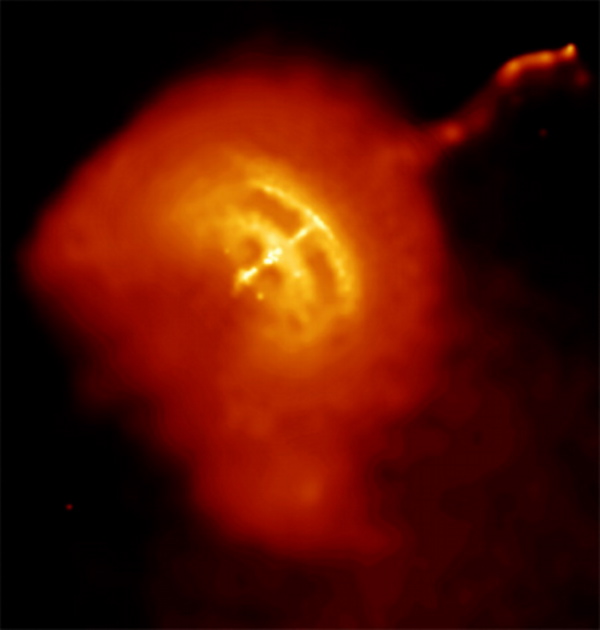 n
n n
n n
n n
n n
n