
Table of Contents
- What Are Variable Stars and Why They Matter?
- Types of Variable Stars: Intrinsic vs Extrinsic
- Pulsating Variables: Cepheids, RR Lyrae, and More
- Eclipsing and Rotational Variables: Binaries in Motion
- Cataclysmic and Explosive Variables: Novae and Supernovae
- How to Observe Variable Stars from Your Backyard
- Photometry Basics: Magnitudes, Filters, and Light Curves
- Variable Stars in Familiar Constellations
- Why Variable Stars Matter to Science
- Common Observing Mistakes and How to Avoid Them
- Frequently Asked Questions
- Final Thoughts on Choosing the Right Variable Star Targets
Variable Stars: Types, Observing Methods, and Science
What Are Variable Stars and Why They Matter?
Not all stars shine with unwavering steadiness. A large fraction of stars in our galaxy change their brightness over time. We call these variable stars. Some change subtly over hours, others swell and fade dramatically over months, and some erupt only once in a lifetime. Understanding these fluctuations is one of the most productive paths for both professional and amateur astronomers to uncover how stars live, interact, and die.
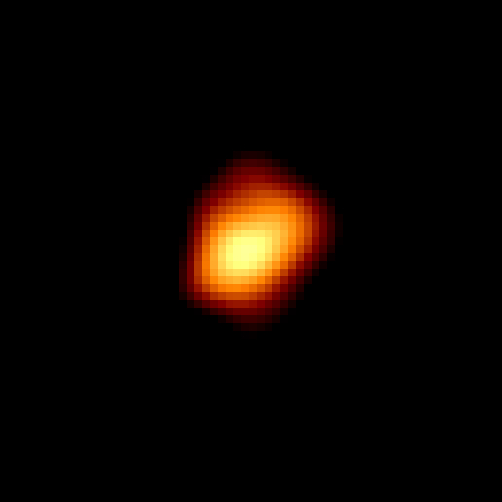
Attribution: Margarita Karovska (Harvard-Smithsonian Center for Astrophysics) and NASA
At its core, stellar variability arises from two broad causes: internal changes in the star itself or external geometry—most commonly a companion star passing in front. This seemingly simple dichotomy encodes a wealth of astrophysics. By studying pulsating variables we can probe a star’s interior via stellar seismology. By tracking eclipsing binaries we weigh stars and measure their sizes with high precision. By monitoring cataclysmic variables we watch accretion physics and explosive nuclear events unfold.
Beyond scientific insight, variable stars are among the most accessible projects for backyard observers. With just the naked eye, binoculars, or a small telescope and a notebook, you can make scientifically useful estimates that contribute to long-term light curves. Modern digital methods—DSLR, CMOS, and CCD photometry—open even more doors for precise measurements from your backyard. If you are searching for a rewarding, long-term observing program, variable stars deliver a blend of nightly challenge and deep scientific relevance.
In this guide, we’ll survey the principal types of variable stars, explain observing techniques ranging from visual estimates to calibrated photometry, and spotlight noteworthy targets in familiar constellations. If you’re new to variable stars, start with the observing section to learn how to begin tonight. Then dive into the photometry basics to improve your measurements and interpret the light you collect.
Types of Variable Stars: Intrinsic vs Extrinsic
Variable stars fall into intrinsic and extrinsic categories, depending on whether the brightness changes arise within the star or because of external effects.
Intrinsic Variables
Intrinsic variable stars change brightness because their physical properties evolve on observable timescales. Typical mechanisms include pulsation, eruptions, and structural changes in the star’s outer layers.
- Pulsating variables: Stars whose outer layers expand and contract periodically, leading to predictable brightness changes. Examples include Classical Cepheids, Type II Cepheids, RR Lyrae, Mira variables, and Delta Scuti stars. See Pulsating Variables.
- Eruptive variables: Stars that undergo irregular outbursts or flares, often due to magnetic activity or accretion. Examples include T Tauri stars (young stars) and flare stars (often red dwarfs).
- Cataclysmic variables: Systems where a white dwarf accretes material from a companion, leading to nova outbursts or recurrent dwarf nova eruptions. See Cataclysmic Variables.
- Semi-regular and irregular giants: Red giants and supergiants that vary with less regular cycles, such as Betelgeuse in Orion, which exhibits semi-regular variations.
Extrinsic Variables
Extrinsic variables change brightness because of orientation or geometry, often involving two stars.
- Eclipsing binaries: Pairs of stars orbiting each other such that one periodically passes in front of the other from our line of sight, causing regular dips in brightness. Classic examples include Algol in Perseus and Beta Lyrae.
- Rotational variables: Stars whose brightness changes because of surface features like starspots rotating in and out of view, or because a star’s shape is distorted by a companion (ellipsoidal variations). Types include BY Draconis, RS Canum Venaticorum, and ellipsoidal variables.
These categories are not mutually exclusive; for example, a star in a close binary can show both pulsations and eclipses. However, the intrinsic-extrinsic framework helps you decide what observing strategies and analysis techniques to use. If you’re planning a photometric campaign, the cadence and filter choices differ markedly between, say, a fast RR Lyrae and a long-period Mira. We’ll detail those tradeoffs in How to Observe Variable Stars and Photometry Basics.
Pulsating Variables: Cepheids, RR Lyrae, and More
Pulsating stars are stellar laboratories. Their periodic expansions and contractions act like natural clocks tied to their luminosity and internal structure. The archetypes—Classical Cepheids and RR Lyrae—anchor the cosmic distance ladder and trace the history of our galaxy.
Classical and Type II Cepheids
Classical Cepheids are massive, relatively young stars that oscillate with periods typically from a few days to about 50 days. Their most important property is the period–luminosity relation (also called the Leavitt Law), discovered in the early 20th century. The relation ties a Cepheid’s pulsation period to its intrinsic luminosity, allowing astronomers to estimate distances by measuring the period and apparent brightness. Classical Cepheids reside primarily in the disks and spiral arms of galaxies, reflecting their youth and metal-rich composition.

Attribution: Warrickball
Type II Cepheids are older, lower-mass, metal-poor stars with similar periodic behavior but lower luminosity at a given period. They inhabit older stellar populations—globular clusters and galactic halos. Distinguishing between Classical and Type II Cepheids is crucial when using them for distance measurements because they share the same pulsation mechanism but follow different calibrations of the period–luminosity relation.
Observationally, Cepheids display characteristic asymmetric light curves—rapid rise to maximum followed by a slower decline. The shape varies with period: longer-period Cepheids often show more complex features like a secondary “bump.” If you’re gathering your first light curve, a well-known target such as Delta Cephei is an excellent place to start. See Variable Stars in Familiar Constellations for target ideas.
RR Lyrae
RR Lyrae stars are older, low-mass, horizontal branch stars with typical periods of roughly 0.2 to 1 day. They are tremendously useful as standard candles for mapping the distances to globular clusters and tracing the Galactic halo. Many RR Lyrae show amplitudes around a magnitude or less in visible bands and can be tracked with high cadence because of their short periods.
Their light curves often fall into categories (RRab, RRc, etc.) reflecting different pulsation modes; RRab typically have asymmetric sawtooth-like curves, while RRc show more sinusoidal patterns with shorter periods. Some RR Lyrae exhibit the Blazhko effect—a modulation of amplitude and phase over longer timescales, still an active area of research. Capturing a full cycle can be done in a single night, making them ideal for observers seeking quick, complete datasets. For best practices, see Photometry Basics.
Mira and Long-Period Variables
Mira variables are pulsating red giants with long periods, typically in the 100–700 day range, and large visible amplitudes (often more than 2.5 magnitudes). Their cycles are easy to follow visually over months. The prototype, Omicron Ceti (Mira), can rise from near the naked-eye limit to easy visibility and then fade again, a gratifying target for beginners and experts alike. While individual cycles can vary somewhat in amplitude and period, Miras remain among the friendliest variables to monitor without special equipment.

Attribution: Margarita Karovska (Harvard-Smithsonian Center for Astrophysics), and NASA/ESA
Delta Scuti and Other Short-Period Pulsators
Delta Scuti stars are A- to F-type pulsators with short periods—from a few minutes to a few hours—and relatively small amplitudes. High-cadence photometry is needed to capture their rapid oscillations, and they offer a gateway into asteroseismology, the study of stellar oscillation modes that can reveal internal structure. Related classes include Gamma Doradus and hybrid pulsators showing both pressure and gravity modes.
Many other pulsator classes fill out the zoo—from Beta Cephei (massive B-type pulsators) to white dwarf pulsators with minute-scale variability. The key idea is the same: oscillations encode interior physics that we can decode by analyzing light curves and frequencies. Techniques like Fourier analysis and periodogram methods, discussed in Photometry Basics, are central to these studies.
Eclipsing and Rotational Variables: Binaries in Motion
When stars orbit each other and the orbital plane is aligned with our line of sight, one star periodically passes in front of the other, causing a predictable drop in brightness. These eclipsing binaries are fundamental laboratories for stellar astrophysics. Precise measurements of their light curves, especially when paired with radial velocity data, yield stellar masses and radii—cornerstones of stellar models.
Algol, Beta Lyrae, and W Ursae Majoris Types
Eclipsing binaries are categorized by light curve shape and underlying geometry:
- Algol-type (EA): Detached systems featuring flat maxima and distinct primary and secondary minima. The classic example is Algol (Beta Persei), with a period of just under three days. During the primary eclipse, the system’s brightness drops substantially as the dimmer companion obscures the brighter star.

Algol (β Persei) is a triple-star system (Algol A, B, and C) in the constellation Perseus, in which the large and bright primary Algol A is regularly eclipsed by the dimmer Algol B every 2.87 days. The eclipsing binary pair is separated by only 0.062 astronomical units (AU) from each other, so close in fact that Algol A is slowly consuming the less massive Algol B by continually stripping off Algol B’s outer layers.
Attribution: Dr Fabien Baron, Dept. of Astronomy, University of Michigan, Ann Arbor, MI 48109-1090 - Beta Lyrae-type (EB): Semi-detached systems with continuous light variation due to tidal distortion and ongoing mass transfer. The light curve shows rounded minima and maxima without flat sections.
- W Ursae Majoris-type (EW): Contact binaries in which both stars share a common envelope. Their light curves are nearly sinusoidal with shallow differences between minima.
Each subtype highlights different aspects of binary evolution: mass transfer in EB systems, common-envelope evolution in EW systems, and relatively clean eclipses in EA systems. Eclipsing binaries are superb targets for differential photometry, because their variability can be deep, periodic, and accessible to modest equipment.
Rotational Variables and Starspots
Not all extrinsic variability involves eclipses. Rotational variables vary as surface features, such as starspots or bright regions, rotate in and out of view. BY Draconis stars are typically K- or M-dwarfs with magnetic activity and noticeable spot coverage, while RS Canum Venaticorum variables often involve close binaries with strong chromospheric activity. Ellipsoidal variables brighten and dim because their stars are tidally distorted into ellipsoids, changing the cross-section we see during the orbit. Observing these systems often requires careful baseline monitoring and high signal-to-noise, especially for small amplitudes.
Fast rotation, differential rotation, and magnetic activity cycles make these stars valuable for studying stellar dynamos and angular momentum evolution. Strategic cadence planning, as discussed under How to Observe Variable Stars, is vital to catch their slower and sometimes subtle changes.
Cataclysmic and Explosive Variables: Novae and Supernovae
Some of the most dramatic variability in the sky comes from cataclysmic variables and explosive events. Although these targets can be less predictable, they are deeply rewarding: catching an outburst or tracking a fading light curve connects you directly to extreme physics.
Cataclysmic Variables (CVs) and Dwarf Novae
Cataclysmic variables are binary systems where a white dwarf accretes matter from a close companion, often a late-type star. In dwarf novae, the accretion disk undergoes instabilities, dumping material onto the white dwarf and producing outbursts that increase the system’s brightness by several magnitudes. Classical examples include U Geminorum and SS Cygni. The intervals between outbursts can vary from weeks to months, making night-to-night monitoring useful for catching onsets and declines.
Other subtypes include nova-like variables with sustained high accretion rates and polars, where the white dwarf’s strong magnetic field channels accretion flows directly onto magnetic poles, quenching the formation of a full accretion disk and producing polarized light.
Classical Novae
In a classical nova, hydrogen-rich material accumulates on a white dwarf’s surface until a thermonuclear runaway ignites, causing a sudden and dramatic brightening—often by 10 magnitudes or more. While these events are unpredictable in detail, sky surveys and alert networks help observers catch them early. Following a nova’s decline can contribute to understanding the properties of the white dwarf, the ejected material, and the interstellar medium the ejecta encounter.
Supernovae
Supernovae are even more energetic. In Type Ia supernovae, a white dwarf in a binary system reaches critical conditions and undergoes a thermonuclear explosion, while in core-collapse supernovae, massive stars end their lives when fusion ceases in their cores. While close, naked-eye supernovae are rare, many supernovae in external galaxies become accessible to modest telescopes. Observers can track light curves as the supernova fades over weeks to months, contributing valuable data. The standardized brightness of Type Ia supernovae underpins measurements of cosmic expansion, a topic touched on in Why Variable Stars Matter to Science.
How to Observe Variable Stars from Your Backyard
Variable-star observing is one of the most accessible ways to contribute to science from home. Whether you’re making visual magnitude estimates or capturing precise photometry with a camera, your data can be part of decades-long light curves that researchers and students use worldwide.
Visual Observing: Naked Eye, Binoculars, and Small Telescopes
Visual observers compare a variable star’s brightness with nearby comparison stars of known magnitude. By bracketing the variable between two comparisons and judging fractional steps, you can estimate the variable’s magnitude to about 0.1–0.3 mag with practice.
- Choosing targets: Start with bright, high-amplitude stars such as Mira, Algol, and Delta Cephei. These offer clear changes that reinforce your technique quickly. See Variable Stars in Familiar Constellations for many options.
- Equipment: Naked-eye monitoring works for bright variables. 7×50 or 10×50 binoculars are excellent for stars down to about 9th magnitude under good skies. A small telescope (60–130 mm) opens thousands of targets.
- Technique: Dark-adapt your eyes, avoid afterimages (don’t stare at bright stars or devices), and use averted vision. Estimate by comparison, record the time (preferably in UTC), sky conditions, and method used. Repeat estimates to check consistency.
- Cadence: Match your cadence to the star’s timescale. For RR Lyrae, multiple estimates per night capture the cycle. For Mira, weekly or biweekly estimates suffice.
Digital Observing: DSLR/CMOS/CCD Photometry
Digital sensors provide precise measurements when combined with careful calibration and methodology.
- Mount and optics: A stable mount and a short to medium focal length telescope (or even a camera lens for wide fields) are enough for many targets. Track smoothly to avoid trailing.
- Calibration frames: Take bias, dark, and flat frames. Bias frames capture readout noise, dark frames capture thermal noise, and flats correct for vignetting and dust motes. Consistent calibration is crucial for reliable photometry.
- Filters: The Johnson–Cousins system (U, B, V, R, I) remains standard in amateur–professional collaborations. Many start with a V filter. If you use a DSLR, the green channel approximates V but requires care and transformations (see Photometry Basics).
- Aperture photometry: Use software to sum the light within a circular aperture, subtract the sky background estimated from an annulus, and compare the variable’s flux to nearby, similar-color comparison stars. Choose an aperture radius matched to the seeing (often 1.5–2.5× the full width at half maximum of star images).
- Differential method: Measure the variable relative to one or more comparison stars and a check star. This cancels out transparency fluctuations and improves precision.
- Exposure control: Avoid saturation and stay within the linear regime of your camera sensor. If the target and comparisons differ greatly in brightness or color, adjust exposure and choose comparisons more carefully.
Planning and Field Identification
Accurate identification is key. Star fields can be dense, and misidentifying the target or a comparison star is a common source of error.
- Charts and sequences: Use reliable charts with designated comparison stars and known magnitudes. Many organizations provide sequences tuned to variable-star work.
- Field rotation and mirror flips: Telescopes with star diagonals or cameras may rotate or flip the field. Practice matching star patterns and make notes on instrument orientation.
- Altitude and extinction: Observe the target as high as possible to minimize atmospheric extinction and scintillation. If you must compare stars at different altitudes, apply extinction corrections or choose closer-in-angle comparisons.
Keeping a Useful Observing Log
Consistent records turn casual observations into valuable datasets. A minimal log records target, time, method, estimate or measured magnitude, comparison stars, and conditions. Here’s a simple format you can adapt:
Target: Delta Cephei

Date/Time (UTC): 2026-01-27 03:15

Method: Visual estimate with 10x50 binoculars

Estimate: 4.1 mag

Comparisons: 3.9, 4.3

Sky: Clear, NELM ~ 5.5, seeing 3/5

Notes: Slight haze to the north; repeated estimate x3, consistent to 0.1 mag
For digital observations, add camera settings (gain/ISO, exposure, filter), number of frames, calibration details, and software versions used for reduction. Frequency and consistency are more valuable than occasional perfect nights. If you’re new, start modestly and aim for repeatable data. The techniques in Photometry Basics will help you grow.
Photometry Basics: Magnitudes, Filters, and Light Curves
At the heart of variable-star science lies the measurement of light. Photometry quantifies brightness, enabling comparisons over time and between observers. Understanding magnitudes, filters, and calibration will dramatically improve your results and help you interpret light curves.
The Magnitude System
The astronomical magnitude scale is logarithmic by design. A difference of 5 magnitudes corresponds to a factor of 100 in flux. Thus 1 magnitude corresponds to a factor of about 2.512 (the fifth root of 100). This scale compresses the huge dynamic range of stellar brightnesses into a manageable scale for estimating and plotting.
There are two commonly discussed magnitudes:
- Apparent magnitude (m): How bright a star appears from Earth.
- Absolute magnitude (M): How bright a star would appear at a standard distance of 10 parsecs.
Variable-star observers generally measure apparent magnitude over time. When combined with distance and extinction (dimming by interstellar dust), apparent magnitude changes can be translated into intrinsic variations.
Filters and Color Indices
Standardized filters ensure that observations from different observers and nights can be compared. The Johnson–Cousins system is widely used:
- U (ultraviolet): Centered in the near-UV; sensitive to atmospheric conditions and less commonly used by amateurs due to low throughput.
- B (blue) and V (visual/green): The most common pair; the color index B − V indicates stellar temperature and changes during variable-star cycles.
- R and I: Red and near-infrared bands; useful for red variables like Miras and for minimizing atmospheric effects.
For DSLR photometry, the sensor’s Bayer filter has red, green, and blue channels. The green channel often serves as a proxy for V, but transformations to the standard system require careful calibration with stars of known color in the field.
Calibration: Bias, Dark, and Flat Frames
To extract accurate photometry, calibrate your images:
- Bias frames: Very short exposures with the shutter closed, capturing readout artifacts.
- Dark frames: Same exposure time and temperature as your light frames, removing thermal noise when subtracted.
- Flat fields: Uniformly illuminated images to correct vignetting and dust shadows. Take them at similar focus and orientation as your light frames.
Consistent calibration is the single best way to boost the reliability of your measures. Without it, small systematics hide in your light curves and mimic real variability.
Aperture Photometry and Differential Methods
Most amateur photometry uses aperture photometry: sum the pixel values in a circular aperture, subtract an estimate of the sky background sampled in a surrounding annulus, and compare the result to the same measure for comparison stars. Keep your aperture large enough to include the star’s full profile under varying seeing, but not so large that you admit excessive sky noise or neighboring stars.
Differential photometry divides the target’s flux by that of a comparison star, ideally matched in brightness and color and close on the sky. Using a third star as a check helps you confirm that your comparison is stable and your results are repeatable. For high-precision work, you may transform your instrumental magnitudes to a standard system using transformation coefficients derived from standard fields.
Atmospheric Extinction and Airmass
Light passing through Earth’s atmosphere is attenuated. The effect is strongest at low altitudes and is wavelength-dependent (blue light is affected more). Airmass quantifies the path length through the atmosphere; it rises steeply as a star approaches the horizon. Correcting for extinction improves consistency, especially when your target and comparison stars have different colors or zenith distances. Whenever possible, observe your target well above 30 degrees altitude and use comparisons nearby on the sky.
Light Curves and Period Analysis
A light curve plots brightness versus time. For periodic variables, folding the data by the best-fit period reveals a clean curve, often with characteristic shapes that diagnose the variable class. For non-periodic variables, the curve highlights trends, outbursts, or irregular behavior.

Attribution: Warrickball
Common methods to estimate periods include Fourier analysis and periodograms such as the Lomb–Scargle method. O − C diagrams (Observed minus Calculated) track deviations from a predicted ephemeris and can reveal period changes over time—crucial for systems like eclipsing binaries or evolving pulsators.
Precision and Error Budgets
Every measurement has uncertainty. Track your error sources: photon statistics (shot noise), sky background, read noise, scintillation (most significant for short exposures on small apertures), comparison-star errors, and systematics like flat-field residuals. Reporting uncertainties and the number of frames averaged is as important as the magnitude itself. Your data’s scientific value rests on both accuracy and transparency.
Variable Stars in Familiar Constellations
You don’t have to search obscure corners of the sky for variable stars. Many bright, well-studied variables reside in familiar constellations, offering easy ways to begin or deepen your observing program.
- Perseus – Algol (Beta Persei): The archetype of eclipsing binaries. Algol dims by more than a magnitude every 2.867 days. Monitoring the exact timing of minima contributes to studies of orbital evolution. See eclipsing binaries for observing tips.

The position of Beta Persei (Algol; Gorgona; Gorgonea Prima; Demon Star; El Ghoul) Thanks for the help of Patrick Chevalley
Attribution: Zwergelstern - Cepheus – Delta Cephei: The prototype Classical Cepheid, bright and well placed in northern skies. Its light curve illustrates the period–luminosity relationship discussed in Pulsating Variables.
- Cetus – Mira (Omicron Ceti): The namesake Mira variable. Track it over seasons to appreciate long-period pulsations and their large amplitudes. Great for visual observers.
- Lyra – RR Lyrae: The prototype RR Lyrae star. Short period and healthy amplitude make it ideal for high-cadence campaigns.
- Orion – Betelgeuse (Alpha Orionis): A red supergiant with semi-regular variability. While not a textbook pulsator like a Cepheid, it illustrates how massive, evolved stars can vary due to complex processes in their envelopes.
- Cygnus – SS Cygni: A bright dwarf nova. Regularly monitor to catch outbursts; during outburst, follow the decline and compare to quiescence, as outlined in Cataclysmic Variables.
- Gemini – U Geminorum: Another classic dwarf nova, useful for learning outburst cadence and disk instability behavior.
- Ursa Major – W UMa: Prototype of contact binaries. While often fainter than the naked-eye limit, it showcases the nearly sinusoidal light curves of EW systems.
- Corona Borealis – R CrB: Prototype of R Coronae Borealis variables—rare carbon-rich supergiants that undergo unpredictable deep fades due to dust formation. A striking example of eruptive behavior.
- Ursa Minor – Polaris (Alpha UMi): The North Star is a low-amplitude Classical Cepheid. Its subtle variability offers a challenge for precise photometry.
When selecting targets, consider your latitude, season, and equipment. Aim for a mix: a long-period Mira for weekly checks, a fast RR Lyrae for a single-night light curve, and an eclipsing binary for timing minima. This diversified program keeps observing interesting and strengthens your skills across different variability types. Cross-reference each star with the techniques in How to Observe Variable Stars and Photometry Basics.
Why Variable Stars Matter to Science
Variable stars are not just visually compelling—they are foundational to astrophysics. Observations of variable stars have shaped our understanding of stellar structure, Galactic architecture, and the scale of the universe.
The Distance Ladder and the Leavitt Law
Classical Cepheids’ period–luminosity relation enables distance measurements to nearby galaxies. By calibrating Cepheid luminosities—using parallax for the closest stars—astronomers extend the distance ladder outward, allowing other standard candles to be set. This chain underlies estimates of the Hubble constant, a key parameter describing the expansion rate of the universe. Type II Cepheids and RR Lyrae extend similar capabilities to older, metal-poor populations, especially in globular clusters and the Galactic halo.
Stellar Evolution and Interior Physics
Pulsating variables occupy specific regions in the Hertzsprung–Russell diagram, such as the instability strip. As stars evolve across these regions, they become unstable to pulsations. The periods and amplitudes of pulsation, combined with spectral information, help model internal structure, mass, and age. High-cadence studies of short-period pulsators inform asteroseismology, the analysis of oscillations that provides a window into stellar interiors, similar to how seismology probes Earth’s interior.
Binary Star Physics and Fundamental Parameters
Eclipsing binaries yield some of the most reliable stellar masses and radii when photometric light curves are combined with spectroscopic radial velocities. Such fundamental parameters are vital to calibrate stellar models across a wide range of masses and compositions. Contact and semi-detached systems also illuminate mass transfer, angular momentum loss, and the magnetic activity that follows.
Accretion, Outbursts, and Extreme Events
Cataclysmic variables, novae, and supernovae are showcases for accretion physics and explosive nucleosynthesis. Tracking outbursts and post-outburst evolution constrains disk instability models and white dwarf properties. Supernova light curves, especially for Type Ia, are standardized tools for cosmology, while core-collapse events shed light on the final stages of massive star evolution and the birth of neutron stars and black holes.
Exoplanet Transits and Survey Synergies
While exoplanet transits represent a separate topic, they exemplify extrinsic variability—minute periodic dips in starlight caused by planets crossing in front of their host star. Space missions that detect exoplanets, such as Kepler and TESS, also discover vast numbers of stellar variables. Survey alerts can direct ground-based observers to targets needing follow-up. Careful photometry techniques, like those in Photometry Basics, are transferable between variable-star and exoplanet projects.
Common Observing Mistakes and How to Avoid Them
Even careful observers make mistakes now and then. Awareness is half the battle. Here are frequent pitfalls and practical fixes.
- Misidentifying the target or comparison stars: Star fields can be confusing, especially at low magnification or with field rotation. Use detailed charts, confirm patterns, and cross-check coordinates. If using a camera, annotate your images.
- Saturating the sensor: Overexposure ruins photometric linearity. Shorten exposures or lower ISO/gain. Ensure both target and comparisons are below saturation and not clipped.
- Neglecting calibration frames: Skipping darks or flats invites systematics. Build calibration routines into your session workflow.
- Using poorly matched comparison stars: Large color or brightness differences increase extinction and transformation errors. Choose comparisons similar in color and close on the sky.
- Ignoring atmospheric conditions: High airmass and thin clouds introduce noise. Note conditions in your log and, when necessary, reschedule high-precision work for better nights.
- Inconsistent apertures: Changing apertures between nights makes data difficult to compare. Pick a method—aperture radius relative to FWHM—and stick to it.
- Undersampling fast variables: RR Lyrae and eclipsing minima can change rapidly. Plan cadence to capture key features. See How to Observe Variable Stars for cadence strategies.
- Forgetting to transform: If your project requires standard-system magnitudes, determine transformation coefficients and apply them. Untransformed instrumental magnitudes can mislead when compared across observers.
Whenever you encounter a puzzling result, revisit the basics in Photometry Basics. Small corrections and consistent routines often tame large discrepancies.
Frequently Asked Questions
Can I do useful variable-star work with just binoculars?
Absolutely. Many long-period variables (like Mira) and bright eclipsing binaries (like Algol) are accessible to binocular observers, especially under dark skies. Visual estimates—carefully logged with comparison stars and times—are scientifically valuable, particularly for long-term monitoring. As you gain experience, you can add a small telescope for fainter targets or more precise estimates. The guidance in How to Observe Variable Stars shows you how to start tonight.
What filter should I buy first for photometry?
If you plan to do standardized photometry, a V-band filter is the most common starting point. It balances throughput, atmospheric stability, and compatibility with existing datasets. If your targets are red (Miras, red giants), adding an R or I filter is helpful. DSLR observers can begin without dedicated filters by using the green channel, but to compare with others and reduce color-dependent systematics, standardized filters and transformations are recommended. Details are in Photometry Basics.
Final Thoughts on Choosing the Right Variable Star Targets
Variable-star observing marries disciplined technique with the thrill of discovery. Start simple: pick one bright eclipsing binary like Algol, a classic Cepheid such as Delta Cephei, and a Mira like Omicron Ceti. These three alone will teach you cadence planning, visual estimation, and photometry fundamentals. As you gain confidence, add a fast RR Lyrae or a dwarf nova to stretch your skills and your equipment.
Focus on repeatability. A well-planned, consistent routine produces more valuable data than occasional heroic efforts. Keep honest logs, calibrate thoroughly, and seek out standard comparison sequences. Use your completed light curves to ask deeper questions and explore analysis techniques, like periodograms and O − C diagrams, introduced in Photometry Basics.
Above all, enjoy the process. With each observation, you participate in a century-old collaborative enterprise that advances stellar astronomy. If you found this guide helpful, consider subscribing to our newsletter to receive future deep dives on observing techniques, astrophysical insights, and curated target lists throughout the year.