
Table of Contents
- What Are Variable Stars and Why They Change Brightness?
- Major Types of Variable Stars: Pulsating, Eruptive, and Eclipsing
- How to Read Variable Star Light Curves and Periods
- Why Variable Stars Matter in Astronomy and Cosmology
- Observing Variable Stars: Visual, DSLR, and CCD/CMOS Methods
- Equipment, Filters, and Software for Reliable Photometry
- Planning Campaigns and Choosing Variable Star Targets
- Reducing and Analyzing Photometric Data
- Common Mistakes in Variable Star Observing (and How to Avoid Them)
- Frequently Asked Questions
- Final Thoughts on Choosing the Right Variable Stars to Observe
What Are Variable Stars and Why They Change Brightness?
Variable stars are stars whose brightness changes over time as seen from Earth. Some vary subtly by a fraction of a magnitude, while others undergo dramatic changes of many magnitudes. These variations can be periodic, semi-regular, or irregular, and they arise from different physical processes that either change a star’s light output intrinsically or modulate how much light we see extrinsically.
At its simplest, a variable star is any star for which the measured magnitude is not constant. Astronomers characterize variability by measuring light curves—plots of brightness versus time—that reveal patterns such as period, amplitude, and shape. Understanding these light curves unlocks insights into stellar structure, binary interactions, mass transfer, and even cosmological distance scales. We will return to light curves in detail in How to Read Variable Star Light Curves and Periods.

There are two major categories of variability:
- Intrinsic variability: The star’s luminosity truly changes due to physical processes within or on the star—such as pulsation, flares, or explosive outbursts.
- Extrinsic variability: The star’s light output is steady, but something external (like an orbiting companion or dust) periodically blocks or modulates the light we receive.
For observers, variable stars present both a scientific opportunity and an accessible entry point into meaningful astronomical contribution. You can start visually with binoculars, progress to DSLR photometry, and then graduate to rigorous CCD/CMOS measurements with standard filters. In this guide, we will walk through the major types of variables, show how to interpret their light curves, and provide practical instructions for observing and analyzing data.
Major Types of Variable Stars: Pulsating, Eruptive, and Eclipsing
The classification of variable stars is extensive, but most observing programs focus on several foundational groups. Below is an observer-oriented overview with representative examples and hallmark behaviors.
Pulsating Variables (Intrinsic)
Pulsating variables change brightness as they expand and contract. Their outer layers oscillate, altering temperature and radius. These stars often have highly distinctive, repeatable light curves.
- Cepheid variables: Supergiant stars with periods from about 1 to 50+ days. Classical (Type I) Cepheids obey a well-defined period–luminosity relation, meaning their pulsation period correlates with intrinsic luminosity. This makes them powerful standard candles for measuring distances to nearby galaxies. A well-known example is Delta Cephei.
- RR Lyrae: Old, low-mass pulsators found abundantly in globular clusters. Periods are typically around 0.2–1 day. Like Cepheids, RR Lyrae are valuable standard candles, especially for mapping the Milky Way’s structure.
- Mira variables (long-period variables): Cool, red giant stars (often carbon- or oxygen-rich) with large amplitudes (several magnitudes) and long periods (~100–700 days). Mira (Omicron Ceti) is the archetype.
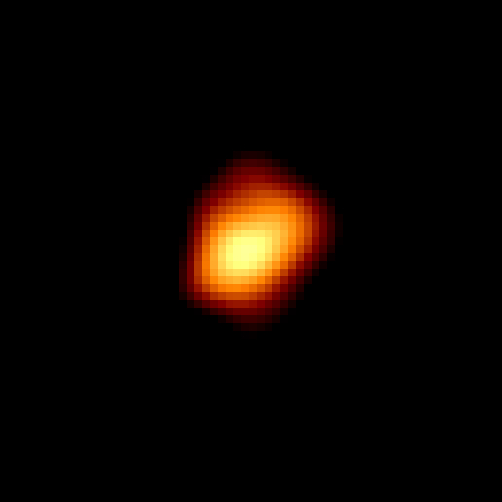
This image by the Hubble Space Telescope displays an asymmetrical shape of the red giant star Mira. This may be due to expansion-contraction cycles, or else unresolved surface features. Attribution: Margarita Karovska (Harvard-Smithsonian Center for Astrophysics) and NASA. - Delta Scuti and SX Phoenicis: Short-period pulsators with periods of hours, often lower amplitude. They can exhibit multiple pulsation modes.
- Semiregular variables: Giants and supergiants with somewhat irregular periods and amplitudes that can vary over time, illustrating complex pulsation behavior.
Eruptive and Cataclysmic Variables (Intrinsic)
Eruptive variables undergo sudden increases in brightness due to energetic processes in or near the star.
- Classical novae and dwarf novae: In close binary systems where a white dwarf accretes material from a companion, thermonuclear runaways (classical novae) or disk instabilities (dwarf novae) cause outbursts. Dwarf novae exhibit quasi-periodic outbursts with amplitudes of a few magnitudes.
- Recurrent novae: Similar systems that erupt more than once on timescales of years to decades.
- Flare stars (UV Ceti-type): Cool, late-type dwarfs that can produce rapid, high-energy flares increasing brightness on timescales of minutes to hours.
- Young stellar objects (e.g., T Tauri stars): Pre-main-sequence stars with variability tied to accretion processes, spots, and circumstellar material.
Rotational Variables (Intrinsic)
These stars exhibit brightness changes due to surface features such as starspots rotating into and out of view. Variability can be subtle but periodic.
- BY Draconis-type variables: Late-type main-sequence stars with spots and chromospheric activity; light curve modulation tracks stellar rotation.
- Alpha^2 Canum Venaticorum-type: Magnetic, chemically peculiar stars with abundance patches on the surface causing periodic changes with rotation.
Eclipsing Binaries and Transits (Extrinsic)
In binary systems oriented favorably, one star periodically passes in front of the other, producing predictable dips in brightness. The resulting light curves are highly characteristic.
- Algol-type (EA): Detached systems with flat maxima and distinct, deep primary minima. The prototype is Algol (Beta Persei), famous for its regular eclipses.

Bright triple star system 90 ly away in the constellation of Perseus – The hot luminous primary and the larger, but cooler and fainter secondary pass in front of each other every 2.86 days causing 10-hour-long eclipses – An observed gas flow transferring mass between them solves the “Algol paradox” of why the most massive is less evolved and vice versa – The third star orbits the pair every 680 days at 2.7 AU – Attribution: Pablo Carlos Budassi. - Beta Lyrae-type (EB): Semi-detached binaries with continuously varying light curves due to distorted, interacting components.
- W Ursae Majoris-type (EW): Contact binaries with nearly equal minima and short periods.
- Exoplanet transits: Not a stellar variable per se, but the host star shows shallow, periodic dips when a planet transits. These events are analogous to very shallow eclipses and are analyzed with similar photometric tools.
Different classes produce different light curve signatures. As you learn to recognize these patterns, you will be able to identify phenomena quickly and select appropriate observing strategies—see Observing Variable Stars: Visual, DSLR, and CCD/CMOS Methods and Reducing and Analyzing Photometric Data for practical workflows.
How to Read Variable Star Light Curves and Periods
A light curve shows brightness over time, usually magnitude versus Julian Date or another time system. Key properties include:
- Amplitude: The total range of brightness variation (in magnitudes). For example, a Mira variable might vary by more than 5 magnitudes.
- Period: The time to complete one full cycle. Periods can be minutes (flare stars) to months (Miras) or longer.
- Phase: When folding data on the period, phase runs from 0 to 1 across one cycle, helping reveal subtle features and harmonics.
- Shape: The detailed morphology—sawtooth, sinusoidal, flat maxima with sharp minima (Algol-type), or continuously varying (Beta Lyrae-type).

In pulsating variables, changes in radius and temperature alter luminosity and color. For Cepheids and RR Lyrae, the light curve shape is not purely sinusoidal; it often shows a steep rise and a slower decline. The precise shape carries physical information that can be extracted through modeling or Fourier decomposition.
Two relations are especially important:
- Period–luminosity relation (PLR) for Cepheids: The longer the period, the brighter the intrinsic luminosity. By measuring the period accurately and the apparent brightness, and by accounting for extinction, distances to host galaxies can be estimated. This relation underpins parts of the cosmic distance ladder, as discussed in Why Variable Stars Matter.
- RR Lyrae absolute magnitude calibration: RR Lyrae have relatively uniform intrinsic luminosities that, alongside metallicity dependencies, make them useful as distance indicators within the Milky Way and nearby systems.
For eclipsing binaries, key light curve features include the primary and secondary minima depths, ingress/egress timing, and any out-of-eclipse variations. Orbital inclination, stellar radii, and temperature ratios all leave imprints on the light curve. With enough data and physical modeling, it is possible to derive the system geometry and stellar parameters.
Some practical concepts for interpreting and using light curves:
- O-C (Observed minus Calculated) diagrams: Track timing deviations from a predicted ephemeris, revealing period changes, mass transfer, or third bodies.
- Color indices (e.g., B–V): Measure temperature changes and can help classify the variability mechanism when combined with amplitude and period.
- Fourier analysis and Lomb–Scargle periodograms: Discover periodicities in unevenly sampled data, essential for finding periods in noisy or gapped time series.
Always examine uncertainties and data quality flags. Evaluating signal-to-noise, scatter, and potential systematics (clouds, moonlight, instrumental drift) is critical before drawing physical conclusions. Later sections on Reducing and Analyzing Photometric Data will guide you from raw frames to trustworthy plots.
Why Variable Stars Matter in Astronomy and Cosmology
Variable stars are not only fascinating targets; they are cornerstones of modern astrophysics. Here are several reasons their study remains central:
- Distance scale calibration: Cepheids and RR Lyrae are fundamental rungs in the cosmic distance ladder. Accurate distances to galaxies containing Cepheids help calibrate other indicators and inform measurements of the Hubble constant.
- Stellar evolution insights: Variables trace different evolutionary phases—Mira variables showcase late-stage red giants losing mass; RR Lyrae inhabit the horizontal branch; and cataclysmic variables illustrate tight binary interactions and accretion physics.
- Binary star physics: Eclipsing binaries allow precise determination of stellar masses and radii, especially when coupled with spectroscopy. These measurements test stellar structure and evolution models.
- Asteroseismology: Multiperoidic pulsators reveal internal structure through their oscillation modes. Even ground-based photometry can track mode beating and amplitude changes over time.
- Exoplanet detection and validation: Transit photometry relies on the same observational techniques used in variable star work, and stellar variability must be accounted for when confirming exoplanet candidates.
- Mapping the Milky Way: Standard candles like RR Lyrae help trace the structure of the Galactic halo and globular clusters.
- Transient phenomena: Rapid follow-up of novae and other outbursts improves our understanding of accretion disks, thermonuclear processes, and binary evolution.
Importantly, amateurs and small observatories continue to contribute to all of these areas by producing dense, long-term time series that large telescopes cannot easily obtain. Observers who combine careful technique with persistence can make meaningful scientific contributions. If you are eager to get involved, jump to Observing Variable Stars and Planning Campaigns for practical steps.
Observing Variable Stars: Visual, DSLR, and CCD/CMOS Methods
Variable star observing spans a spectrum from simple visual estimates to high-precision, filtered photometry. Each approach has its place and can be useful when executed carefully.
Visual Observing
Visual observing involves estimating a variable’s brightness by comparing it to nearby reference stars with known magnitudes. Even naked-eye or binocular estimates, if done consistently, build valuable long-term records.
- Charts with comparison stars: Use charts that list comparison stars with calibrated magnitudes. Choose bracketing stars—one slightly brighter and one slightly fainter than the target—to estimate the variable’s magnitude.
- Dark adaptation and technique: Give your eyes time to adapt to the dark. Avoid bright lights and use consistent techniques (e.g., out-of-focus viewing to reduce color bias).
- Record keeping: Log date/time, estimate, chart used, and observing conditions. Consistent methodology reduces scatter. See a simple logging format example in Reducing and Analyzing Photometric Data.
Visual accuracy to about 0.2–0.3 magnitude is often achievable with practice. For some targets—especially long-period variables and bright eclipsing binaries—these data remain scientifically useful.
DSLR or Mirrorless Cameras
Consumer cameras can produce surprisingly good photometry when used thoughtfully. They are ideal for bright variables and moderately crowded fields.
- RAW format: Always shoot RAW to preserve linearity and avoid in-camera processing artifacts.
- Defocus slightly: Spread starlight across more pixels to reduce saturation and improve precision, especially for bright targets.
- Fixed ISO and exposure: Maintain constant settings within a time series to minimize systematic errors.
- Use green channel as proxy for V: The green channel of a Bayer array correlates reasonably with the V band for many applications; some observers use transformation equations to tie DSLR magnitudes to standard systems (see Equipment, Filters, and Software).
- Tripod vs. tracking: Short exposures on a tripod can work for bright stars; a tracking mount enables longer exposures and lower ISO, improving signal-to-noise.
CCD/CMOS Photometry
Dedicated astronomy cameras and standardized filters yield the most rigorous data. This path is recommended for observers who want to contribute to coordinated campaigns or publishable datasets.
- Filters: The Johnson–Cousins B, V, Rc, Ic system is widely used; Sloan filters are also common. For many targets, the V band provides good sensitivity and comparability across observers.
- Calibration frames: Darks, bias, and flats are essential to remove instrumental signatures and vignetting.
- Differential photometry: Measure your target relative to one or more comparison stars in the same frame to cancel atmospheric and instrumental effects.
- Ensemble photometry: Use multiple comparison stars to further reduce noise and mitigate color-dependent extinction.
For all methods, strive for consistency. Document your equipment settings, processing steps, and observing conditions so results can be interpreted and replicated. For guidance on processing workflows, continue to Reducing and Analyzing Photometric Data.
Equipment, Filters, and Software for Reliable Photometry
Good photometry does not always require expensive equipment, but certain choices improve data quality and reduce frustration. Here’s a focused overview of what matters most.
Optics and Mount
- Telescopes: Small, fast refractors (e.g., 60–100 mm aperture) provide wide fields for comparison stars and minimal optical aberrations. Larger apertures are useful for fainter targets but can complicate flats and increase the risk of saturation on bright stars.
- Mount: A stable equatorial or alt-az mount with good tracking reduces star trailing. Precise autoguiding is less critical for short exposures but helps maintain consistent star profiles over long sessions.
- Focus: Slight defocus can increase photometric precision by averaging pixel response variations. Keep the defocus consistent throughout a session.
Cameras and Filters
- CCD vs CMOS: Modern cooled CMOS cameras offer low read noise and high quantum efficiency, rivaling or surpassing many CCDs for photometry. Key is consistent behavior and calibration.
- Dynamic range: Ensure stars remain within the linear response of the sensor; avoid saturation and extremely low counts.
- Filters: Johnson–Cousins B, V, Rc, Ic filters are the workhorses for variable star work. Sloan filters (u’, g’, r’, i’, z’) are increasingly common. Pick a filter band and stick with it to build a consistent dataset.
- Transformation coefficients: To compare your data with others or standard catalogs, determine transformation coefficients that relate your instrumental magnitudes to a standard system. This typically involves observing standard fields and solving for color terms.
Calibration Frames
- Bias frames: Shortest possible exposures with the shutter closed, measuring readout offset.
- Dark frames: Same exposure and temperature as your light frames, measuring thermal signal.
- Flat fields: Uniformly illuminated frames to correct pixel response non-uniformity and vignetting. Take separate flats for each filter and optical configuration.
Software Toolkit
- Acquisition: Camera control software that manages sequences, dithering (if needed), and filter changes.
- Photometry: Tools like AstroImageJ, Maxim DL, or similar packages can perform aperture photometry, ensemble calibration, and transit/eclipse modeling.
- Analysis and visualization: Period search tools (e.g., Lomb–Scargle) and plotting libraries help uncover periodicity and trends. Some observers use general-purpose tools like Python notebooks for custom analyses.
- Quality control: Software that flags outliers, poor seeing, or clouds, and integrates metadata (airmass, FWHM, sky background) helps diagnose systematics that mimic variability.
For a deeper dive into workflow from raw frames to polished light curves, proceed to Reducing and Analyzing Photometric Data. If you’re deciding which targets to prioritize with your setup, see Planning Campaigns and Choosing Variable Star Targets.
Planning Campaigns and Choosing Variable Star Targets
Choosing the right targets and planning an observing cadence are critical for collecting scientifically useful data. The best choice depends on your equipment, sky conditions, and the scientific questions you want to address.
Matching Targets to Your Equipment
- Visual and binocular observers: Bright, high-amplitude variables are ideal. Examples include Mira (Omicron Ceti), Algol (Beta Persei), and semiregular red giants visible across seasons.
- DSLR users: Focus on bright pulsators (e.g., Delta Cephei), eclipsing binaries with pronounced minima, and long-period variables. Avoid extremely crowded fields until you have practice.
- CCD/CMOS setups with filters: Tackle fainter, faster targets (e.g., RR Lyrae), multi-band campaigns on Cepheids, or coordinated monitoring of dwarf novae outbursts. Work with standardized comparison stars to enable cross-observer synthesis.
Cadence and Coverage
- Period estimation: For unknown or poorly constrained periods, aim for a cadence that samples at least 10–20 points per expected cycle. For very short periods (hours), continuous monitoring over one or more nights is valuable.
- Eclipses and transits: Increase cadence during predicted minima to capture ingress and egress. Outside eclipse, lower cadence suffices.
- Long-period variables: Even once-per-week estimates can be valuable over months to years. The power of long-term monitoring cannot be overstated.
Seasonal Accessibility and Field Considerations
- Altitude and air mass: Prioritize targets that achieve higher elevation to reduce atmospheric extinction and scintillation. Consistency of observing conditions improves the quality of light curves.
- Comparison stars in the field: Select fields with multiple, well-distributed comparison stars of similar color and brightness to the target when possible. This improves ensemble photometry.
- Sky brightness: Avoid fields near the Moon or bright city glow for fainter work. For bright variables, urban observing can still be effective—see Frequently Asked Questions.
Suggested Starter Targets
- Algol (Beta Persei): Classic eclipsing binary with deep, predictable minima—excellent for timing and for practicing precise photometry.

The position of Beta Persei (Algol; Gorgona; Gorgonea Prima; Demon Star; El Ghoul) Thanks for the help of Patrick Chevalley Attribution: By Zwergelstern. - Delta Cephei: Prototype Cepheid; measuring its period and constructing its light curve is a rewarding project.
- Mira (Omicron Ceti): Dramatic amplitude changes visible to the naked eye near maximum; great for visual observers.
- SS Cygni: Dwarf nova with recurrent outbursts; monitoring can catch the onset of an event for rapid follow-up.
- Betelgeuse (Alpha Orionis): Semiregular red supergiant with notable brightness variations over months; its changes are widely watched.
Develop a personal project plan: define your targets, set a cadence, choose your filters, and commit to a time span. A season-long campaign, even with modest equipment, can produce a compelling dataset worth sharing.
Reducing and Analyzing Photometric Data
Turning raw images into a plotted light curve requires careful processing. The key is to minimize systematics and quantify uncertainties. Below is a practical workflow that scales from beginner to advanced work.
Calibration and Preprocessing
- Organize data: Keep lights, darks, bias, and flats in well-labeled directories by date and filter. Consistent naming accelerates processing and reduces mistakes.
- Create master calibration frames: Median- or average-combine a set of frames to create master bias, dark, and flat fields for each configuration.
- Apply calibration: Subtract bias and dark frames from your light frames; divide by the normalized flat. This removes fixed-pattern noise and vignetting.
- Alignment: Register images to a common reference to ensure stars fall in the same pixels, reducing photometric scatter.
Aperture Photometry and Differential Magnitudes
- Aperture selection: Choose an aperture radius that captures most of the star’s light (often a multiple of the FWHM) and a sky annulus free of contaminating stars.
- Differential approach: Compute the variable’s magnitude relative to one or more comparison stars in the same field. Ensemble methods average several comparison stars, reducing noise.
- Instrumental to standard system: If using filters, transform instrumental magnitudes to a standard system using your transformation coefficients. If not, report the band clearly (e.g., DSLR green channel) so others can interpret the data.
Uncertainties and Quality Control
- Photometric errors: Include photon noise, read noise, and sky background variance. Your photometry software should estimate these uncertainties per measurement.
- Outlier rejection: Identify frames affected by clouds, wind shake, or guiding errors. Track FWHM, sky background, and airmass to diagnose problems.
- Color effects: Atmospheric extinction depends on color; if the comparison stars have very different colors from the target, airmass changes can introduce trends.
Period Searching and Modeling
- Lomb–Scargle periodogram: Designed for unevenly sampled data, it is a standard tool for finding periodic signals.
- Phase folding: Fold the time series on candidate periods to evaluate light curve coherence and refine the period.
- O-C analysis: For eclipsing binaries, measure times of minima and build an O-C diagram to detect period changes.
- Multi-band analysis: Compare light curves in different filters to study temperature variations and spot or pulsation behavior.

Observed properties of the prototypical cepheid variable star, Delta Cephei, including the V-magnitude brightness and B-V color from Engle et al. (2014), the apparent diameter in units of miliarcseconds from Mérand et al. (2015), and the surface radial velocity by Anderson et al. (2015). Attribution: jradavenport.
Logging and Data Formats
Keep thorough logs. A simple CSV format for visual or instrumental observations might look like:
Date(UTC),JD,Target,Mag,Unc,Filter,CompStars,Notes

2026-01-10,2460675.75,Algol,3.45,0.02,V,HD12345;HD67890,Primary eclipse; clear sky

2026-01-11,2460676.75,Delta Cep,4.06,0.03,V,HD11111;HD22222,Good seeing; slight hazeDocumenting your observational choices boosts the scientific value of your data and enables others to reproduce your results. If you intend to share or submit data, follow the receiving organization’s format and validation checks.
Common Mistakes in Variable Star Observing (and How to Avoid Them)
Variable star photometry is accessible, but small missteps can degrade data quality. Here are frequent pitfalls and how to avoid them.
Instrumental and Acquisition Issues
- Saturation and nonlinearity: Overexposing targets undermines photometry. Keep peak counts below the sensor’s nonlinear region.
- Inconsistent focus: Changing FWHM alters aperture capture fractions and photometric consistency. Maintain stable focus over a session.
- Poor flats: Uneven or improperly normalized flats introduce gradients and artifacts. Update flats whenever the optical path changes.
- Guiding drift: Stars moving across different pixels can increase scatter. Register frames in processing and assess drift during acquisition.
Comparison Star Selection
- Color mismatch: Large color differences between target and comparison stars can produce extinction-related trends with airmass. Choose comps with similar color where possible.
- Variable comparisons: Ensure comparison stars are non-variable. Check established charts and catalogs for vetted comps.
- Too few comparisons: Using a single comp star risks bias. Ensemble photometry helps average out individual star peculiarities.
Processing and Analysis
- Omitting uncertainty: Reporting magnitudes without errors limits scientific usability. Always include uncertainties.
- Ignoring systematics: Monitor sky background, airmass, and seeing. Correlate these with residuals to identify trends that are not astrophysical.
- Overfitting: Complex models can fit noise. Validate period findings with independent nights and, if possible, different filters.
When in doubt, keep your methodology simple and well-documented. Repeatable procedures and consistent setups often outperform ad hoc tweaks night to night. For guidance on best practices, revisit Equipment, Filters, and Software and Reducing and Analyzing Photometric Data.
Frequently Asked Questions
Can I do useful variable star work from a light-polluted city?
Yes. Many bright variables can be monitored effectively from urban locations, especially eclipsing binaries and long-period variables with large amplitudes. For imaging-based photometry, the sky background is higher under city lights, which reduces sensitivity to faint targets. However, with short exposures, differential photometry, and careful comparison star selection, you can still produce valuable data. Focusing on brighter systems, using a V filter (or DSLR green channel), and keeping the target and comparison stars within the same field help mitigate urban light pollution effects. For target selection tips, see Planning Campaigns and Choosing Variable Star Targets.
How precise can DSLR photometry be compared with CCD/CMOS?
With careful technique—shooting RAW, avoiding saturation, using stable exposures, defocusing slightly, and performing differential photometry—DSLR photometry can often achieve repeatability on the order of a few hundredths of a magnitude for bright stars. Cooled CCD/CMOS cameras paired with standard filters and rigorous calibration typically achieve higher precision and stability, especially for fainter targets or when multi-band standardization is required. Your science goals should guide the choice: DSLR is excellent for bright, high-amplitude variables and learning workflows; CCD/CMOS is preferable for faint targets, high cadence, and standardized multi-filter campaigns.
Final Thoughts on Choosing the Right Variable Stars to Observe
Variable stars offer an accessible, scientifically rich pathway into observational astrophysics. From the rhythmic heartbeat of Cepheids to the dramatic plunges of eclipsing binaries, each class tells a different story about stellar structure, evolution, and interaction. The common denominator is the light curve: a simple brightness-versus-time plot that encodes a wealth of physical information.
To get started, pick a manageable set of targets aligned with your gear and sky conditions. Establish a consistent cadence, document your setup, and apply sound calibration and differential photometry. As your confidence grows, expand into multi-band work, explore rapid phenomena like RR Lyrae, or join collaborative campaigns for outbursts in cataclysmic variables.
If you have made it this far, you already have the essential framework: understand the types of variable stars, read their light curves, plan your campaigns, and process your data with disciplined analysis. With persistence, your observations can contribute to long-term datasets that professional surveys cannot easily replicate. For future guides, step-by-step tutorials, and curated target lists, consider subscribing to our newsletter so you never miss the next article.