
Table of Contents
- What Are Red Dwarf Stars (M-Dwarfs)?
- How Red Dwarfs Form and Evolve Over Trillions of Years
- Magnetic Flares, Stellar Winds, and Space Weather Around M-Dwarfs
- Habitable Zones Around Red Dwarfs: Tidal Locking and Climate
- Exoplanets of Red Dwarfs: TRAPPIST-1, Proxima b, and Beyond
- How Astronomers Study Red Dwarfs: Spectra, Transits, and Flares
- Benefits and Biases: Why We Find Many Planets Around M-Dwarfs
- Implications for the Search for Life and Technosignatures
- Frequently Asked Questions
- Final Thoughts on Understanding Red Dwarf Stars
What Are Red Dwarf Stars (M-Dwarfs)?
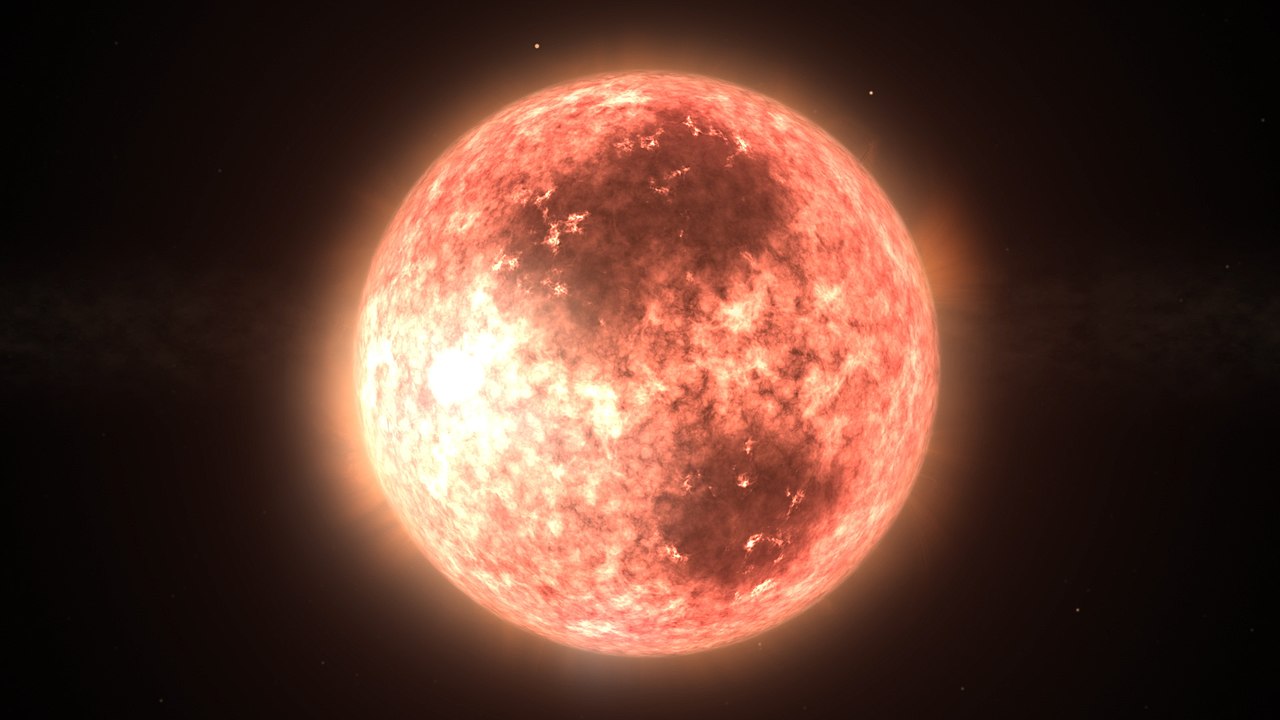
Red dwarf stars, also known as M-dwarfs, are the smallest, coolest, and most common hydrogen-fusing stars in the Milky Way. Ranging from roughly 0.08 to about 0.6 times the mass of the Sun, they shine with temperatures typically between about 2,400 and 3,900 K and exhibit distinctive molecular absorption bands in their spectra, including titanium oxide (TiO) and vanadium oxide (VO) in the optical, as well as water vapor and carbon monoxide in the near-infrared. Their small size and low luminosity give them a warm, reddish hue and an extraordinary longevity compared with Sun-like stars.

Artist: Viktor Hahn (Viktor.Hahn@web.de)
Although red dwarfs are intrinsically faint—often more than a hundred times dimmer than the Sun—collectively they dominate the Galaxy’s stellar population. In a typical stellar census, M-dwarfs make up the majority of stars by number. Many of the stars closest to Earth are red dwarfs, including Proxima Centauri, the nearest star to the Sun, which hosts at least one planet in its temperate zone. The prevalence of these stars, combined with the rapidly growing catalog of small planets around them, underpins their central role in modern exoplanet science.
From the standpoint of planetary habitability, red dwarfs are a study in contrasts. On one hand, their dimness forces their habitable zones to nestle close to the star, which makes temperate, Earth-sized planets easier to discover via both the transit and radial velocity methods. On the other hand, many red dwarfs—especially younger and rapidly rotating ones—are magnetically active, emitting high-energy flares and persistent ultraviolet (UV) and X-ray radiation that can challenge the survival of planetary atmospheres. As we explore their formation, evolution, activity, and planetary systems, we will repeatedly return to this tension between observability and habitability, a running thread that unites our understanding of M-dwarf science across disciplines.
In this article we will dive into several pillars of red dwarf research: their stellar physics and multi-trillion-year lifetimes, the nature of their magnetic storms, the climates of tidally locked worlds, and the headline discoveries—like TRAPPIST-1 and Proxima Centauri b—that define the present conversation. We will also look at the instruments and methods behind these insights in How Astronomers Study Red Dwarfs and the observational biases that make M-dwarfs especially planet-rich in our datasets in Benefits and Biases. Finally, we will connect these threads to the prospects for life and technosignatures in Implications for the Search for Life.
How Red Dwarfs Form and Evolve Over Trillions of Years
Red dwarfs form in much the same way as other stars: from the gravitational collapse of cold, dense regions within molecular clouds. As gas contracts, it spins up and fragments, forming protostars surrounded by disks. The protostar gains mass by accretion until pressure and temperature in its core are sufficient to sustain hydrogen fusion via the proton–proton chain. For the lowest-mass stars (approaching the hydrogen-burning limit near 0.075–0.08 solar masses), core conditions are just barely hot enough for sustained fusion; these objects are true stars, not brown dwarfs.
Once on the main sequence, red dwarfs fuse hydrogen into helium at a sedate pace due to their low mass and temperature. This slow burn translates directly into longevity. While the Sun’s main-sequence lifetime is about 10 billion years, the smallest red dwarfs are projected—based on well-understood nuclear physics and stellar models—to endure for trillions of years, vastly exceeding the current age of the Universe (about 13.8 billion years). As a result, no red dwarf has yet had time to evolve off the main sequence; we observe them all in the earliest chapters of their life stories.
A key structural feature is that the lowest-mass M-dwarfs are fully convective. Below a critical mass (commonly estimated around 0.35 solar masses), energy transport throughout the stellar interior is dominated by convection from core to surface. Full convection profoundly affects both evolution and magnetic activity. Evolutionarily, it allows fresh hydrogen to be continuously mixed into the core, meaning the star can use a larger fraction of its fuel. This is one reason for the extraordinary lifespan of these stars. Magnetically, full convection changes the nature of the internal dynamo compared with Sun-like stars that have both radiative and convective zones; we revisit these consequences in Magnetic Flares, Stellar Winds, and Space Weather.

Artist: Meli thev
What is the ultimate fate of a red dwarf? Theoretical models suggest that the very lowest-mass M-dwarfs never become red giants. Instead, they gradually brighten and heat up over eons while consuming their hydrogen uniformly, eventually exhausting it and evolving into dense, cooling remnants—helium white dwarfs—without a dramatic giant-branch phase. Slightly more massive M-dwarfs, near the upper end of the M spectral class, may experience modest expansion late in life, but, again, none have yet reached that stage. The main point is clear: the Universe is far too young to show us a red dwarf’s endgame observationally. Everything we know about their terminal stages comes from well-tested stellar physics extrapolated to much longer timescales than we can witness.
Although red dwarfs evolve slowly, their luminosity is not perfectly constant. Over billions of years, an M-dwarf’s output gradually increases. This matters when we consider habitable zones and the long-term stability of climates on their planets. As we discuss in Habitable Zones Around Red Dwarfs, a star’s slow brightening can push the classic liquid-water zone outward over time, potentially transforming a marginally habitable world into a runaway greenhouse or a frozen desert depending on the initial conditions and planetary feedbacks.
Magnetic Flares, Stellar Winds, and Space Weather Around M-Dwarfs
Many red dwarfs are magnetically active, particularly when they are young and rapidly rotating. Their magnetic fields, generated by vigorous convective motions and stellar dynamos, can become twisted and stressed, occasionally reconnecting in explosive events known as stellar flares. These flares can release tremendous amounts of energy across the electromagnetic spectrum—radio, optical, ultraviolet, and X-ray—on timescales of minutes to hours. Some M-dwarfs exhibit so-called “superflares” that outshine the star’s quiescent light by large factors, briefly dominating its output.
Artist: NASA’s Goddard Space Flight Center. Chris Smith (USRA): Lead Producer
From the perspective of an orbiting planet, a flare can mean a surge of high-energy photons and energetic particles. Flares often coincide with other space weather phenomena, like heightened stellar winds. On the Sun, flares are sometimes associated with coronal mass ejections (CMEs), where huge clouds of magnetized plasma are ejected into space. Whether CMEs occur as frequently and forcefully on M-dwarfs is an active area of research. Some models and observations suggest that strong, global magnetic fields on certain M-dwarfs might actually suppress the large-scale propagation of CMEs, while other observations of radio bursts hint that energetic ejections do occur. The net effect on nearby planets depends on complex magnetic geometries and the planet’s own defenses: intrinsic magnetic fields, atmospheric composition, ionospheric coupling, and outgassing rates.
Key aspects of M-dwarf space weather include:
- Persistent high-energy emission: Even in quiescence, active M-dwarfs emit strong far-ultraviolet (FUV) and extreme-ultraviolet (EUV) radiation compared with Sun-like stars of the same age. This radiation can photodissociate molecules and drive atmospheric escape on close-in planets over long timescales.
- Frequent flaring: The flare rate depends on stellar age and rotation; younger, faster rotators flare more frequently and strongly than older, spun-down M-dwarfs. Flare frequency distributions often follow power laws, where many small flares are punctuated by occasional large outbursts.
- Particle events and winds: Energetic particles and strong winds can erode atmospheres, especially if the planet lies within a few hundredths of an astronomical unit (AU). A substantial planetary magnetic field can deflect charged particles, while a dense atmosphere can absorb high-energy photons and reradiate energy at safer wavelengths.
Do these harsh conditions categorically sterilize worlds around M-dwarfs? Not necessarily. The outcome hinges on many variables: planetary mass and gravity, initial volatile inventory, the presence and strength of a magnetic field, rates of volcanic and tectonic outgassing to replenish atmospheres, and atmospheric chemistry that can heal after flares. Some modeling studies have shown that while early intense activity can strip primordial hydrogen/helium envelopes, it may still allow a secondary atmosphere rich in heavier molecules (like N2, CO2, and H2O) to persist if replenished. Moreover, tidal locking and cloud feedbacks could stabilize climate on the dayside for certain atmospheric compositions. The net habitability of such worlds remains an open, evidence-driven question that active missions are now addressing.
Habitable Zones Around Red Dwarfs: Tidal Locking and Climate
The classic circumstellar habitable zone (HZ) describes the range of orbits where a rocky planet with the right kind of atmosphere could sustain liquid water on its surface. Because red dwarfs are intrinsically faint, their HZs lie very close to the star, typically at orbital distances from a few hundredths to a few tenths of an AU. In this regime, orbital periods are short (days to weeks), which is why many well-known temperate exoplanets have such rapid years.
To first order, the location of the HZ scales with the square root of stellar luminosity. A simple back-of-the-envelope estimate uses:
a_HZ ≈ a_HZ,☉ × √(L⋆ / L☉)

# where a_HZ,☉ ~ 1 AU for Sun-like insolation,
# and L⋆ / L☉ is the star's luminosity in solar units.
For example, an M-dwarf with luminosity 1% that of the Sun would have an Earth-like irradiation near ~0.1 AU (since √0.01 ≈ 0.1). Of course, more sophisticated climate models refine these boundaries by including greenhouse effects, cloud feedbacks, and the star’s spectral energy distribution.
Being so close to the star has consequences. Tidal forces will efficiently synchronize a planet’s rotation with its orbit (or drive it into a spin–orbit resonance). The canonical outcome is tidal locking, where one hemisphere perpetually faces the star (dayside) and the opposite hemisphere remains in endless night. Early thinking regarded tidally locked climates as extremes: a blazing dayside and a frozen, air-collapsed nightside. However, modern 3D climate models show that with even a modest atmosphere, winds and circulation can redistribute heat, preventing atmospheric collapse on the nightside and reducing temperature contrasts. Cloud decks on the substellar point (the point directly facing the star) can reflect starlight, potentially extending habitability inward.
Important habitability considerations for M-dwarf HZ planets include:
- Tidal locking timescales: For Earth-size planets at ~0.05–0.2 AU around M-dwarfs, tidal locking can occur in geologically short timescales (often much less than a billion years), especially if the planet starts with a substantial tidal dissipation factor. Resonant states (like Mercury’s 3:2 resonance) are also possible depending on eccentricity and tidal properties.
- Star–planet magnetic and radiation environment: Close HZ orbits imply enhanced exposure to stellar winds, UV, and X-rays. As noted in Magnetic Flares, Stellar Winds, and Space Weather, these factors can drive atmospheric loss. Planetary mass, magnetic field, and atmospheric composition modulate vulnerability.
- Spectral effects on climate and photosynthesis: M-dwarfs emit most of their light at red and near-infrared wavelengths. This affects atmospheric absorption, surface albedo, and potential photosynthetic pigments an ecosystem might use. The plausible range of photosynthetic strategies is broad, but the detailed biophysics would depend on many environmental factors.
- Long-term stellar brightening: Even slow increases in stellar luminosity can move the HZ outward over billions of years. A planet that is comfortably in the HZ early on may eventually experience a runaway greenhouse if insolation creeps up and overwhelms negative feedbacks.
In short, habitability around M-dwarfs is neither guaranteed nor impossible. It is a multi-parameter problem where atmospheric protection, surface–interior coupling, and stellar activity histories all matter. Ongoing observations—particularly spectroscopy of transiting planets—are rapidly replacing speculation with data; we highlight landmark systems in Exoplanets of Red Dwarfs.
Exoplanets of Red Dwarfs: TRAPPIST-1, Proxima b, and Beyond
Red dwarfs have become the workhorses of exoplanet discovery, yielding some of the most celebrated systems in the field. The combination of small stellar radii and short-period orbits makes Earth-size planets easier to detect than around Sun-like stars. A few keystone systems illustrate the scientific potential and the open questions.
TRAPPIST-1: Seven Earth-Sized Worlds
The TRAPPIST-1 system, about 40 light-years away, hosts seven transiting, Earth-sized planets orbiting an ultra-cool M-dwarf. With orbital periods ranging from roughly 1.5 to 18.8 days, the planets form a remarkably compact, resonant chain. Several reside within or near the star’s habitable zone. The system’s architecture provides unique leverage for measuring planetary masses via transit timing variations, and its small star favors deep transits that are amenable to atmospheric studies.

Artist: NASA/JPL-Caltech
Recent observations with space-based telescopes have begun to probe the atmospheres and thermal properties of the innermost TRAPPIST-1 planets. Analyses to date indicate that the innermost planet(s) do not possess thick, hydrogen-dominated envelopes, and dayside thermal emission measurements for the innermost world are consistent with a bare or tenuous atmosphere. For planets closer to or within the habitable zone, the jury is still out: current data place increasingly strong limits on puffy, primordial atmospheres, but detecting and characterizing thinner, secondary atmospheres (composed of molecules like N2, CO2, or H2O) remains an ongoing challenge given stellar variability and the sensitivity required.
Proxima Centauri b: Our Nearest Temperate Exoplanet Candidate
Proxima Centauri, the nearest star to the Sun, is a late-type M-dwarf a little over 4 light-years away. Its planet, Proxima b, was discovered by precision radial velocities and is a minimum-mass, roughly Earth-mass world receiving an amount of stellar irradiation comparable to Earth’s. Because it does not transit (as far as current data indicate), we do not yet have direct access to atmospheric transmission spectra. However, Proxima’s magnetic activity and flares are well documented, raising critical questions about atmospheric retention and surface conditions on Proxima b. The system’s proximity and brightness make it a prime target for continued radial-velocity monitoring, high-contrast imaging attempts, and (in the longer term) direct spectroscopy with next-generation facilities.
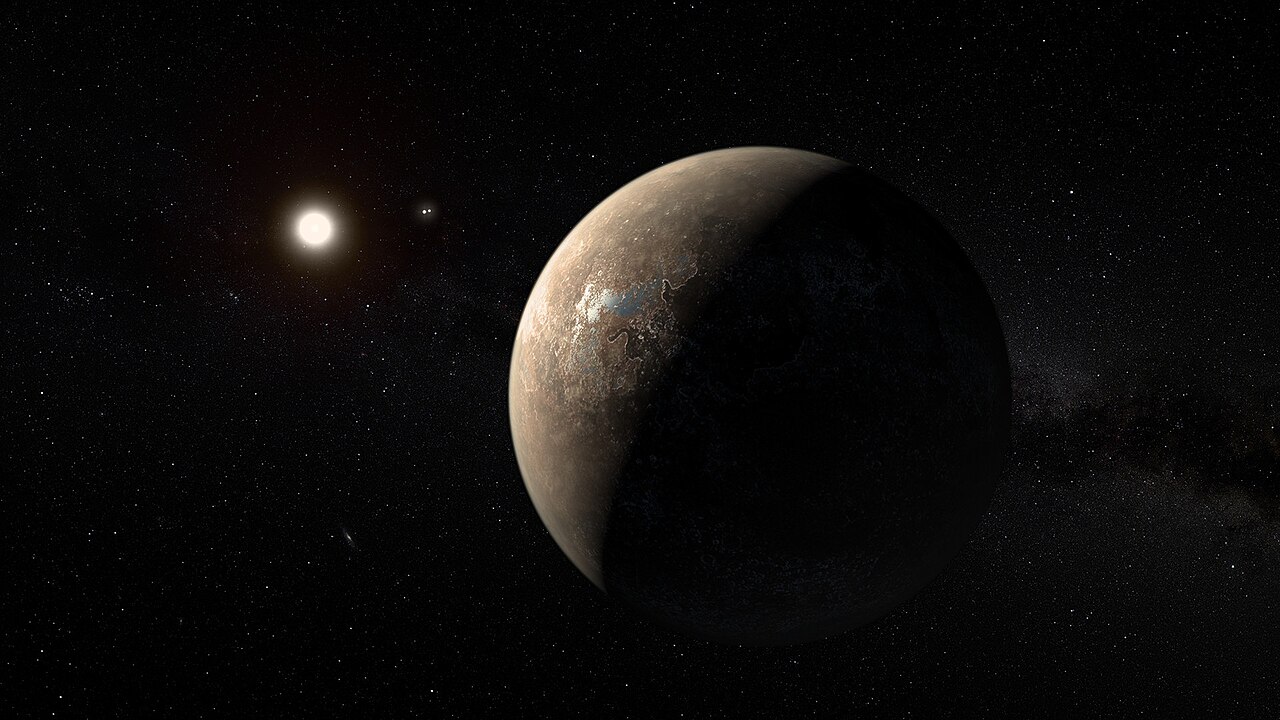
Artist: ESO/M. Kornmesser
LHS 1140 and Other Nearby M-Dwarfs with Temperate Worlds
LHS 1140 is a mid-M dwarf with a transiting super-Earth in the temperate zone. The planet’s size and density suggest a rocky composition, and its orbit potentially allows for temperate conditions under the right atmospheric makeup. Because it transits a small star, LHS 1140 b (and other similar worlds) are ideal laboratories for atmospheric characterization using transmission spectroscopy. Observations to date have not revealed a puffy hydrogen envelope, consistent with the trend among temperate, terrestrial-size planets around M-dwarfs. Whether these worlds harbor substantial secondary atmospheres remains an area of active study.
Beyond these marquee systems, surveys continue to find a wealth of small planets around M-dwarfs: ultra-short-period rocky worlds, compact multiplanet systems, and temperate super-Earths. Space missions and ground-based surveys contribute complementary discoveries. As we expand the catalog, population-level questions come into focus: How common are Earth-sized planets in the habitable zones of M-dwarfs? How often do they retain atmospheres in the face of strong stellar activity? And how diverse are their compositions, from water-rich to iron-rich extremes?
To interpret these observations, techniques described in How Astronomers Study Red Dwarfs are crucial. For instance, jointly analyzing radial velocities and transits improves mass–radius estimates, while multiwavelength monitoring of stellar flares informs atmospheric escape models. Ultimately, the fate of an M-dwarf planet’s atmosphere is a tug-of-war between replenishment and escape, a theme that connects this section back to M-dwarf space weather and forward to the search for life.
How Astronomers Study Red Dwarfs: Spectra, Transits, and Flares
The modern picture of red dwarfs is built from a toolkit of observational techniques spanning the electromagnetic spectrum. Each method probes different facets of stellar and planetary physics, and together they form a coherent strategy for disentangling planets from stellar variability.
Spectral Diagnostics and Stellar Parameters
Classifying M-dwarfs relies on characteristic molecular absorption bands. In the optical, TiO and VO features are strong indicators of low temperatures, while in the near-infrared, H2O and CO bands become prominent. High-resolution spectroscopy enables measurements of radial velocities and rotational broadening, while spectral indices calibrated against benchmark stars provide estimates of metallicity and effective temperature. Determining metallicity for M-dwarfs is more challenging than for Sun-like stars due to line blending and molecular dominance, but techniques using near-infrared indices and comparisons with binary companions (where one component is Sun-like) have improved the situation.
Measuring stellar radii and luminosities often benefits from interferometry (for the brightest nearby M-dwarfs), parallax measurements that fix distances, and spectral energy distribution fitting. Accurate stellar parameters are essential: the inferred radii and temperatures of transiting planets scale directly with the host star’s properties. Underestimating a star’s radius translates to underestimating a planet’s size, which can skew density and composition inference.
Transit Photometry and Transmission Spectroscopy
Transit surveys—space-based and ground-based—have been prolific in finding planets around M-dwarfs. When a planet passes in front of its star, it blocks a fraction of the star’s light; the depth of the dip gives the ratio of planet to star radii. Because M-dwarfs are small, Earth-sized planets block a larger fraction of the light compared with Sun-like stars, boosting detectability. Repeated transits pin down the orbital period and, when combined with stellar parameters, the orbital distance and likely irradiation.
During transit, a fraction of starlight filters through the planet’s limb, imprinting spectral fingerprints of atmospheric gases. This is transmission spectroscopy. Strong, puffy atmospheres are the easiest to detect; thin, high-mean-molecular-weight atmospheres produce much smaller signals that are challenging yet not impossible with current facilities for the most favorable systems. Complications arise from starspots and faculae—cool and hot regions on the stellar surface—which can bias transmission spectra if unaccounted for. Multiwavelength observations and stellar monitoring help identify and correct these systematics.
Radial Velocities in the Optical and Near-Infrared
Radial velocity (RV) measurements detect the gravitational tug of planets on their host stars. Many M-dwarfs are faint at optical wavelengths but comparatively brighter in the near-infrared (NIR), inspiring the development of high-precision NIR spectrographs. Combining optical and NIR RVs can help distinguish stellar activity signals (which are wavelength dependent) from true planetary signals. Numerous RV detections of small planets around M-dwarfs have come from instruments that push precision into the sub-meter-per-second regime, enough to reveal Earth-mass planets on short orbits.
Flare Monitoring and High-Energy Observations
Photometric monitoring from the ground and space reveals flare rates and energies, while ultraviolet and X-ray observatories characterize the high-energy radiation environment. These data are crucial inputs for models of atmospheric escape and chemistry on orbiting planets. Time-resolved spectroscopy during flares constrains temperatures, emission measures, and particle acceleration. Because flares can inject short-lived spectral features, coordinated campaigns across wavelengths provide a holistic view of stellar activity with direct implications for exoplanet atmospheres.
In sum, the observational arsenal for red dwarfs blends techniques sensitive to stellar physics with those optimized for tiny planets. Integrating these lines of evidence—especially in systems like TRAPPIST-1 and LHS 1140—is what turns detections into physical understanding.
Benefits and Biases: Why We Find Many Planets Around M-Dwarfs
Our exoplanet catalogs contain a striking number of small planets around M-dwarfs. That does reflect a real underlying abundance, but it is also influenced by powerful observational biases. Understanding these biases is key to drawing proper conclusions about planet formation and habitability.
- Transit depth scales with (Rp/R⋆)2: For a given planet size Rp, smaller stars produce deeper transits, making Earth-sized planets more readily detectable around M-dwarfs than around Sun-like stars. An Earth-radius planet in front of a star half the Sun’s radius blocks four times more light.
- Short orbital periods and high transit probability: The geometric probability that we see a transit increases for shorter orbital distances. Because the habitable zones of M-dwarfs lie close to the star, HZ planets have a higher chance of transiting than HZ planets around brighter stars.
- Radial velocity amplitude scales with planet-to-star mass ratio: For the same planet mass, the stellar wobble is larger if the star is less massive, which again favors M-dwarf detections.
- Follow-up efficiency: Deep transits around small stars and short orbital periods enable rapid characterization with fewer photons and shorter campaigns.
On the flip side, several challenges complicate the picture:
- Stellar activity can mimic planetary signals: Spots, plages, and magnetic cycles can introduce apparent RV shifts and photometric variability. Disentangling activity from planets requires careful multiwavelength monitoring and modeling, as noted in observation methods.
- Atmospheric characterization is hard for thin atmospheres: While big hydrogen envelopes are relatively easy to detect via transmission spectra, the thinner, secondary atmospheres expected on many rocky HZ worlds produce signals near or below current detection thresholds, especially in the presence of stellar heterogeneity.
- Host star faintness: Many M-dwarfs are intrinsically faint, which can limit signal-to-noise for detailed spectroscopy, though nearby examples mitigate this challenge.
These benefits and biases act together to shape our discoveries. The bottom line is that red dwarfs are natural amplifiers for planet detection signals, but turning those detections into robust inferences about habitability requires wrestling with stellar activity and pushing instrumentation to the limits.
Implications for the Search for Life and Technosignatures
The extraordinary abundance of M-dwarfs means that, even if only a small fraction of their planets are habitable, the absolute number of potentially life-bearing worlds could be enormous. But do their environments nurture life-friendly conditions, or do they undermine them through relentless space weather? The emerging consensus is nuanced: the answer likely varies from system to system and depends on evolutionary histories.
Several threads connect red dwarf environments to astrobiology:
- Atmospheric survival: The early, active phases of M-dwarf evolution can last hundreds of millions to billions of years, delivering high doses of UV/EUV radiation and particle fluxes. If a young planet loses its initial atmosphere, can it build a secondary one through volcanic outgassing and delivery of volatiles via impacts? Planet mass appears crucial: higher gravity helps retain gases, and larger cores may sustain dynamos that power protective magnetic fields.
- Prebiotic chemistry under red light: Many proposed prebiotic pathways are sensitive to UV flux. M-dwarfs provide less near-UV than Sun-like stars but can intermittently spike UV during flares. It is plausible that such bursts might drive episodic chemistry, though the net balance between beneficial synthesis and destructive photolysis remains an open question to be resolved observationally and experimentally.
- Climates of tidally locked worlds: As discussed in Habitable Zones Around Red Dwarfs, atmospheric circulation can prevent nightside freeze-out and may create stable, temperate regions, especially near the substellar point. Cloud albedo feedbacks could widen the inner edge of the HZ for certain compositions.
- Biosignature detection strategies: Future observations will target atmospheric gases like O2, O3, CH4, and CO2 on temperate, transiting M-dwarf planets. Interpreting any potential biosignatures requires robust stellar context: flares and starspots can contaminate spectra, and abiotic processes can produce oxygen under some conditions.
- Technosignatures: The nearest M-dwarfs are natural targets for technosignature searches, including radio SETI and high-resolution spectroscopy searches for artificial light or unusual chemical species. While no technosignatures have been confirmed, ongoing surveys continue to expand both sensitivity and sky coverage.
The strategy for the coming decade combines population statistics with case studies of the very best targets. Systems like TRAPPIST-1 and LHS 1140 will anchor atmospheric characterization efforts, while nearby non-transiting systems like Proxima b may eventually yield to direct imaging and thermal phase curve measurements with large, next-generation observatories. By weaving together constraints from stellar activity, planetary densities, and atmospheric spectra, we will move from plausibility arguments to empirical answers about life’s prospects around the Galaxy’s most common stars.
Frequently Asked Questions
Do red dwarf planets get enough light for photosynthesis?
M-dwarfs emit most of their light at red and near-infrared wavelengths, with relatively less blue and ultraviolet output compared with Sun-like stars. On a temperate planet around an M-dwarf, the total energy at the top of the atmosphere can be similar to Earth’s if the orbit lies in the habitable zone, but the spectral distribution is shifted to longer wavelengths. For hypothetical photosynthetic organisms, this could favor pigments that absorb efficiently in the red and near-infrared. Laboratory and ecological studies on Earth suggest a variety of light-harvesting strategies are possible, including pigments tuned to longer wavelengths. Whether this would support robust biospheres depends on many environmental details—atmospheric composition, cloud cover, and nutrient cycles. Importantly, intermittent UV from flares can both drive and disrupt photochemistry; long-term habitability will hinge on how ecosystems adapt to or are shielded from such variability.
Can a tidally locked world have a stable, Earth-like climate?
Yes, under the right conditions. Early arguments held that the nightside of a tidally locked planet would freeze out its atmosphere, but 3D climate models have shown that even a modest atmosphere can transport heat effectively, preventing collapse. The substellar region may host thick cloud decks that reflect starlight and moderate surface temperatures, potentially extending habitability inward toward the star. Oceans, if present, can further redistribute heat through currents. That said, stability depends on atmospheric mass and composition, rotation and orbital eccentricity, and the level of stellar activity. Planets lacking sufficient volatiles or subject to intense, prolonged atmospheric escape may not sustain such climates. As observational constraints accumulate—particularly from transmission and emission spectroscopy—we will refine which combinations of parameters support long-term stability.
Final Thoughts on Understanding Red Dwarf Stars
Red dwarfs sit at the crossroads of stellar astrophysics, planetary science, and astrobiology. They are the most numerous hydrogen-fusing stars, long-lived to an extent that dwarfs cosmic history, and magnetically feisty in ways that can both illuminate and complicate our exploration of nearby worlds. Their small sizes and close-in habitable zones make temperate, Earth-sized planets detectable and, in favorable cases, characterizable. At the same time, their active high-energy environments force us to sharpen models of atmospheric escape, chemistry, and climate on tidally locked worlds.
The current observational picture is both encouraging and challenging. Systems like TRAPPIST-1 and LHS 1140 demonstrate that rocky, temperate planets around M-dwarfs are real and accessible to today’s instruments, while the lack of thick, primordial atmospheres on some inner planets strengthens the case for evolved, secondary atmospheres. Results indicating a likely absence of puffy hydrogen envelopes do not yet settle the crucial question: do these worlds possess dense, protective atmospheres compatible with surface liquid water? The answer will come from sustained, multiwavelength campaigns that jointly model stellar activity and planetary signals, as detailed in How Astronomers Study Red Dwarfs.

Artist: NASA, ESA, CSA, J. Olmsted (STScI), T. P. Greene (NASA Ames), T. Bell (BAERI), E. Ducrot (CEA), P. Lagage (CEA)
For readers following this field, a few takeaways stand out:
- Red dwarfs are prime hunting grounds for small, temperate exoplanets due to favorable detection physics.
- Magnetic activity and high-energy radiation are central to the fate of planetary atmospheres; context from flare and wind measurements is indispensable.
- Tidally locked climates are not a deal-breaker for habitability; atmospheric circulation and cloud feedbacks can stabilize conditions, as explored in habitable zone climates.
- The best-characterized systems will continue to refine our understanding of atmospheric retention, surface conditions, and biosignature detectability.
As new observations roll in, we will update our understanding of red dwarf planets from first-detection excitement to comparative planetology. If you enjoyed this deep dive and want to track the next wave of discoveries—from atmospheric spectra to direct imaging of nearby temperate worlds—consider subscribing to our newsletter. We share data-driven briefs, expert explainers, and curated links to the latest peer-reviewed results and mission updates. Stay tuned as the story of the Galaxy’s most common stars continues to unfold.