
Table of Contents
n
- n
- What Is a Dobsonian Telescope and Why Choose One?
- Aperture, Focal Length, and f/Ratio Explained
- Alt-Azimuth Mounts, Bearings, and Ergonomics
- Eyepieces, Exit Pupil, and True Field of View
- Collimation and Cooling: Maintaining Sharp Views
- Finders, Star-Hopping, and Alignment Techniques
- Observing Under Light Pollution: Filters and Targets
- Portability, Storage, and Transport Considerations
- Popular Apertures and Representative Models
- Why Dobsonians Aren’t Ideal for Long-Exposure Astrophotography
- Maintenance, Mirror Care, and Smart Upgrades
- Building an Observing Plan and Logbook
- Frequently Asked Questions
- Final Thoughts on Choosing the Right Dobsonian Telescope
n
n
n
n
n
n
n
n
n
n
n
n
n
n
nn
What Is a Dobsonian Telescope and Why Choose One?
n
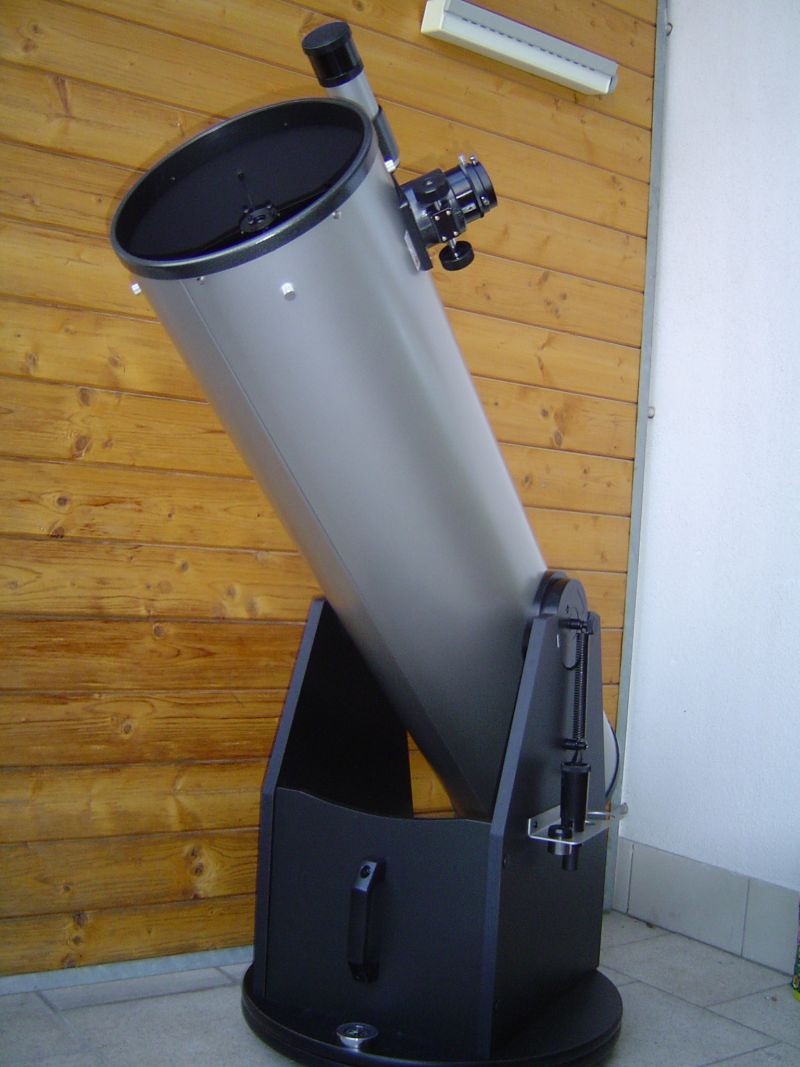
A Dobsonian telescope is a Newtonian reflector placed on a simple alt-azimuth (up/down, left/right) mount. The term “Dobsonian” typically refers to a large-aperture, cost-effective telescope optimized for visual observing. The design prioritizes simplicity, stability, and value, channeling most of your budget into the mirror (aperture) rather than complex mechanics or electronics. For beginners and seasoned observers alike, a Dobsonian can deliver stunning lunar, planetary, and deep-sky views without the setup overhead of more intricate systems.
n
 n
nn Credit: first uploaded on the English-speaking Wikipedia under the same filenamen
nn
In practical terms, a classic Dobsonian includes:
n
- n
- A parabolic primary mirror housed in a tube or truss structure
- A flat secondary mirror in a spider assembly directing light to the focuser
- A low-friction, boxy wooden or metal base with altitude and azimuth bearings
- A simple focuser (often 2-inch) to accommodate a wide range of eyepieces
n
n
n
n
n
Why choose a Dobsonian?
n
- n
- Maximum aperture per dollar: In amateur astronomy, larger aperture gathers more light and resolves finer detail. Dobsonians deliver large mirrors at accessible prices.
- Easy to use: The intuitive push-to pointing is quick to learn. There is no polar alignment and minimal setup compared with equatorial mounts.
- Stable views: The mount’s broad footprint and low center of gravity resist vibration, important for high-power planetary observing.
- Modular scalability: From compact tabletop reflectors to large truss designs, there’s a Dobsonian for nearly every observing environment and budget.
n
n
n
n
n
If you’re comparing options, see how optical principles in Aperture, Focal Length, and f/Ratio favor the Dobsonian’s strength in light gathering. To understand the engineering that makes pointing feel so smooth, jump to Alt-Azimuth Mounts, Bearings, and Ergonomics.
nn
Aperture, Focal Length, and f/Ratio Explained
n
Three core specifications determine what a Dobsonian can show: aperture, focal length, and f/ratio. Understanding these will help you match a scope to your observing goals.
n
Aperture: Light and Resolution
n
Aperture is the diameter of the primary mirror (e.g., 150 mm/6-inch, 200 mm/8-inch, 250 mm/10-inch). Aperture governs:
n
- n
- Light grasp: A larger mirror collects more light, revealing fainter galaxies, nebulae, and clusters.
- Resolution: Bigger apertures can resolve finer planetary and lunar detail, subject to atmospheric seeing.
n
n
n
As a rough guide, an 8-inch Dobsonian is considered a sweet spot for beginners because it balances weight, cost, and performance. Larger sizes provide more capability but demand more storage, transport planning, and cool-down time, as discussed in Portability, Storage, and Transport Considerations.
n
Focal Length and Magnification
n
Focal length is the distance over which the mirror brings light to focus (e.g., 1200 mm). It determines magnification with a given eyepiece:
n
Magnification = Focal length of telescope / Focal length of eyepiece
n
For example, a 1200 mm telescope with a 10 mm eyepiece produces 120× magnification. It’s normal to use multiple eyepieces to vary magnification for different targets.
n
f/Ratio: Speed, Field, and Coma
n
The f/ratio equals focal length divided by aperture (e.g., 1200 mm / 200 mm = f/6). Lower f/ratios (f/4–f/5) are often called “fast” and produce wider fields with lower magnification for a given eyepiece, while higher f/ratios (f/6–f/8) are “slow” and yield narrower fields and higher magnification.
n
- n
- Fast systems (f/4–f/5): Great for wide deep-sky views, but they show more coma (off-axis star elongation) and demand more careful collimation. Some observers use a coma corrector at f/4–f/5.
- Moderate systems (f/5–f/6): A balanced choice for general use and a common range for 8–10 inch Dobs. Coma is present but often tolerable for many observers.
- Slow systems (f/6–f/8): Easier on eyepieces and collimation, better for high-power lunar/planetary observing, but yield narrower maximum true fields.
n
n
n
n
When choosing your first Dobsonian, consider a moderate f/ratio (around f/6 for 6–8 inch scopes and around f/5 for 10–12 inch scopes) to balance field of view, eyepiece demands, and collimation tolerance. If you plan to emphasize planetary detail and double-star work, slower f/ratios can be friendlier. If you love sweeping Milky Way star fields and large nebulae, faster systems paired with wide-angle eyepieces can be compelling.
nn
Alt-Azimuth Mounts, Bearings, and Ergonomics
n
The hallmark of a Dobsonian is its simple alt-azimuth mount. The design aims to be smooth yet firm, holding position without backlash. Small design features matter enormously to the observing experience.
n
Bearings and Motion
n
 n
nn Artist: James Stewart 669n
nn
- n
- Azimuth bearing: The base rotates on low-friction surfaces. Classic designs use Teflon pads on textured laminate to achieve a controllable, smooth motion.
- Altitude bearings: The tube rides in semicircular or cylindrical bearings. Large-diameter altitude bearings improve balance and reduce sensitivity to eyepiece weight changes.
- Stiction vs. slip: Ideally, initial friction (“stiction”) matches dynamic friction so motion begins and continues smoothly. This reduces overshoot when centering targets at high power.
n
n
n
n
Ergonomics and Balance
n
Comfortable observing positions help you see more. Here are practical considerations:
n
- n
- Eyepiece height: A classic solid-tube 8-inch Dobsonian can usually be observed from a standing or seated position. Larger apertures may benefit from an observing chair.
- Balance adjustments: Swapping to a heavy 2-inch eyepiece or adding a finder can shift balance. Some mounts provide adjustable spring tension, friction knobs, or movable altitude bearings.
- Base weight and footprint: Heavier bases add stability but reduce portability. Split-base or collapsible designs improve transport without sacrificing steadiness.
n
n
n
n
If you’re comparing how different bases feel, test them at both low and high magnification. Ensure fine adjustments are easy when the target is near zenith—this is where finder alignment and smooth motions are especially crucial.
nn
Eyepieces, Exit Pupil, and True Field of View
n
Dobsonians often come with one or two eyepieces, but adding a few thoughtfully chosen optics can transform your experience. The interplay between exit pupil, apparent field of view (AFOV), and eye relief will guide good choices.
n
Magnification and Exit Pupil
n
The exit pupil is the diameter of the beam reaching your eye, calculated as:
n
Exit pupil (mm) = Eyepiece focal length (mm) / Telescope f/ratio
n
Guidelines:
n
- n
- Low power (4–6 mm exit pupil): Great for sweeping star fields and locating faint, extended objects.
- Medium power (2–3 mm): Excellent for galaxies, globular clusters, and many nebulae.
- High power (0.5–1.5 mm): Ideal for lunar/planetary work and tight double stars, limited by seeing.
n
n
n
n
For a 200 mm f/6 Dobsonian, example eyepieces might be: 30–32 mm for low power, 12–14 mm for mid power, and 6–8 mm for high power. Adding a 2× Barlow lens effectively doubles your eyepiece set.
n
 n
nn Artist: Mornn
nn
Apparent vs. True Field of View
n
Use the AFOV provided by the eyepiece manufacturer to estimate true field of view (TFOV):
n
TFOV (degrees) ≈ AFOV (degrees) / Magnification
n
Wider AFOV eyepieces make tracking easier on a manual Dobsonian because the target stays in view longer. A 68°–82° AFOV is popular for mid- and low-power deep-sky work, while 50°–60° can suffice at high power where you prioritize sharpness and contrast.
n
2-Inch vs. 1.25-Inch Focusers
n
A 2-inch focuser supports larger field-stop eyepieces, enabling maximum TFOV. This is especially beneficial in faster scopes where your widest views are otherwise limited. Many modern Dobsonians come standard with 2-inch focusers and include an adapter for 1.25-inch eyepieces.
n
Correcting Common Optical Issues
n
- n
- Coma: Off-axis star elongation increases as f/ratio decreases. A coma corrector can significantly improve edge performance in fast (f/4–f/5) Newtonians.
- Astigmatism (observer’s eye): Some observers notice star shapes elongating at larger exit pupils if they have uncorrected astigmatism. Eyeglasses or dioptric correction can help at low power.
- Focusing precision: A dual-speed focuser makes fine focus easier at high power and is a recommended upgrade if your scope does not include one.
n
n
n
n
For guidance on keeping your optics aligned for best performance, see Collimation and Cooling.
nn
Collimation and Cooling: Maintaining Sharp Views
n
Dobsonians use Newtonian optics, which require periodic collimation—aligning the primary and secondary mirrors so light converges precisely at the focal plane. Good collimation enables crisp high-power views of planets and tight double stars.
n
Essential Collimation Tools
n
- n
- Collimation cap: An inexpensive plastic cap with a small peephole. Adequate for beginners and quick checks.
- Cheshire/sight tube: Assists with secondary centering and primary alignment using a reflective plate.
- Laser collimator: Useful for rough alignment, though lasers themselves must be collimated and used carefully.
n
n
n
n
Basic Collimation Steps
n
- n
- Center the secondary under the focuser: Use a sight tube to ensure the secondary mirror appears circular and centered. This is about positioning, not tilt.
- Adjust secondary tilt: Point the secondary so the focuser sees the center of the primary (often marked by a center spot).
- Align the primary: Using a Cheshire or the donut reflection in a collimation cap, adjust the primary mirror’s collimation screws until the center spot aligns with the reference.
n
n
n
n
Fine-tune at night using a high-power star test when conditions permit. A well-collimated Dobsonian can perform impressively on Jupiter’s belts, Saturn’s rings, and lunar rilles.
n
Cooling and Thermal Management
n
Mirrors perform best when close to ambient temperature. Thermal plumes can soften images, especially at high power.
n
- n
- Cool-down time: Allow 30–60 minutes (or more for larger mirrors) for temperatures to equalize.
- Rear fan: Many bases include a low-speed fan behind the primary mirror to hasten equilibrium. Gentle airflow is preferable to avoid vibrations.
- Ventilation: Open or truss designs exchange air more readily; solid tubes may take longer to cool but shield the optics better from stray light.
n
n
n
n
Optimizing collimation and temperature control can be as impactful as buying a new eyepiece. For tracking and aiming benefits that pair with sharp optics, refer to Finders, Star-Hopping, and Alignment.
nn
Finders, Star-Hopping, and Alignment Techniques
n
Because Dobsonians are manual in their basic form, the finder system you choose will dramatically affect how quickly you can locate targets.
n
Common Finder Options
n
- n
- Red-dot or reflex finder: Projects a 1× reticle on the sky; ideal for rough pointing using bright stars and naked-eye patterns.
- RACI (Right-Angle Correct-Image) finder: A small refractor finder that shows a correctly oriented view; excellent for star-hopping from charts.
- Telrad/rigid reflex sights: Large, concentric circles make angular offsets from bright stars easy. Works well alongside a RACI finder.
- Push-to encoders/digital setting circles: Some Dobsonians offer optional encoders and a handheld device or app. You push the scope while the display guides you to the coordinates.
n
n
n
n
n
Star-Hopping Basics
n
Star-hopping is the art of navigating from known bright stars to faint targets using a sequence of patterns:
n
- n
- Use a planisphere or app to pick a bright anchor star near your target.
- Swing the telescope with the red-dot toward the anchor star, then switch to the RACI finder to follow asterisms (triangles, curves, lines).
- Match the scale in your finder to your chart and step your way to the target. Once close, switch to a low-power eyepiece and sweep slowly.
n
n
n
n
Once you develop a consistent method, you will locate objects faster than you might expect. For help prioritizing objects based on sky brightness, see Observing Under Light Pollution.
nn
Observing Under Light Pollution: Filters and Targets
n
Many observers live under bright suburban or urban skies. While dark sites yield the best results, a Dobsonian remains potent from the backyard if you adapt your target list and accessories.
n
Filters That Help
n
- n
- UHC (Ultra High Contrast) filters: Emphasize emission nebulae by transmitting key nebular lines while diminishing much of the broadband skyglow. Useful on objects like the Orion Nebula (M42) and the Lagoon Nebula (M8).
- O III filters: Narrowband filters isolating doubly ionized oxygen lines. Particularly effective on planetary nebulae and some supernova remnants; they often darken the sky background substantially.
- Neutral density or polarizing lunar filters: Reduce glare on the Moon for increased comfort and perceived detail.
n
n
n
n
Note: Broadband “light pollution reduction” filters are less effective on galaxies and clusters, which emit continuous spectra. Galaxies generally require darker skies, good transparency, and patient averted vision. For maximum backyard success with faint fuzzies, consider larger aperture as discussed in Aperture, Focal Length, and f/Ratio.
n
Targets That Punch Through Glow
n
- n
- The Moon: Endless detail at any phase; try different sunlight angles across craters and rilles.
- Planets: Jupiter’s belts and moons, Saturn’s rings and Cassini Division, Mars’ polar cap (when favorable), and Venus’ phases.
- Double stars: Color contrast and close splits (e.g., Albireo, Epsilon Lyrae) offer rewarding challenges.
- Bright clusters and nebulae: Open clusters like the Pleiades (M45) or the Double Cluster can shine even in city skies; emission nebulae benefit from UHC/O III filters when suitably bright and large.
n
n
n
n
n
n
Tip: Shield your observing area from direct local lights using a screen or portable panel. Preserving dark adaptation improves contrast more than you might expect.
n
nn
Portability, Storage, and Transport Considerations
n
Dobsonians range from compact tabletop reflectors to large-aperture truss designs. Your space and transport options should inform your choice as much as your observing ambitions.
n
Solid Tube vs. Truss Designs
n
- n
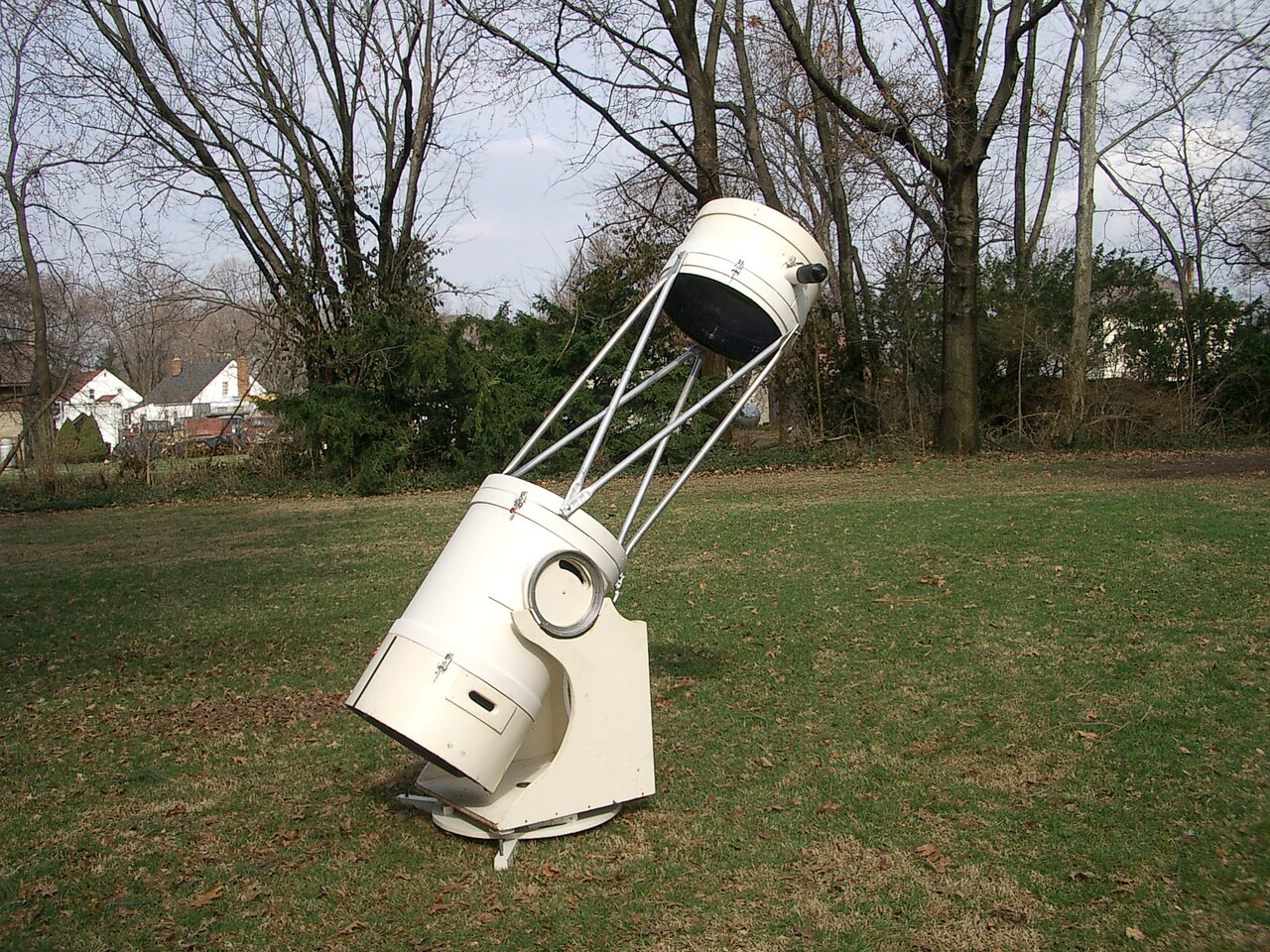
- Solid tube: Common for 6–10 inch sizes. They are straightforward, robust, and quick to set up. The tube can be bulky in smaller cars at 10–12 inches.
- Truss/strut: Collapsible or truss Dobsonians break down into smaller pieces, making large apertures transportable. They require additional setup time and often benefit from a light shroud.
n
n
n
 n
nn Artist: JamesStewart669n
nn
Tabletop Dobsonians
n
Compact 4–6 inch tabletop reflectors can be excellent “grab-and-go” scopes. They require a stable surface (a sturdy table or a short tripod) and offer quick, low-barrier observing. They are ideal for casual lunar/planetary sessions and bright deep-sky highlights.
n
 n
nn Artist: Wutthichai Charoenburin
nn
Storage, Carrying, and Setup
n
- n
- Weight distribution: Even if the total weight is manageable, ensure each individual component (tube and base) is easy to carry.
- Footprint: Measure doorways, car trunks, and storage spaces. A simple dolly or hand truck can make moving a solid-tube Dob significantly easier.
- Setup sequence: Practice a safe lifting posture, carry the base first, then the tube. Beware of wind when transporting and assembling large truss scopes.
n
n
n
n
If portability is a priority, revisit Alt-Azimuth Mounts, Bearings, and Ergonomics to weigh the stability benefits of heavier bases against the convenience of lighter, collapsible designs.
nn
Popular Apertures and Representative Models
n
Dobsonians are offered by multiple reputable manufacturers. While availability, features, and brand names vary by region and over time, the following aperture-based overview can guide expectations. Always verify current specifications, pricing, and included accessories.
n
6-Inch (150 mm)
n
- n
- Use case: Budget-friendly entry point that excels on the Moon, planets, bright clusters, and some brighter nebulae.
- Pros: Light and portable; cools quickly; easier collimation; often includes a 1.25-inch or 2-inch focuser.
- Considerations: Limited reach on faint galaxies from light-polluted sites; smaller maximum exit pupil with 1.25-inch-only focusers.
n
n
n
n
8-Inch (200 mm)
n
- n
- Use case: Widely recommended “first serious telescope.” A balanced option for beginners who want a lifetime-capable scope.
- Pros: Significantly more light grasp than 6-inch; still manageable for one person; often f/6 for forgiving collimation and eyepiece performance.
- Considerations: Base and tube are bulkier; plan storage and transport accordingly.
n
n
n
n
10-Inch (250 mm)
n
- n
- Use case: Deep-sky performance step-up; more detail on globulars and planetary nebulae; stronger galaxy hunting at dark sites.
- Pros: Noticeable jump in brightness and resolution; many models feature dual-speed focusers and 2-inch focusers as standard.
- Considerations: Heavier and larger; cool-down time increases; collimation tolerance narrows at typical f/5 focal ratios.
n
n
n
n
12-Inch (300 mm) and Larger
n
- n
- Use case: Serious deep-sky reach and resolution; a favorite among visual observers who prioritize faint nebulae and galaxy structure.
- Pros: Dramatic jump in light gathering; resolves globular clusters into stars; pairs well with narrowband filters.
- Considerations: Transport logistics, storage space, and cool-down management become central. Truss designs are common to keep size manageable.
n
n
n
n
When comparing specific models, look for details such as bearing diameter, focuser quality, mirror cell ventilation, included finder types, and compatibility with upgrades like encoders.
nn
Why Dobsonians Aren’t Ideal for Long-Exposure Astrophotography
n
Dobsonians shine for visual observing. However, the simple alt-az mount presents challenges for long-exposure, deep-sky astrophotography:
n
- n
- Field rotation: As the telescope tracks by pushing in altitude and azimuth, the sky appears to rotate in the field of view, smearing long exposures.
- No driven tracking: Without motorized tracking, targets drift rapidly at high magnification. Manual tracking requires constant nudging.
- Guiding complexity: Adding equatorial platforms or field derotators increases cost and complexity, diminishing the core Dobsonian advantage.
n
n
n
n
What does work well?
n
- n
- Short-exposure planetary imaging: High-frame-rate video (lucky imaging) of the Moon, planets, and double stars can be very effective. You capture thousands of short frames and stack the best.
- Afocal snapshots: With a smartphone adapter, you can take casual photos of the Moon and bright planets.
n
n
n
If your primary goal is long-exposure deep-sky photography, a dedicated equatorial mount with a smaller refractor is often recommended. For more on visual strengths in less-than-ideal skies, see Observing Under Light Pollution.
nn
Maintenance, Mirror Care, and Smart Upgrades
n
Dobsonians are robust, but a little maintenance keeps performance high and ownership enjoyable.
n
Cleaning and Handling Optics
n
- n
- Dust management: A dusty mirror generally has minimal impact on views. Clean only when necessary to avoid risk.
- Primary mirror cleaning: If required, use a gentle rinse with distilled water after a lukewarm soak and a mild surfactant. Avoid wiping unless absolutely necessary; use minimal pressure with clean cotton if you must dislodge particles.
- Secondary mirror care: Even more delicate due to smaller size and mounting. Consider removing it carefully, noting the orientation.
n
n
n
n
 n
nn Artist: Tim van Werkhovenn
nn
Always consult your manufacturer’s guidance and proceed cautiously. Reassembly should be followed by collimation checks.
n
Upgrades That Deliver
n
- n
- Dual-speed focuser: Improves fine focusing at high magnification.
- Finder combo: Pair a reflex sight (or Telrad) with a RACI finder for efficient star-hopping.
- Encoder-based push-to: Digital setting circles offer a middle ground between manual and fully computerized systems.
- Coma corrector: For fast scopes (f/4–f/5), improves edge star shapes in wide-field eyepieces.
- Light shroud (truss scopes): Reduces stray light and dew; improves contrast.
- Primary fan: If not included, a quiet fan accelerates cool-down and stabilizes images.
n
n
n
n
n
n
n
Dew and Stray Light
n
- n
- Dew control: Secondary mirrors, eyepieces, and finders can dew up. Use dew shields, gentle heat, or chemical hand warmers with care.
- Stray light management: Consider flocking the tube opposite the focuser to absorb light; keep nearby lights out of your direct line of sight.
n
n
n
These small improvements help you extract full performance without changing the telescope’s core simplicity. Consider pairing upgrades with a structured observing plan to make the most of clear nights.
nn
Building an Observing Plan and Logbook
n
The difference between a good night and a great one often comes down to planning. Organize your targets, anticipate sky conditions, and record what you see for steady progress.
n
Plan to Conditions
n
- n
- Seeing vs. transparency: If the atmosphere is steady (good seeing), emphasize planets, double stars, and tight detail. If the sky is crisp and clear (good transparency), focus on nebulae and galaxies.
- Altitude and timing: Objects high in the sky suffer less atmospheric interference. Aim to view targets when they culminate (reach their highest point).
- Moon phase: Dark windows around new moon are best for faint deep-sky; bright lunar phases are perfect for detailed Moon exploration and planetary sessions.
n
n
n
n
Build a Shortlist
n
Pick a handful of targets in each category (planets, clusters, nebulae, galaxies) and arrange them in a logical order by right ascension or by constellation. This minimizes slewing time and keeps you oriented for efficient star-hopping.
n
Keep a Log
n
- n
- Record conditions: Note seeing, transparency, wind, and temperature.
- Document equipment: Eyepieces used, magnifications, filters, and any upgrades in play.
- Sketches and notes: Even rough sketches sharpen your observing eye; jot down subtle details like stellar color or faint nebular extensions.
n
n
n
n
Over time, your logbook becomes a personalized atlas of lessons learned—informing future equipment choices and highlighting which upgrades provide the most value.
nn
Frequently Asked Questions
n
What size Dobsonian is best for a beginner?
n
For most people, an 8-inch Dobsonian offers the best balance of performance, cost, and manageability. It provides a significant jump in light-gathering over a 6-inch without becoming unwieldy. If storage or budget is tight, a 6-inch remains a solid choice. If you can handle more weight and bulk, a 10-inch opens new deep-sky possibilities. Always consider where you will store and use the telescope, as discussed in Portability, Storage, and Transport Considerations.
n
Do I need expensive eyepieces for a Dobsonian?
n
No. Many affordable eyepieces perform well, especially at moderate f/ratios (around f/6). Wider AFOV eyepieces are attractive for manual tracking, but quality mid-priced options can provide immersive views without breaking the bank. If your Dobsonian is fast (f/4–f/5), carefully chosen eyepieces and possibly a coma corrector improve edge performance. Start with a sensible spread of focal lengths and add specialty eyepieces after a few observing sessions, guided by the principles in Eyepieces, Exit Pupil, and True Field of View.
nn
Final Thoughts on Choosing the Right Dobsonian Telescope
n
Dobsonian telescopes earn their reputation by delivering what matters most to visual observers: generous aperture, stable mounts, and uncomplicated operation. Start by clarifying your priorities—aperture versus portability, wide-field sweeping versus high-power planetary detail, and budget versus upgrade paths. Pay particular attention to the fundamentals covered in Aperture, Focal Length, and f/Ratio, the tactile performance of the mount in Alt-Azimuth Mounts, Bearings, and Ergonomics, and the optical fine-tuning practices in Collimation and Cooling.
n
A well-chosen 6–10 inch Dobsonian can unlock years of lunar, planetary, and deep-sky exploration from your backyard and beyond. Add a thoughtfully curated eyepiece set, a reliable finder combination, and a simple observing plan, and you will be amazed by how much the night sky reveals. If you enjoyed this guide and want more practical, evidence-based astronomy content, subscribe to our newsletter for upcoming deep dives on equipment choices, seasonal targets, and observing techniques.