
Table of Contents
n
- n
- What Is Titan, Saturn’s Largest Moon?
- Titan’s Thick Atmosphere and Methane Weather
- Surface Geology: Dunes, Lakes, and Cryovolcanism
- Organic Chemistry and Prebiotic Potential
- Interior Structure and the Subsurface Ocean
- Exploration History: Cassini–Huygens Insights
- Future Missions: NASA’s Dragonfly Rotorcraft
- How to Observe Titan from Earth and at Home
- Frequently Asked Questions
- Final Thoughts on Exploring Titan, Saturn’s Organic-Rich Moon
n
n
n
n
n
n
n
n
n
n
nn
What Is Titan, Saturn’s Largest Moon?
n
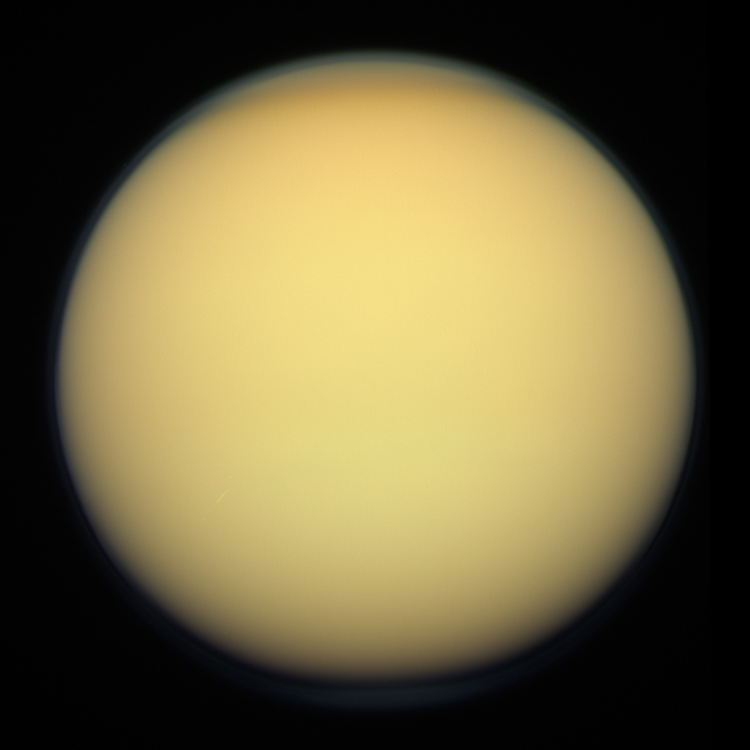
Titan is Saturn’s largest moon and one of the most intriguing worlds in the Solar System. Bigger than the planet Mercury and only slightly smaller than Jupiter’s moon Ganymede, Titan stands out for a singular reason: it is the only moon with a thick, stable atmosphere and the only known world besides Earth with stable liquids on its surface. Those liquids are not water—they are hydrocarbons like methane and ethane—flowing and pooling in rivers, lakes, and seas under an orange, hazy sky.
n
 n
nn
n
Orbiting Saturn at roughly 1.2 million kilometers, Titan completes a circuit every ~16 Earth days, locked in synchronous rotation so the same hemisphere always faces Saturn. With a diameter of about 5,150 kilometers and a bulk density of approximately 1.88 g/cm³, Titan is composed of a mix of water ice and rocky material. Its surface gravity is around 1/7th of Earth’s—enough to keep a dense atmosphere, but low enough that a human with wings could conceivably glide in its thick air. The surface temperature hovers around 94 K (−179 °C), cold enough that water is rock-hard ice and methane can condense and flow.
n
This combination of a frigid environment, a nitrogen-rich atmosphere, and hydrocarbon chemistry makes Titan a natural laboratory for studying processes that might resemble the prebiotic chemistry of early Earth—just at a much colder temperature. As later sections on organic chemistry and interior structure will explain, Titan’s potential extends from its surface to possible subsurface oceans, attracting sustained scientific interest and a new generation of missions.
n
{n "name": "Titan",n "primary": "Saturn",n "mean_radius_km": 2575,n "mass_kg": 1.345e23,n "mean_density_g_cm3": 1.88,n "surface_gravity_m_s2": 1.35,n "surface_pressure_bar": 1.5,n "surface_temperature_K": 94,n "orbital_period_days": 15.945,n "atmosphere_major": "N2 (~98% by volume)",n "atmosphere_minor": "CH4 (percent-level), trace hydrocarbons",n "surface_liquids": "methane, ethane",n "discovery": "Christiaan Huygens, 1655"n}nn
In the context of planetary science, Titan bridges categories. It is a moon with an Earth-like meteorological cycle—clouds, rain, rivers, seas—except the working fluid is methane, not water. It may also hide an internal ocean of liquid water mixed with ammonia, geologically decoupling the outer ice shell from the interior. This rare confluence of attributes is why Titan is central to comparative planetology and astrobiology, linking disciplines from atmospheric chemistry to geophysics.
nn
Titan’s Thick Atmosphere and Methane Weather
n
Titan’s atmosphere is a standout: a dense, nitrogen-based envelope with a surface pressure about 1.5 times that of Earth. The main component, molecular nitrogen (N2), is accompanied by methane (CH4) at the percent level and a host of trace hydrocarbons and nitriles produced by photochemistry in the upper atmosphere. Sunlight and energetic particles break apart methane and nitrogen, enabling complex reactions that create aerosol particles called tholins, which give Titan its characteristic orange hue and can settle toward the surface.
n
 n
nn
n
Unlike any other moon, Titan supports an active weather cycle. Methane behaves on Titan as water does on Earth, cycling among vapor, clouds, rain, rivers, lakes, and seas. At higher altitudes, methane condenses to form clouds that can drift and precipitate. Seasonal changes driven by Saturn’s ~29.5-year solar orbit result in shifts in cloud patterns and rainfall, often favoring one pole or the other depending on the season. Observations have shown storm activity and large cloud outbursts over the mid-latitudes and poles, especially as the seasons transition.
n
Because the atmosphere is thick, winds play a significant role in shaping the landscape. Near the equator, prevailing winds and seasonal reversals interact with Saturn’s gravitational tides to generate the distinctive linear dunes observed over vast regions. Atmospheric circulation models suggest global-scale Hadley cells that migrate with the seasons, redistributing methane and haze across latitudes. The complex interplay among radiation, chemistry, and dynamics makes Titan a natural testbed for atmospheric science, a topic we revisit when discussing surface geology and dune formation.
n
Methane on Titan is a finite resource. Over geologic time, methane should be photochemically destroyed, raising an active question: What replenishes it? Hypotheses range from subsurface reservoirs that outgas over time to episodic release from clathrate hydrates or cryovolcanic activity. While definitive evidence for cryovolcanism remains debated, the methane budget problem is a central driver of current and future exploration, as it links atmospheric chemistry to interior processes.
n
- n
- Atmospheric composition highlights: N2 dominant; CH4 percent-level; trace hydrocarbons and nitriles.
- Pressure and temperature: ~1.5 bar, ~94 K at the surface.
- Haze and tholins: produced by photochemistry; drive orange coloration, influence climate.
- Methane cycle: evaporation, cloud formation, precipitation, runoff into lakes and seas.
- Seasonality: Saturn’s long year drives multi-year shifts in storm patterns and polar meteorology.
n
n
n
n
n
n
These processes are not just atmospheric curiosities—they leave fingerprints on the ground. The orientation of dunes, the presence of dried riverbed networks, and the distribution of polar lakes all reveal how Titan’s atmosphere sculpts its surface, connecting the sky to the ground in a way comparable to Earth. For a closer look at those surface signatures, see Surface Geology.
nn
Surface Geology: Dunes, Lakes, and Cryovolcanism
n
Titan’s surface is a composite of water-ice “bedrock,” solid organic sediments, and hydrocarbon liquids. It is not pockmarked by impact craters to the extent some moons are; instead, it shows geologically young features in many areas, indicating ongoing resurfacing processes. When the Cassini spacecraft probed the surface with radar and near-infrared instruments, it revealed an alien-yet-familiar landscape: dark plains, mountain chains, vast dune fields, dendritic river valleys, and polar seas.
n
Hydrocarbon Lakes and Seas
n
Titan’s most dramatic surface features are the lakes and seas concentrated near the poles. The largest seas—Kraken Mare, Ligeia Mare, and Punga Mare—spread across hundreds of kilometers, filled with liquid methane and ethane. Smaller lakes populate the surrounding high latitudes, some with steep-sided depressions that may represent karst-like dissolution features formed in hydrocarbon-solvent conditions.
n
 n
nn
n
These bodies of liquid are part of Titan’s active methane cycle discussed in Titan’s Thick Atmosphere and Methane Weather. Radar observations have revealed mirror-like reflections consistent with still, liquid surfaces, and changes in shoreline features over time hint at seasonal hydrology. Studies suggest that the composition varies by location and season, with ethane often more abundant in larger, longer-lived seas and methane more present in precipitation-fed lakes.
n
Equatorial Dunes
n
Titan’s equatorial regions are dominated by longitudinal dunes—long, linear ridges separated by interdune flats. These dunes are composed of organic sand-sized particles, likely formed from the aggregation and chemical processing of atmospheric aerosols. The sand grains are transported by near-surface winds that, despite Titan’s weak sunlight, can be energetic enough under certain conditions to initiate saltation. Dune orientation and morphology encode information about wind regimes, seasonal reversals, and even Saturn’s tidal influence on the atmosphere. When future missions visit equatorial terrains, they will encounter this unique aeolian laboratory.
n
Mountains, Channels, and Plains
n
Beyond dunes and seas, Titan features mountain chains—likely water-ice tectonic features—and extensive plains that may consist of organic sediments or eroded icy material. River channels, such as the prominent Vid Flumina system, snake into seas, displaying dendritic patterns indicative of rainfall-fed erosion. Many channels appear to be carved by liquid methane, sometimes cutting into bedrock-like water ice, illustrating how Titan’s criesosphere can be shaped by hydrocarbon fluids.
Cryovolcanism: Possible but Unconfirmed
n
The evidence for cryovolcanism—eruption of liquids or slurries of water and ammonia from the interior—remains tantalizing but not definitive. Certain candidate features, such as dome-like structures or flow-like morphologies, have been interpreted as potential cryovolcanic constructs. If cryovolcanism occurs, it could provide a source of methane to the atmosphere over geologic timescales, partially addressing the methane replenishment puzzle raised in the atmosphere section. However, alternative explanations, including tectonism or erosion, can mimic cryovolcanic signatures, keeping the debate open.
n
What is clear is that Titan’s surface and atmosphere are tightly coupled. Aeolian, fluvial, and lacustrine processes operate in tandem with photochemistry and climate, redistributing organic material across the globe and generating a stratified, dynamic landscape. That organic layer is not just geologically interesting; it’s chemically rich, as explored next in Organic Chemistry and Prebiotic Potential.
nn
Organic Chemistry and Prebiotic Potential
n
Titan’s atmosphere is a factory for complex organic molecules. Ultraviolet sunlight and energetic particles break apart methane and nitrogen, producing a cascade of reactions that yield hydrocarbons (such as ethane, acetylene, propane, and benzene) and nitrogen-bearing organics (nitriles like hydrogen cyanide). Many of these molecules polymerize or aggregate into solid aerosols—tholins—that settle downward and blanket the surface in a dark, organic-rich deposit.
n
From the perspective of astrobiology, Titan is compelling for several reasons:
n
- n
- Prebiotic feedstock: The atmosphere and surface are replete with molecules relevant to prebiotic chemistry, including hydrocarbons and nitriles. These can be precursors to amino acids and nucleobases under certain reaction conditions.
- Transient liquid water: Although Titan’s surface is far too cold for persistent liquid water, short-lived liquid water environments can be generated by impact heating. When a meteorite strikes Titan’s icy crust, melting can produce liquid water that mixes with organics, potentially enabling prebiotic reactions during the cooling interval.
- Subsurface ocean potential: If Titan harbors a subsurface ocean (see Interior Structure), water–rock interactions could provide chemical energy gradients conducive to complex chemistry. Even if the ocean is isolated from the surface, tectonic or cryovolcanic pathways could occasionally communicate between reservoirs.
n
n
n
n
Laboratory experiments simulating Titan-like conditions have shown that tholin material can produce amino acid precursors when exposed to liquid water and energy sources. While Titan’s surface lacks persistent liquid water, these experiments suggest that episodic water exposure—such as that created by impacts—could yield temporary microenvironments for complex chemistry.
n
There’s also the intriguing possibility of exotic life in non-aqueous solvents. In Titan’s seas, methane and ethane serve as the working liquids. The idea that life could arise in hydrocarbon solvents is speculative and faces major chemical challenges—such as reduced solubility for many polar biomolecules and limited energetics at 94 K. However, exploring Titan’s seas and shorelines could reveal whether any unconventional chemical systems occur naturally in such conditions. Even a null result would tightly constrain the range of plausible chemistries for life and its precursors, which is scientifically valuable.
n
Finally, the abundance of organics on Titan provides a bridge to understanding the early Earth. While Earth’s early atmosphere differed in composition and temperature, Titan’s photochemical haze and nitrogen base invite comparisons about how complex organics accumulate and process over time. Viewed this way, Titan is a “time capsule” for prebiotic chemistry—one that the upcoming Dragonfly mission is poised to interrogate in situ.
nn
Interior Structure and the Subsurface Ocean
n
Modeling of Titan’s internal structure, informed by gravity measurements, rotation dynamics, and surface morphology, supports the presence of a layered interior: a rocky core, a high-pressure ice mantle, a global subsurface ocean (likely water with dissolved ammonia), and an outer shell of water ice. The ocean’s presence is suggested by how Titan’s rotation and tidal response deviate from what would be expected of a fully rigid body. An internal ocean can decouple the outer ice shell from the deeper interior, enabling subtle rotational and tidal features.
n
The hypothesized ocean could exist tens to hundreds of kilometers beneath the surface. Ammonia—if present—would act as an antifreeze, lowering water’s freezing point and extending the longevity of a liquid layer. The exact thickness of the ocean and the viscosity of the overlying ice shell remain active research areas. Even the ocean’s salinity is unknown; salts or other solutes could alter its density and convection patterns.
n
The ocean’s astrobiological implications are significant. Water–rock interactions at the seafloor might produce redox gradients that provide chemical energy for potentially complex chemistry. If there are occasional conduits to the surface via faults, cryovolcanic pathways, or impact fracturing, organic materials from above could mix with water, enriching reaction possibilities. Determining whether such exchanges occur is a central question for Titan science, connecting deep interior processes to surface chemistry and atmospheric composition.
n
Unlike Europa or Enceladus, where evidence of active plumes offers direct sampling opportunities, Titan does not yet show unambiguous plume activity. That makes surface exploration—like the one planned for Dragonfly—especially valuable. In the absence of easily accessible ocean material, sampling organic sediments, meteorite impact ejecta, and dune sands can still provide strong constraints on material cycling and the ocean’s possible influence on surface composition.
n
n
Key idea: Titan’s interior ocean likely decouples the icy shell from the core, influencing rotation and tides, while offering a potentially habitable aqueous environment—albeit one deeply buried under a shell of ice.
n
nn
Exploration History: Cassini–Huygens Insights
n
The modern era of Titan exploration began in earnest with the Cassini–Huygens mission to the Saturn system. The Cassini orbiter arrived at Saturn in 2004 and conducted repeated flybys of Titan over the next 13 years. The Huygens probe, built by the European Space Agency, detached from Cassini and descended through Titan’s atmosphere on January 14, 2005, transmitting the first and only in situ data and images from Titan’s surface.
n
 n
nn
n
Huygens Descent and Landing
n
Huygens provided a dramatic, detailed look at Titan’s atmosphere and ground. As it parachuted down, it measured atmospheric composition, temperature, pressure, and winds. It snapped images of bright highlands crossed by dark, branching channels—evidence of erosion. After a gentle touchdown, Huygens transmitted data from the surface for over an hour, revealing a landscape of rounded pebbles or cobbles composed of water ice, suggesting past flow of liquid hydrocarbons. The surface appeared firm but soft, as if crusted over; the probe’s measurements indicated dampness consistent with hydrocarbons present in the regolith.
n
Cassini’s Long Campaign
n
Cassini conducted more than a hundred targeted flybys of Titan, employing radar to penetrate the haze and map the surface at high resolution while also using near-infrared and other instruments to study both surface and atmosphere. Major discoveries include:
n
- n
- Lakes and seas: Definitive mapping of methane–ethane seas at high latitudes, including the vast Kraken Mare.
- Dunes: Identification of extensive equatorial dune fields of organic sands, forming linear ridges hundreds of kilometers long.
- Active meteorology: Observations of cloud outbursts and seasonal changes, linking to Titan’s methane cycle.
- River channels: Dendritic drainage networks leading into seas, consistent with rainfall and runoff.
- Interior hints: Evidence supporting a decoupled outer shell and a subsurface ocean, inferred from gravity and rotation data.
n
n
n
n
n
n
By mission’s end in 2017, Cassini had transformed Titan from a mysterious orange orb into a richly characterized world with diverse landscapes and an active climate. It also left behind outstanding questions: How is methane replenished? What are the detailed pathways of prebiotic chemistry in Titan’s environment? Are there cryovolcanic processes? These questions motivate the next phase of exploration discussed in Future Missions.
nn
Future Missions: NASA’s Dragonfly Rotorcraft
n
The next leap in Titan exploration is NASA’s Dragonfly mission, a nuclear-powered rotorcraft designed to fly through Titan’s dense air and traverse varied terrains. Titan’s low gravity and thick atmosphere make flight energetically practical, allowing Dragonfly to “hop” between sites separated by kilometers, surveying dunes, interdune flats, and regions influenced by impact processes.
n
 n
nn
n
Dragonfly’s science goals focus on understanding the chemical and physical processes that shape Titan’s environment, especially its prebiotic chemistry. The mission aims to:
n
- n
- Sample diverse materials: Collect and analyze organic-rich sands, potential impact melt products, and wind-blown sediments to reconstruct chemical pathways.
- Assess habitability: Evaluate whether environments like impact sites could have hosted liquid water long enough for complex chemistry to proceed.
- Characterize weather and climate: Measure atmospheric conditions from the surface to near-ground flight altitudes, complementing global insights from atmospheric studies.
- Probe geophysics: Monitor seismic activity and surface properties to infer subsurface structure and constrain the thickness and mechanical behavior of the outer ice shell.
n
n
n
n
n
Dragonfly is planned to target the Shangri-La dune fields and explore areas near the impact structure Selk crater, a region where liquid water may have transiently existed due to impact heating. Such locations offer prime opportunities to examine how organics interact with water—a key step that could bridge Titan chemistry to pathways relevant to the origin of life.
n
Key features of the mission concept include autonomous navigation in a low-light, hazy environment; a suite of instruments for imaging, meteorology, geophysics, and chemical analysis; and the ability to reposition as science dictates. Operating on the surface between flights, Dragonfly can conduct detailed measurements, then take to the air to scout new targets or avoid hazards. Its mobility is a force multiplier, turning a single lander into a multi-site explorer.
n
While the mission timeline can evolve, Dragonfly’s arrival in the 2030s is anticipated. Its dataset will complement the catalogs of Cassini and Huygens, offering a ground-level perspective of Titan’s materials and processes. When considered alongside investigations of Titan’s interior and prebiotic chemistry, Dragonfly could reshuffle our understanding of how organic complexity arises on planetary bodies.
nn
How to Observe Titan from Earth and at Home
n
You do not need a spacecraft to appreciate Titan—you can observe it from your backyard with modest equipment. Titan is the brightest of Saturn’s moons and is visible as a starlike point near the planet. Under good conditions, even small telescopes can show Titan distinctly separated from Saturn, while larger apertures may reveal additional moons.
n
 n
nn
n
Visibility Basics
n
- n
- Brightness: Titan’s visual magnitude hovers around +8.5, varying with geometry and phase angle.
- Separation: At maximum elongation, Titan can appear roughly a few arcminutes from Saturn (on the order of ~3 arcminutes), depending on Saturn–Earth distance.
- Period: Titan orbits Saturn in about 16 Earth days, so its position relative to the planet changes night by night.
n
n
n
n
Equipment Tips
n
- n
- Binoculars: Large binoculars (e.g., 15×70) under dark skies can sometimes pick out Titan as a pinprick near Saturn, but a telescope is more reliable.
- Small telescopes (60–100 mm): Titan should be visible as a point of light near Saturn at moderate magnifications (80–150×). Consult sky charts or apps to identify its position on a given night.
- Medium to large telescopes: Larger apertures improve contrast and may reveal additional Saturnian moons. Titan remains a star-like point; its disk is generally too small to resolve visually.
- Filters: Broadband filters can help with glare from Saturn, but Titan is usually bright enough to see without specialized filters. For imaging, infrared-capable cameras can enhance contrast against the rings and planet.
n
n
n
n
n
Timing and Conditions
n
- n
- Observe when Saturn is high in the sky to reduce atmospheric distortion.
- Use a stable mount and give your optics time to thermally stabilize.
- Check ephemerides: Titan’s position changes nightly; maximum elongations provide the easiest views.
n
n
n
n
For a simple observing log, you can keep track like this:
n
# Titan observing log (example)n2025-08-15 22:15 localnInstrument: 100 mm refractor, 9 mm eyepiece (~110×)nSeeing: 3/5; Transparency: GoodnNotes: Titan visible ~E of Saturn, clearly separated; suspected Rhea closer in.nn
If you are curious about how the landscape and chemistry look up close, revisit Surface Geology and Organic Chemistry for context on what Dragonfly will one day encounter on the ground.
nn
Frequently Asked Questions
n
Could life exist in Titan’s methane lakes?
n
Speculation exists about exotic life in non-polar solvents like methane and ethane, but such chemistry would face significant challenges at Titan’s low temperatures, including slow reaction rates and limited solubility for many biomolecules. No evidence of life has been found on Titan. Nonetheless, exploring the lakes and shorelines constrains what chemistries are plausible under such conditions and could yield important insights into prebiotic processes.
n
Why doesn’t Titan’s methane run out over time?
n
Methane is destroyed by sunlight-driven chemistry, so it must be replenished. Proposed sources include outgassing from the interior, release from clathrate hydrates in the crust, and possibly cryovolcanic activity. While the balance of these processes is not fully established, the methane budget problem is a major scientific question that future missions, notably Dragonfly, aim to investigate by sampling surface materials and measuring atmospheric conditions.
nn
Final Thoughts on Exploring Titan, Saturn’s Organic-Rich Moon
n
Titan is a world of paradoxes and parallels—exotic yet strangely Earth-like. Its nitrogen atmosphere, methane meteorology, and organic chemistry create a system that echoes our planet’s hydrologic cycle while pushing chemistry into a colder, hydrocarbon-dominated regime. Below its rugged, dune-streaked surface may lie a global ocean of liquid water mixed with ammonia, hinting at geophysical complexity and potential habitability beyond the reach of sunlight.
n
From the Huygens landing to Cassini’s panoramic radar maps, we now see Titan as a dynamic environment shaped by wind, rain, rivers, and seas—only with methane as the working fluid. The scientific questions that remain—how methane is replenished, how organics evolve, whether interior oceans communicate with the surface—are precisely the ones that the upcoming Dragonfly rotorcraft mission is designed to address. By flying across Titan’s landscapes and sampling diverse materials, Dragonfly will transform our knowledge of prebiotic chemistry and planetary processes.
n
If you are an observer, you can witness Titan’s waltz around Saturn through a backyard telescope and feel connected to this distant world. If you are a student or enthusiast, Titan stands at the crossroads of planetary science, astrobiology, and atmospheric physics—a case study in complexity under alien conditions. To stay current with new findings and mission updates, consider subscribing to our newsletter for future articles and deep dives into the Solar System’s most compelling worlds.