
Table of Contents
- What Is the Interstellar Medium (ISM)?
- Gas, Dust, Cosmic Rays, and Phases of the ISM
- Heating, Cooling, Magnetic Fields, and Turbulence
- From Molecular Clouds to Stars: Collapse and Feedback
- How Astronomers Observe the ISM Across the Spectrum
- The ISM in the Milky Way: Local Bubble, Bubbles, and Spirals
- Interstellar Chemistry, H2 Formation, and Dust Evolution
- The Galactic Ecosystem: Fountains, Winds, and the CGM
- Why the ISM Matters for Exoplanets and Habitability
- Simulations, Surveys, and Open Data You Can Explore
- Frequently Asked Questions
- Further Reading and Trusted Resources on the ISM
- Final Thoughts on Exploring the Interstellar Medium
Interstellar Medium Explained: Gas, Dust, and Star Birth
The interstellar medium (ISM) is not an empty void between stars—it is a dynamic, multi-phase mixture of gas, dust, magnetic fields, and high-energy particles that shapes how galaxies live, breathe, and evolve. Understanding the ISM connects the life cycles of stars, the chemistry of planets, and the grand structure of galaxies. In this in-depth guide, we explore what the ISM is, how it works, how astronomers study it, and why it matters for everything from star formation to exoplanet habitability.
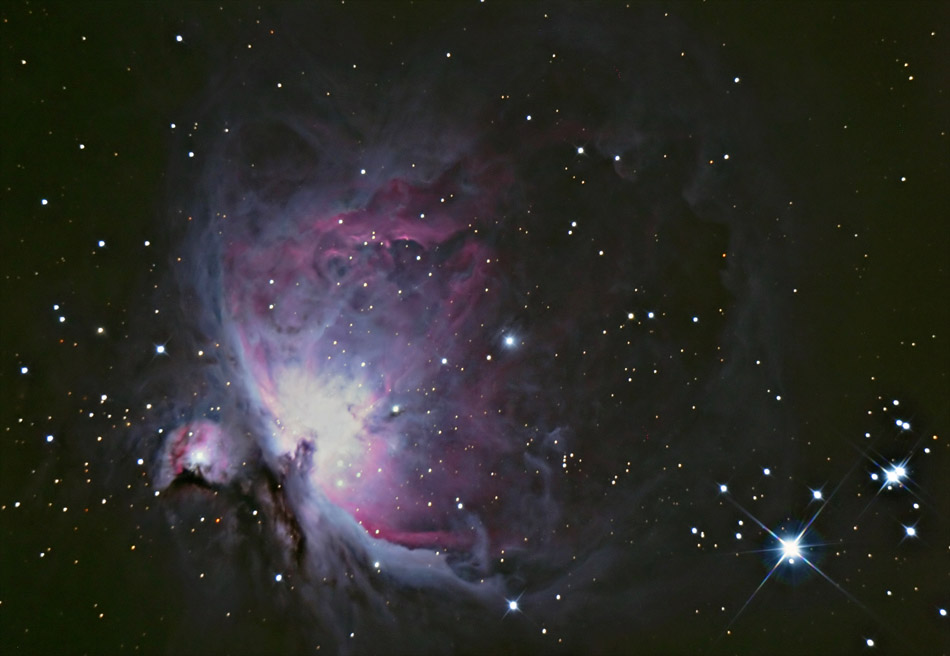
Artist: Rochus Hess
What Is the Interstellar Medium (ISM)?
The interstellar medium is the diffuse material that fills the space between stars within a galaxy. Despite being extremely tenuous compared to earthly standards, the ISM is crucial: it is the raw material for new stars and planets, a reservoir for galactic chemistry, and a conduit for energy and momentum through shocks, radiation, and stellar winds.
Typical ISM properties vary widely by region:
- Density: from < 0.001 to > 10^6 particles per cubic centimeter (cm−3) across different phases
- Temperature: from a few Kelvin in cold molecular cores to millions of Kelvin in hot, ionized bubbles
- Composition: primarily hydrogen (~70% by mass), helium (~28%), and heavier elements (metals) making up the rest
To make sense of such diversity, astronomers categorize the ISM into distinct phases defined by temperature, density, and ionization state. These phases coexist and exchange matter and energy, rather than existing as tidy, isolated layers. The ISM is therefore multi-phase and dynamic.
Key idea: The ISM is not static. Turbulence, stellar feedback (winds and supernovae), radiation, and gravity continuously stir, heat, cool, compress, and rarefy interstellar gas and dust.
Understanding the ISM is essential for deciphering star formation (how dense clouds collapse), galactic structure (how spiral arms and bubbles organize gas), and even the conditions that shape potential life elsewhere (ISM and exoplanets).
Gas, Dust, Cosmic Rays, and Phases of the ISM
The ISM consists of several intertwined components:
- Gas: predominantly hydrogen (atomic H and molecular H2), with helium and trace metals. Gas phases include cold atomic, warm atomic, warm ionized, hot ionized, and cold molecular.
- Dust: sub-micron solid particles of silicates, carbonaceous material, and ices in dense regions. Dust absorbs and scatters starlight, re-emitting in the infrared (IR).
- Cosmic rays: relativistic particles (mostly protons and electrons) that permeate the Galaxy and deposit energy via ionization and magnetic interactions.
- Magnetic fields: threading the gas, shaping turbulence, cosmic-ray transport, and star formation efficiency.
These components assemble into phases with characteristic temperatures (T) and densities (n). A compact map of the canonical phases:
Phase                     T (K)           n (cm^-3)         Dominant species/notes
----------------------------------------------------------------------------------
Molecular (H2)            10–50           10^2–10^6        CO traces H2; star-forming cores
Cold Neutral Medium       50–200          10–100          Atomic H I; often in sheets/filaments
Warm Neutral Medium       6,000–10,000    0.1–1           Atomic H I; fills large volumes
Warm Ionized Medium       6,000–10,000    0.01–0.5        H II; diffuse, pervades disk
Hot Ionized Medium        10^6            10^-3–10^-2     Coronal gas in superbubbles
Some practical tracers you will encounter in observations:
- 21-cm line of H I: The hyperfine transition at 1420.4058 MHz probes atomic hydrogen in diffuse gas.
- CO rotational lines: Especially CO(1–0) at 115 GHz, a proxy for cold H2 where H2 is hard to observe directly.
- Hα emission (656.3 nm): Recombination line of hydrogen tracing ionized regions and the diffuse warm ionized medium.
- Fine-structure lines: [C II] 158 μm and [O I] 63 μm are powerful coolants of neutral gas.
- Dust continuum: Far-IR/submillimeter emission from grains heated by starlight; UV/optical extinction and reddening trace dust column density.
Understanding the balance between these phases—and how gas moves among them—requires the physics of heating, cooling, turbulence, and magnetic support.
Heating, Cooling, Magnetic Fields, and Turbulence
Despite its low density, the ISM follows thermodynamic and magnetohydrodynamic (MHD) principles. Several processes regulate temperature, ionization, and structure.
Heating mechanisms
- Photoelectric heating: Ultraviolet photons eject electrons from small dust grains and polycyclic aromatic hydrocarbons (PAHs), heating neutral gas—dominant in the diffuse ISM.
- Cosmic ray ionization: High-energy particles ionize atoms and molecules, depositing energy especially in dense, UV-shielded regions.
- Photoionization heating: In H II regions around massive stars, absorbed UV photons heat gas to ~10,000 K.
- Shock heating: Supernova blasts and stellar winds drive shocks that compress and heat gas, producing hot bubbles and shells.

This Picture of the Week revisits the Veil Nebula, a popular subject for Hubble images! This object was featured in a previous Hubble photo release, but now new processing techniques have been applied, bringing out fine details of the nebula’s delicate threads and filaments of ionised gas. To create this colourful image, observations taken by Hubble’s Wide Field Camera 3 instrument through 5 different filters were used. The new post-processing methods have further enhanced details of emissions from doubly ionised oxygen (seen here in blues), ionised hydrogen and ionised nitrogen (seen here in reds). The Veil Nebula lies around 2100 light-years from Earth in the constellation of Cygnus (The Swan), making it a relatively close neighbour in astronomical terms. Only a small portion of the nebula was captured in this image. The Veil Nebula is the visible portion of the nearby Cygnus Loop, a supernova remnant formed roughly 10 000 years ago by the death of a massive star.
Artist: ESA/Hubble & NASA, Z. Levay - X-ray heating: In hot phases and near energetic sources, X-rays ionize and heat gas.
Cooling mechanisms
- Line cooling: Atoms and molecules radiate energy via spectral lines. Key coolants include [C II], [O I], CO rotational lines, and H2 rotational-vibrational lines in warm molecular gas.
- Recombination and free–free emission: In ionized regions, electrons recombine with ions (line cooling) and radiate bremsstrahlung (continuum).
- Dust–gas coupling: In dense clouds, collisions with dust grains can cool gas if the grains are cooler than the gas.
Thermal balance and two-phase equilibrium
In the neutral ISM, heating and cooling curves often allow two stable thermal equilibria at similar pressure: a cold phase (CNM) and a warm phase (WNM), with an unstable intermediate regime. This “two-phase” picture helps explain why we see cold filaments embedded in a warmer sea. However, real gas is stirred by turbulence and feedback, creating a spectrum of densities and temperatures rather than only two discrete states.
Magnetic fields, turbulence, and cosmic rays
- Magnetic fields (a few μG in the Milky Way disk) guide charged particles and provide pressure support against gravity and shocks. They affect cloud lifetimes, filament alignment, and the rate of star formation.
- Turbulence in the ISM is typically supersonic in molecular clouds, creating a hierarchy of clumps and filaments. It both seeds density enhancements (aiding collapse) and provides support (resisting collapse).
- Cosmic rays carry an energy density comparable to magnetic fields and starlight in the Galaxy (~1 eV cm−3), influencing ionization, heating, and gas dynamics.
These processes directly shape star formation and feedback, and they leave fingerprints that astronomers read using multiwavelength observations (observing the ISM).
From Molecular Clouds to Stars: Collapse and Feedback
Stars form in the coldest, densest parts of molecular clouds. Understanding this process ties together gravity, turbulence, magnetic fields, and chemistry.

Artist: (c) NASA, ESA, CSA / Science leads and image processing: M. McCaughrean, S. Pearson, CC BY-SA 3.0 IGO
From diffuse gas to molecular clouds
- Shielding and cooling: As gas accumulates in spiral arms, supershells, or colliding flows, higher column densities enable dust to shield molecules from dissociating UV radiation. Cooling allows temperatures to fall to ~10–20 K.
- H2 formation: Molecular hydrogen forms efficiently on dust grain surfaces (see interstellar chemistry and H2 formation), becoming the dominant species in dense clouds.
- Cloud structure: Supersonic turbulence creates filaments and clumps. Observations show ubiquitous filamentary morphology, often with dense cores along filaments.
Gravitational collapse and star formation
- Jeans criterion: A region collapses if its self-gravity exceeds pressure support. The Jeans mass and length depend on temperature and density; cooler and denser gas more easily collapses.
- Core formation: Collapse concentrates material into prestellar cores that eventually form protostars surrounded by disks, outflows, and envelopes.
- Star formation rate scaling: On galactic scales, the star formation rate surface density correlates with gas surface density (commonly framed as the Kennicutt–Schmidt relation). Locally, dense gas tracers (e.g., HCN) correlate more directly with star formation.
Feedback: regulating and triggering star formation
- Stellar winds and radiation pressure: Young, massive stars inject momentum and carve cavities in surrounding gas.
- Photoionization: H II regions expand, compressing nearby gas and potentially triggering new star formation while clearing out natal clouds.
- Supernovae: Explosions heat and stir the ISM, driving turbulence, creating superbubbles, and distributing heavy elements (metals) into the gas.
Feedback can both suppress star formation (by dispersing clouds) and stimulate it (by compressing gas at shell edges). The net effect depends on environment and timing. Over time, stellar activity shapes the bubble-rich structure of the Milky Way’s ISM and fuels outflows into the circumgalactic medium.
How Astronomers Observe the ISM Across the Spectrum
Because the ISM spans such a range of conditions, astronomers use the full electromagnetic spectrum to study it. Each wavelength regime reveals a different facet of interstellar physics described in heating/cooling and MHD and phases.
Radio: neutral hydrogen and molecules
- 21-cm H I emission: Maps atomic gas across entire galaxies. Modern all-sky surveys have charted the Milky Way’s H I distribution in great detail, including intermediate- and high-velocity clouds in the halo.
- CO and other molecules: Millimeter/submillimeter telescopes detect rotational lines of molecules, with CO often used to estimate H2 mass. High-resolution interferometers resolve cloud structure, filaments, and kinematics.
Infrared and submillimeter: dust and cool gas tracers
- Thermal dust emission: Far-IR to submillimeter emission measures column density and temperature of dust, and by extension, gas (using a dust-to-gas ratio).
- PAH features: Mid-IR emission from PAHs traces photodissociation regions (PDRs) at the boundaries of molecular clouds illuminated by UV radiation.
- Fine-structure lines: [C II] 158 μm and [O I] 63 μm cooling lines probe PDRs and diffuse gas.
Optical: Hα and dust extinction
- Hα emission: Maps ionized gas in H II regions and the diffuse warm ionized medium; velocity-resolved Hα reveals kinematics.
- Stellar reddening and extinction: Measuring how starlight is dimmed and reddened by dust yields dust column density and properties such as the total-to-selective extinction ratio RV.
Ultraviolet: hot/cool gas in absorption
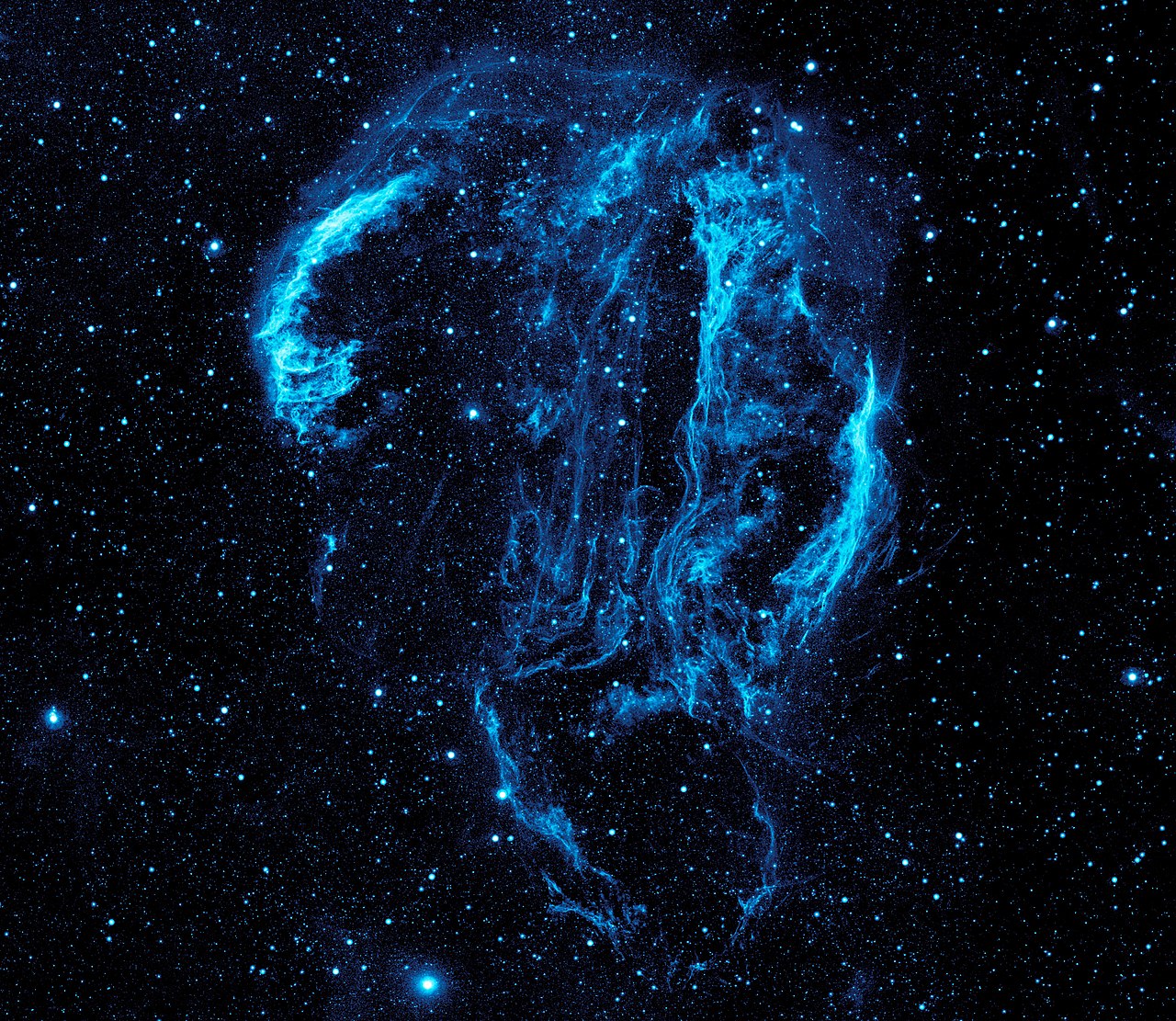
Artist: NASA/JPL-Caltech
- Absorption lines: UV spectroscopy of background stars and active galactic nuclei (AGN) detects ions across a range of temperatures (e.g., H2, C II, Si II, Si IV, C IV, O VI), probing multiphase gas along a line of sight.
- Molecular hydrogen: H2 Lyman–Werner absorption bands appear in the far-UV, directly tracing molecular gas in diffuse clouds.
X-rays: hot bubbles and the halo
- Soft X-ray emission: Reveals ~106 K plasma in supernova remnants, superbubbles, and the hot Galactic halo.
- Absorption lines of highly ionized species: O VII and O VIII absorption against bright X-ray sources trace very hot, diffuse gas.
Combining these windows provides a holistic view. For example, a star-forming region can be charted in CO (dense gas), [C II] (PDR cooling), Hα (ionized zones), and dust emission (mass and temperature), embedded in a broader 21-cm H I envelope. Data fusion across wavelengths is often essential for robust physical inferences.
The ISM in the Milky Way: Local Bubble, Bubbles, and Spirals
The Milky Way’s interstellar medium is highly structured, featuring spiral arms, shells, chimneys, and bubbles carved by stellar feedback. A few highlights connect to the processes introduced in feedback and turbulence and magnetic fields:

Artist: European Space Agency
- Spiral arms: Density waves and orbit crowding concentrate gas into arms where molecular clouds and star formation are prevalent.
- Supershells and chimneys: Clusters of supernovae blow superbubbles that can break out of the disk, venting hot gas into the halo and forming “chimneys.”
- Filaments and loops: H I surveys show large loops and arcs; radio polarization maps reveal magnetized filaments aligned with the Galactic magnetic field.
The Local Bubble
Our Sun currently resides in a relatively low-density cavity known as the Local Bubble, a region hundreds of light-years across likely formed by past supernovae. The Local Bubble affects local soft X-ray backgrounds and the density of interstellar gas interacting with the heliosphere. Dust and gas are concentrated in surrounding “walls,” within which nearby star-forming regions (e.g., in Gould’s Belt) are located.
Cold molecular complexes
Prominent nearby molecular clouds—such as Taurus, Ophiuchus, and Orion—showcase the path from diffuse gas to stellar nurseries described in molecular cloud collapse. Observations in CO and dust continuum reveal filamentary networks feeding dense cores and young stellar objects.
The Milky Way thus demonstrates all ISM phases side-by-side, from hot coronal gas in bubbles to cold, star-forming filaments, making it an ideal laboratory for testing theories and calibrating extragalactic studies.
Interstellar Chemistry, H2 Formation, and Dust Evolution
Chemistry in the ISM ranges from simple ions to complex organics, and it plays an essential role in cooling, cloud structure, and prebiotic chemistry. Dust grains are central actors: they catalyze reactions and set the radiative environment through extinction.
H2 formation and shielding
- Grain-surface catalysis: Two H atoms stick to a grain, migrate, and recombine into H2, then desorb. This route dominates in the ISM because gas-phase formation is inefficient at typical densities and temperatures.
- Self-shielding: As H2 accumulates, it absorbs the very UV lines that dissociate it, protecting deeper layers; dust also provides continuum shielding.
- CO formation: Once sufficient shielding exists, carbon transitions from C+ to C and CO. CO’s rotational lines then efficiently cool dense gas and trace molecular mass (with caveats).
Cooling, depletion, and ice mantles
- Depletion: Atoms and molecules freeze out onto cold dust grains in dense cores, reducing gas-phase abundances (e.g., CO depletion).
- Ice mantles: Water, CO, CO2, methanol, and other ices accumulate on grains at ~10–20 K, altering surface chemistry and setting initial conditions for planet formation.
- Desorption processes: Thermal “evaporation” near young stars and non-thermal processes (cosmic-ray hits, UV photodesorption) return species to the gas phase.
Polycyclic aromatic hydrocarbons (PAHs) and small grains
- Photoelectric heating: PAHs are efficient photoelectric heaters in diffuse regions (see heating mechanisms).
- IR features: PAHs produce characteristic mid-IR emission bands that trace PDRs and UV radiation fields.
Dust properties and extinction curves
- Extinction and reddening: Dust preferentially removes blue light, reddening starlight. The ratio of total to selective extinction (RV) reflects grain size distributions; larger grains yield higher RV.
- Composition: Observations support a mix of silicates and carbonaceous grains, with a prominent 2175 Å UV bump often attributed to small carbonaceous particles.
- Polarization: Aligned non-spherical grains polarize starlight; polarization maps trace magnetic fields in the ISM.
This microphysics connects to the macroscopic questions of how clouds fragment and how we interpret observations using molecular and dust tracers.
The Galactic Ecosystem: Fountains, Winds, and the CGM
The ISM is not a closed box; it sits within a larger context. Gas cycles between the disk and halo, and galaxies exchange matter with their surroundings.
Galactic fountains and chimneys
- Superbubbles vent upwards: Energy from clustered supernovae punches holes through the disk, sending hot gas into the halo via chimneys.
- Cooling and rain-back: Some uplifted gas cools and returns as a “galactic fountain,” replenishing the disk with enriched material.
- Accretion: The disk also gains relatively metal-poor gas from the halo or intergalactic medium, sustaining star formation over cosmic times.
Circumgalactic medium (CGM)
- Extended multiphase halo: Surrounding galaxies is a vast reservoir of gas—the CGM—detected primarily in absorption against background quasars in lines such as H I Lyα, Mg II, C IV, and O VI.
- Connection to the ISM: Feedback-driven outflows enrich the CGM; accretion from the CGM resupplies the ISM. This exchange regulates star formation and metallicity in galactic disks.
Thus, the ISM is part of a galaxy-scale feedback loop in which energy and matter constantly cycle between disk, halo, and beyond. The observational evidence (e.g., absorption-line studies and X-ray halos) supports a dynamic, multiphase CGM tightly linked to the star-forming ISM.
Why the ISM Matters for Exoplanets and Habitability
While the ISM seems remote, it influences planetary systems in multiple ways:
- Star and planet formation: The physical and chemical state of natal clouds sets initial conditions for protoplanetary disks, ice inventories, and elemental abundances.
- Radiation environments: Massive-star feedback and supernovae near forming systems can alter disk chemistry and dynamics; isotopic anomalies in meteorites likely reflect early Solar System exposure to nearby stellar activity.
- Interstellar environments: As stars orbit the Galaxy, they traverse regions of varying density and radiation, which can modulate heliospheres and cosmic-ray fluxes affecting planetary atmospheres.
For exoplanet habitability studies, the ISM contextualizes key boundary conditions: the supply of volatiles, dust-to-gas ratios shaping disk evolution, and the irradiation background for planetary atmospheres. These links tie back to interstellar chemistry and feedback processes at the heart of the ISM.
Simulations, Surveys, and Open Data You Can Explore
Modern understanding of the ISM arises from a marriage of observations and simulations. The community has produced high-resolution MHD and radiation-hydrodynamic models and a wealth of public surveys. While this article does not embed external links, you can search for the following well-known resources and datasets by name.
Numerical simulations
- Galaxy-scale MHD and feedback: State-of-the-art simulations model turbulence, supernova feedback, and galactic fountains, following multiphase gas in disks and halos.
- Cloud-scale star formation: Zoom-in MHD simulations resolve filament formation, core collapse, and feedback from young stars (outflows, radiation).
- Codes used in the field: Widely referenced codes include grid-based (e.g., RAMSES, ENZO) and meshless/mesh codes (e.g., GIZMO, AREPO). These support self-gravity, magnetic fields, and chemistry modules.
All-sky and targeted surveys
- Neutral hydrogen (H I) surveys: All-sky 21-cm maps chart the Milky Way’s H I distribution, including high-velocity clouds and filamentary structures.
- Molecular gas surveys: CO maps of the Galactic plane and extragalactic CO surveys characterize molecular mass and cloud demographics.
- Dust and infrared missions: IR satellites have mapped dust emission, optical depth, and temperature across the sky, enabling precise dust-based gas estimates.
- Ionized gas tracers: Hα surveys and UV spectrographs on space telescopes provide emission and absorption data for the warm ionized medium and hot halo gas.
Do-it-yourself: viewing ISM maps
If you are eager to explore, consider these general steps to visualize ISM data with commonly available tools:
- Search for an all-sky viewer (e.g., virtual observatory portals) and load a 21-cm H I map layer to see atomic gas structures across the Milky Way.
- Overlay infrared dust maps to compare dust lanes with H I structures along the Galactic plane.
- Compare CO maps of a star-forming region (such as Orion) with Hα emission to see how molecular clouds, PDRs, and ionized gas relate spatially.
Interpreting these maps benefits from the physical context in phases of the ISM and observational tracers. For example, strong [C II] emission but weak CO can indicate “CO-dark” H2 envelopes around molecular clouds.
Handy 21-cm velocity–frequency conversion
Observers often convert frequency to velocity to interpret H I spectra. For non-relativistic velocities, the radial velocity v (km s−1) relative to rest frequency ν0 = 1420.4058 MHz is approximately:
v ≈ c * (ν0 − ν) / ν0where c is the speed of light. This allows you to map gas motions along the line of sight and study Galactic rotation or inflows/outflows.
Frequently Asked Questions
Is space between stars mostly empty?
Compared to Earth’s atmosphere, the ISM is extraordinarily tenuous—typical diffuse regions have ~1 atom per cm3 (or much less). Yet on astronomical scales, this amounts to a significant mass reservoir. The ISM is not empty: it contains gas, dust, magnetic fields, and cosmic rays that actively shape star formation and galactic evolution. Its multiphase structure spans from densest molecular cores (104–106 cm−3) to hot, ionized cavities (~10−3 cm−3).
Is the interstellar medium dangerous for spacecraft?
For spacecraft within the Solar System, drag from interstellar gas is negligible. The ISM becomes a concern mainly for relativistic interstellar travel concepts, where impacts with even tiny dust grains could be hazardous. More relevant to present missions is the interplanetary medium (solar wind, dust) rather than the broader ISM. However, the ISM does influence the heliosphere’s size and shape, affecting how cosmic rays and interstellar atoms penetrate the Solar System.
Further Reading and Trusted Resources on the ISM
If you want to go deeper, consider exploring the following categories and topics by name to find authoritative sources:
- Textbooks and reviews: Introductory and advanced texts on the physics of the interstellar and intergalactic medium provide thorough treatments of heating/cooling, MHD, and chemistry.
- Survey papers: Overviews of 21-cm, CO, infrared dust, Hα, UV absorption, and X-ray surveys summarize major datasets and findings about the Milky Way’s multiphase gas.
- Simulations overviews: Review articles on galactic winds, the CGM, and star formation simulations explain how models connect feedback to observed structures like bubbles and chimneys.
- Data portals: Astronomical data archives and virtual observatories host many public ISM maps (H I, CO, dust) accessible through web-based viewers and APIs.
As you read, connect each dataset or model to the physical concepts above: heating/cooling and turbulence, phases, and feedback loops. This framework helps synthesize a complex literature into a coherent picture of the galactic ecosystem.
Final Thoughts on Exploring the Interstellar Medium
The interstellar medium is the connective tissue of galaxies: it stores raw material, regulates star formation through a balance of gravity, turbulence, and magnetic fields, and recycles energy and metals through winds and supernovae. Its multiphase nature—molecular cores, cold and warm atomic gas, diffuse ionized gas, and hot coronal bubbles—emerges from the interplay of heating, cooling, turbulence, and magnetic fields. Observers probe this tapestry across the spectrum—21-cm H I, CO and other molecules, dust emission and extinction, Hα, UV absorption, and X-rays—while simulations integrate these processes into galaxy-wide narratives.

Artist: ESO/J. Emerson/VISTA
For exoplanets and life, the ISM sets the stage: it seeds disks with volatiles and dust, shapes radiation environments, and influences galactic-scale cycles that determine long-term star formation. Looking outward, the ISM is not isolated; it is embedded in a larger galactic ecosystem connected to the circumgalactic medium via fountains and winds.
Key takeaways:
- The ISM is dynamic and multiphase, with phases defined by temperature, density, and ionization.
- Dust and chemistry are central to cooling, molecule formation, and interpreting observations.
- Star formation and feedback operate in a loop that sculpts clouds, bubbles, and galaxy halos.
- Multiwavelength observations and modern simulations together reveal the ISM’s structure and evolution.
Curious to learn more? Dive into public sky maps and surveys, compare tracers for your favorite star-forming region, and follow new results that sharpen our view of this cosmic ecosystem. If you enjoyed this deep dive, subscribe to our newsletter to get future astronomy articles—spanning the ISM, galaxies, stars, and planets—delivered to your inbox.