
Table of Contents
- What Is a Dobsonian Telescope and Why It’s Ideal for Visual Astronomy?
- Key Optical Parameters: Aperture, Focal Length, and f/ratio Explained
- Understanding Eyepieces, Magnification, Exit Pupil, and True Field
- Collimation, Cooling, and Optical Quality in Newtonian Dobsonians
- Mount Designs: Classic, Push-To, and GoTo Dobsonians Compared
- Portability, Storage, and Setup Time: Matching Telescope Size to Your Life
- Budget Breakdown: Where to Spend and Where to Save
- Observing Performance: Planets vs Deep-Sky, Light Pollution, and Filters
- Essential Accessories: Finders, Shrouds, Coma Correctors, and More
- Step-by-Step Buying Checklist and Example Builds
- Frequently Asked Questions
- Final Thoughts on Choosing the Right Dobsonian Telescope
What Is a Dobsonian Telescope and Why It’s Ideal for Visual Astronomy?
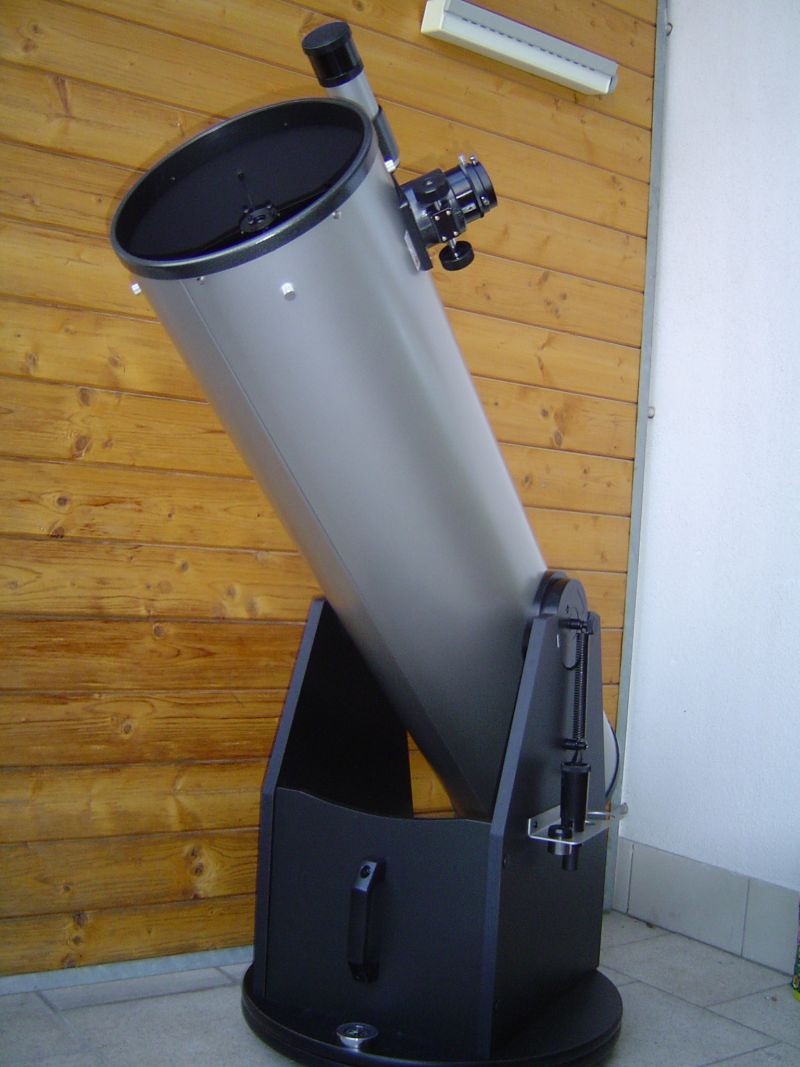
A Dobsonian telescope is a Newtonian reflector on a simple, alt-azimuth base. Its hallmark strengths are large aperture per dollar, straightforward setup, and a remarkably stable, intuitive mount. For visual observers—especially beginners and intermediate stargazers—a Dobsonian often offers the most satisfying views for the least complexity.
Attribution: first uploaded on the English-speaking Wikipedia under the same filename
Designed to be pushed by hand, the classic Dobsonian base uses Teflon-on-laminate (or similar) bearings to provide smooth motion in altitude (up/down) and azimuth (left/right). Paired with a parabolic primary mirror—commonly from 6 inches (150 mm) up to 16 inches (400 mm) or more—Dobsonians gather copious light and deliver bright, contrasty images of deep-sky objects and, when collimated and thermally stabilized, sharp views of the Moon and planets.
Dobsonians are popular because they minimize cost and complexity in areas that least affect visual performance. The mount is simple; there’s no heavy metal equatorial head or motorized wedge to set up. Most of the budget goes to the optics—where it counts. If your primary goal is to see more—galaxies, nebulas, open clusters, globulars—rather than to photograph them, a Dobsonian is often the optimal first serious telescope.
However, to choose the right model for your life and sky, you need to understand a few fundamentals. In the sections below, we examine aperture and focal ratio, eyepieces and magnification, collimation and cooling, and practical differences between classic, push-to, and GoTo mounts. We also compare planetary and deep-sky performance, consider portability and storage, and walk through a shopping checklist.
Key Optical Parameters: Aperture, Focal Length, and f/ratio Explained
Three core optical parameters define a Dobsonian’s behavior: aperture, focal length, and f/ratio. Together, these control image brightness, resolution, field of view, and the size and weight of the telescope.
Aperture: The Light Bucket
Aperture is the diameter of the primary mirror. It directly affects light-gathering ability and resolving power. Larger apertures reveal fainter objects and finer detail, all else equal. Typical Dobsonian apertures:
- 6–8 inches: Classic beginner sweet spot; light and affordable; easy to store and transport.
- 10–12 inches: Noticeably deeper reach and better resolution; heavier; often the upper limit for many car trunks and home storage.
- 14–16 inches and above: Serious deep-sky performance; truss designs help portability; demands more space and time to set up.
Doubling the aperture increases light-gathering by a factor of four (area scales with the square of diameter). An 8-inch mirror collects about 78% more light than a 6-inch, and a 10-inch collects about 56% more light than an 8-inch. This matters for seeing spiral arms in galaxies, resolving globular cluster cores, and detecting faint nebulae under dark skies. See Observing Performance for how this plays out at the eyepiece.
Focal Length and f/ratio: True Field and Eyepiece Behavior
Focal length is the distance light travels from the primary mirror to the focal plane. A typical 8-inch Dob might have a focal length around 1200 mm, while a 10-inch might be 1200–1250 mm or 1500 mm depending on design. The f/ratio is focal length divided by aperture (f/5 means focal length equals five times the aperture). Common Dobsonian f/ratios range from f/4 to f/8.
- Fast (f/4–f/5): Short tubes; wide fields of view possible; more demanding on collimation and eyepieces; off-axis aberration (coma) is more visible.
- Moderate (f/5–f/6): A practical balance for beginners—manageable tube length and good optical performance with everyday eyepieces.
- Slow (f/7–f/8): Easier on eyepieces; potentially higher contrast for planetary; longer tubes can be bulky.
Faster scopes (lower f/ratios) can deliver generous true fields with 2-inch wide-angle eyepieces, making them excellent for sweeping the Milky Way or framing extended nebulae. They also make finding objects easier, which is helpful if you’re using a classic non-tracking mount.
Central Obstruction and Contrast
Newtonian reflectors use a secondary mirror that introduces a central obstruction. Typical mass-market Dobsonians have a secondary that’s roughly 20–25% of the primary diameter (by diameter; percentage may vary with model). While the obstruction slightly reduces contrast compared with an unobstructed refractor of similar aperture, the much larger aperture of a Dob typically overwhelms that difference for visual use, especially on deep-sky targets. On planets, good collimation, thermal equilibrium, and steady seeing are usually the limiting factors—covered in Collimation, Cooling, and Optical Quality.
Light path (simplified, not to scale)

      Incoming light
            \/
        ___________            Secondary mirror
       /           \\           redirects cone 90°
      /  Primary    \\___________________________  Focuser
      \\   Mirror   /
       \\___________/

Attribution: The original uploader was Tmoore at English Wikipedia.
Understanding Eyepieces, Magnification, Exit Pupil, and True Field
You can tailor a Dobsonian’s behavior at the eyepiece. Magnification, exit pupil, and true field of view (TFOV) are interrelated through the telescope’s focal length and the eyepiece’s focal length and apparent field of view (AFOV).
Magnification and Exit Pupil
- Magnification (M) = Telescope focal length / Eyepiece focal length.
- Exit pupil (in mm) = Aperture (in mm) / Magnification.
Typical exit pupil ranges for different targets:
- 4–6 mm: Low power, bright, wide-field views; great for large nebulae and star fields.
- 2–3 mm: Medium power; a sweet spot for galaxies and clusters.
- 1–2 mm: Higher power for small galaxies, planetary nebulae, lunar and planetary detail in steady seeing.
- 0.5–1 mm: Very high power; limited by seeing and collimation; useful for splitting close doubles and teasing fine planetary features.
Eye pupil size varies with age and lighting; under dark skies, many adults reach around 5–7 mm. If your exit pupil exceeds your eye’s pupil, you’re effectively stopping down the telescope (wasting aperture). This is rarely a major problem but is good to keep in mind when selecting a very long focal length eyepiece.
True Field of View
Two approximations are commonly used:
- TFOV ≈ AFOV / Magnification (works well for many eyepieces).
- TFOV ≈ (Field stop diameter / Telescope focal length) × (57.3 degrees).
Wide-field 2-inch eyepieces with large field stops excel in fast Dobsonians—see the synergy with fast f/ratios in Key Optical Parameters. For planetary work, narrower-field, short focal length eyepieces provide higher magnification and can be combined with a quality Barlow lens.
Simple FOV Calculator (Python)
Here’s a short script you can adapt to estimate magnification, exit pupil, and TFOV. It assumes a circular, unobstructed exit pupil—adequate for planning eyepiece sets.
# Simple Dobsonian eyepiece planner
# Edit these values for your scope and eyepieces
aperture_mm = 203      # 8-inch primary ~203 mm
focal_length_mm = 1200 # common 8-inch f/5-ish focal length

eyepieces = [
    {"name": "30mm 70°", "f_mm": 30, "afov_deg": 70, "field_stop_mm": 36},
    {"name": "20mm 68°", "f_mm": 20, "afov_deg": 68, "field_stop_mm": 27},
    {"name": "10mm 60°", "f_mm": 10, "afov_deg": 60, "field_stop_mm": 11},
]

import math
for e in eyepieces:
    mag = focal_length_mm / e["f_mm"]
    exit_pupil = aperture_mm / mag
    tfov1 = e["afov_deg"] / mag
    tfov2 = (e["field_stop_mm"] / focal_length_mm) * 57.3
    print(f"{e['name']}: {mag:.1f}×, exit pupil {exit_pupil:.1f} mm, TFOV≈{tfov1:.2f}°/{tfov2:.2f}°")
Use results to build a well-spaced eyepiece set that covers low, medium, and high power. Pair this with the advice in Essential Accessories to round out your kit.
Collimation, Cooling, and Optical Quality in Newtonian Dobsonians
To get the crisp views Dobsonians are capable of, you need three things in harmony: good collimation, thermal equilibrium, and decent optical quality. Fortunately, mass-market parabolic mirrors today can deliver good performance, and with simple tools, you can collimate quickly in the field.
Collimation Fundamentals
Collimation is the alignment of your primary and secondary mirrors and focuser so the optical axis is straight and centered. Mis-collimation softens planetary contrast, blurs stars, and reveals asymmetric coma. Key steps:
- Center the secondary under the focuser: ensures you see the full primary. This step is more about geometry than aiming the optical axis.
- Aim the secondary at the center of the primary: use a sight tube or laser to center the secondary’s aim on the primary’s center mark.
- Tip-tilt the primary: adjust primary collimation bolts so the center mark reflects to the tool’s center (Cheshire/sight tube) or returns a laser beam to the emitter.
Tools range from a simple collimation cap to a Cheshire/sight tube combo to a quality laser. A good combo tool is cost-effective and precise for f/5–f/6 scopes. Faster scopes benefit from a barlowed-laser technique to accurately set the primary tilt.
Tip: Collimate at the same focus height and focuser drawtube position you’ll use for observing. Consistency reduces small shifts when swapping eyepieces.
Thermal Equilibrium and Cooling
Newtonian mirrors are thick glass that take time to match ambient temperature. While they cool, warm air currents rise from the mirror, degrading contrast. A small fan behind the mirror cell accelerates equilibration and reduces boundary layer effects. Allow 20–60 minutes depending on mirror thickness and temperature drop. Truss tubes and open cells generally cool faster than closed tubes.
Store the scope where temperature swings are modest, and start cool-down early. If significant temperature drop continues through the night, brief fan runs between targets can help. A stable thermal state pairs beautifully with accurate collimation for high-power lunar and planetary work—see Observing Performance.
Optical Quality and Expectations
Quote marks like “diffraction limited” are common. What matters visually is smoothness of the mirror figure, good edge quality, and minimal zones. Many commercial mirrors deliver satisfying visual performance, especially at f/5–f/6. Beyond the primary, flocking the tube opposite the focuser, using a low-reflectivity interior, and installing a well-sized secondary baffle or shroud (for truss scopes) all help maintain contrast. A curved or low-profile secondary holder can slightly reduce diffraction effects, though precise collimation and thermal control typically dominate image quality.
Mount Designs: Classic, Push-To, and GoTo Dobsonians Compared
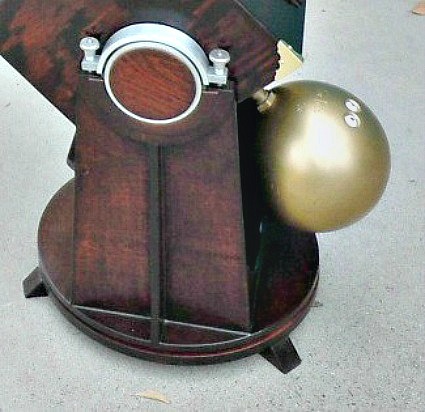
Dobsonians share the same optical core but differ markedly in their bases and guidance systems. Your choice impacts cost, weight, setup time, and how you find and follow objects.
Attribution: Namronpb
Classic Manual Dobsonian
Simple, robust, and quiet—no power required. You nudge the scope to center targets and track them across the sky. Advantages:
- Lowest cost; most aperture for your budget.
- Immediate setup; nothing to align or charge.
- Intuitive star-hopping teaches the sky.
Consider adding analog setting circles or a digital angle gauge for elevation and a printed azimuth circle to aid finding objects. Star-hopping skills get you to the most targets in the long run. See Essential Accessories for finder recommendations.
Push-To (Digital Setting Circles)
Push-to systems use encoders and a hand controller or mobile app to guide you. After a brief alignment, you select a target and arrows show where to push the scope. Tracking remains manual, so there’s no motor noise or heavy batteries.
- Faster object acquisition than pure star-hopping.
- Lower cost and weight than GoTo; retains manual feel.
- Great compromise for outreach or light-polluted sites where star patterns are faint.
GoTo Dobsonian
GoTo bases add motors for slewing and tracking. After alignment, the mount points and tracks selected objects, keeping them centered as Earth rotates—useful at high power or for sharing views with groups.
- Automatic tracking helps on planets and the Moon.
- Higher cost and weight; needs power and alignment time.
- Some GoTo systems support limited electronically assisted astronomy (EAA) with small cameras, though long-exposure astrophotography is not their design goal.
For pure visual observing, all three mount styles can deliver. Your observing style and site conditions decide which is best—see Portability, Storage, and Setup Time and Budget Breakdown for trade-offs.
Portability, Storage, and Setup Time: Matching Telescope Size to Your Life
Telescopes that are easy to use get used more. Aperture is tempting, but not if it stays indoors. Before buying, think concretely about where you’ll store the scope, how you’ll carry it, and how long you want setup to take.
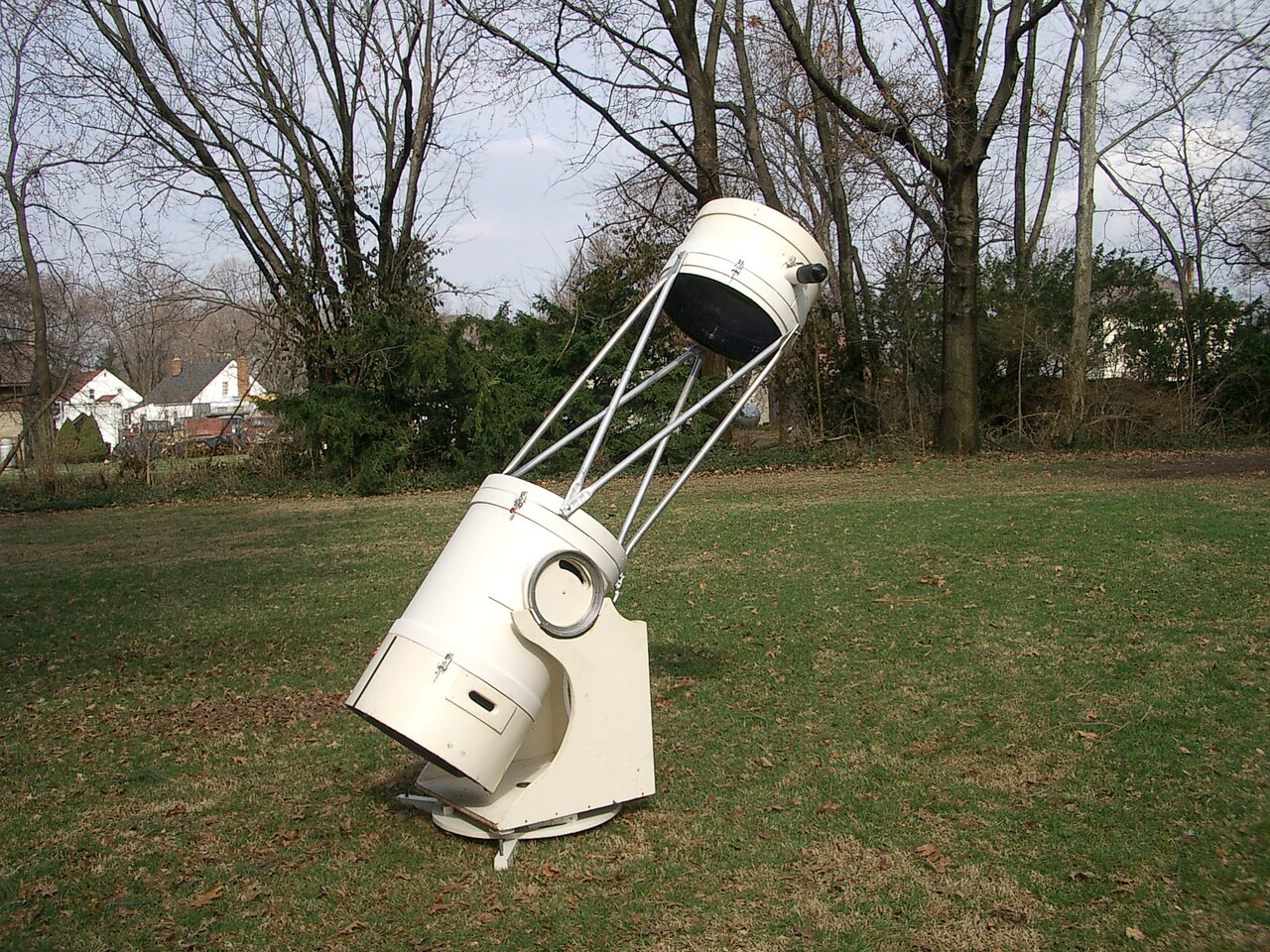
Tube vs Truss Designs
- Solid tube (6–10 inches common): Quicker setup; fewer parts; good for suburban backyards; may be bulky in small cars.
- Truss/Collapsible (10–16 inches+): Breaks down for transport; requires assembly and often a shroud; faster cooling and lighter components.
Attribution: JamesStewart669
Measure your car doors, trunk, and storage closets. Note the weight of heaviest component (often the mirror box) and whether you can lift it safely. A hand truck or strap handles can transform usability for larger Dobs.
Setup and Teardown
- 6–8 inch solid tube: 2–5 minutes from car to stargazing, plus cool-down.
- 10–12 inch solid tube: 5–10 minutes; may need two trips.
- 12–16 inch truss: 10–20 minutes, including assembling the truss and attaching a shroud.
Plan where you’ll observe most: home patio, local dark site, or long trips. If frequent travel is in the cards, mobility matters more than an extra inch or two of aperture.
Budget Breakdown: Where to Spend and Where to Save
A well-balanced kit uses your budget wisely across optics, mount, and critical accessories. Here’s a practical prioritization:

Attribution: Wutthichai Charoenburi
- Aperture and optical quality: Prioritize a sound primary mirror and stable cell. Opt for the largest aperture you will realistically transport and use.
- Finder and eyepiece basics: A good unity finder (reflex) plus a 50 mm RACI (right-angle, correct-image) finder, and two or three well-chosen eyepieces.
- Collimation tools and cooling: Cheshire/sight tube or a good laser; a quiet fan for the primary mirror cell.
- Comfort and ergonomics: Adjustable observing chair, light shield, shroud (for truss), dew control where needed.
- Optional corrections: Coma corrector for fast scopes; dual-speed focuser upgrade; digital setting circles if desired.
Many beginners overspend on a big eyepiece set. Start with three focal lengths that provide low, medium, and high power (for example, 30 mm, 15–20 mm, and 8–10 mm), then add as you learn your preferences. See Understanding Eyepieces for spacing and exit pupil considerations.
Observing Performance: Planets vs Deep-Sky, Light Pollution, and Filters
Dobs excel at deep-sky observing and can be excellent planetary performers in steady conditions. What you see depends on aperture, sky quality, collimation, and thermal stability.
Planets and the Moon
The Moon is rewarding in any aperture. For planets, larger apertures provide higher resolution and brightness at a given magnification. Even a well-cooled 6–8 inch scope can reveal belts and zones on Jupiter, Saturn’s Cassini Division in good seeing, Mars’ polar caps, and phases of Venus. Critical factors:
- Seeing: Atmospheric steadiness limits usable magnification. Patience pays—wait for moments of calm to snap into focus.
- Collimation and focus: Slight errors noticeably degrade planetary contrast; use a high-power star test to fine-tune.
- Thermal equilibrium: Use a primary fan early; avoid observing over rooftops or concrete radiating heat.
At f/5 and faster, consider a dual-speed focuser for fine adjustments and potentially a coma corrector to keep stars tight across the field, which aids high-power tracking by hand—see Accessories.
Deep-Sky: Galaxies, Nebulae, and Clusters
This is where aperture shines. Under dark skies, 10–12 inch Dobs reveal structure in bright galaxies, resolve globular clusters into grainy starlight, and show planetary nebulae with impressive detail. Open clusters pop at low power with wide-field eyepieces.
Extended nebulae benefit from narrowband filters. An UHC-style filter that passes O III and H-beta lines while blocking much of the continuum can dramatically improve contrast on emission nebulae. An O III filter, being more selective, often makes planetary nebulae and supernova remnants stand out. For galaxies, filters are generally unhelpful since they emit broad-spectrum light—dark skies matter most.
Light Pollution Realities
Light pollution reduces contrast, especially on diffuse objects. Dobsonians can still perform well in suburban skies by focusing on targets that tolerate glow: double stars, clusters, the Moon, and planets. Travel to a darker site to unleash your aperture on faint galaxies. A good observing plan and finder charts or a push-to system (Mount Designs) can make urban sessions more productive.
Tracking by Hand vs Mount Assistance
At low power, manual tracking is easy: a gentle push keeps targets centered. Near 200× and up, smooth bearings, correct balance, and good ergonomics become crucial. An equatorial platform can add sidereal tracking to a classic Dob without replacing the mount, useful for high-power views and brief planetary imaging sessions. GoTo bases provide full-time tracking after alignment—see Mount Designs for details.
Essential Accessories: Finders, Shrouds, Coma Correctors, and More
Strategic accessories multiply the capability of any Dobsonian. Below are high-impact upgrades and add-ons that improve finding, focusing, contrast, and comfort.
Finders and Aiming Aids
- Reflex (unity) finder: Projects a 1× illuminated reticle on the sky. Excellent for initial aim and star-hopping steps.
- RACI finder (e.g., 8×50): Right-angle, correct-image view matches star charts; easier on the neck for near-zenith targets.
- Digital angle gauge + azimuth circle: A budget way to approximate push-to. Enter target altitude/azimuth from an app and push the scope accordingly.
Eyepieces, Barlows, and Coma Correction
- Starter set: Low-power 2-inch wide-field (e.g., 28–32 mm), mid-power (15–20 mm), high-power (8–10 mm). See Eyepieces and Magnification.
- Barlow lens: A 2× Barlow effectively doubles your eyepiece options, providing tighter spacing for planetary nights.
- Coma corrector: At f/5 and faster, correctors tighten star images at the edge of wide fields. Essential if you prioritize sweeping rich star fields or if you are sensitive to off-axis aberrations.
Contrast and Stray Light Control
- Shrouds (for truss Dobs): Block stray light and reduce dew. A properly tensioned shroud avoids vignetting the light path.
- Flocking: Darken the tube opposite the focuser or fully flock for maximal suppression of internal reflections.
- Dew control: In humid climates, eyepiece and finder dew heaters, as well as secondary mirror heaters, can save sessions.
Comfort and Ergonomics
- Adjustable observing chair: The single best accessory for steadier, longer looks—stable posture improves detail detection.
- Red-light headlamp: Preserves dark adaptation while keeping hands free.
- Soft cases and handles: Make frequent use and transport painless; consider a hand truck for larger bases.
Upgrades and Fine Tuning
- Dual-speed focuser: Adds fine focus control—particularly helpful at high power and for fast f/ratio scopes.
- Primary mirror fan: A quiet, balanced fan accelerates cooldown; pair with vibration-damping mounts.
- Encoder kits (push-to): Add digital setting circles to a classic base without losing manual simplicity.
Step-by-Step Buying Checklist and Example Builds
Use this checklist to match a Dobsonian to your needs. Cross-reference earlier sections for context and trade-offs.
Checklist
- Define your observing goals: Planets and the Moon? Deep-sky from dark sites? Mixed use from light pollution? See Observing Performance.
- Choose an aperture tier: 6–8 inch for maximum portability and cost-efficiency; 10–12 inch for deeper reach; 14–16 inch for serious deep-sky under dark skies. See Optics Basics.
- Select f/ratio and tube style: f/5–f/6 for balance; solid tube for simplicity, truss for compact transport. See Portability and Storage.
- Pick a mount type: Classic manual, push-to, or GoTo depending on your sky and preferences. See Mount Designs.
- Confirm ergonomics: Eyepiece height at zenith, component weights, carry path, vehicle fit.
- Budget for essentials: Collimation tool, finder(s), at least two eyepieces plus a Barlow, and a chair. See Budget Breakdown and Accessories.
- Plan storage and cooldown: Where will it live? Do you have a fan and power? Is dew control needed?
- Quality check: Smooth bearings, rigid focuser, secure mirror cell, accurate collimation adjustments, and a properly centered primary center spot.
Example Build 1: First Serious Scope (Urban/Suburban)
- Scope: 8-inch f/6 solid-tube Dobsonian (approx. 1200 mm focal length).
- Finders: Reflex finder + 8×50 RACI.
- Eyepieces: 30 mm wide-angle for low power; 15–18 mm for medium; 9–10 mm for high; 2× Barlow.
- Accessories: Cheshire/sight tube, red headlamp, adjustable chair, primary fan.
- Notes: Focus on the Moon, planets, clusters, and brighter nebulae with a UHC-style filter. Consider a digital angle gauge for quick push-to.
Example Build 2: Deep-Sky Oriented (Dark-Sky Trips)
- Scope: 12-inch f/5 truss Dobsonian with shroud.
- Finders: Reflex finder + 50 mm RACI; optional push-to encoders.
- Eyepieces: 28–31 mm 2-inch wide-field; 14–16 mm mid-power; 7–9 mm for higher power; coma corrector preferred.
- Accessories: Fan with speed control, dew control for secondary and eyepieces, observing chair, hand truck.
- Notes: Invest in a high-contrast O III filter for planetary nebulae and supernova remnants. Prioritize dark-site planning.
Example Build 3: Outreach and Family-Friendly
- Scope: 10-inch f/5 solid-tube or collapsible Dob with GoTo for tracking.
- Finders: Reflex finder; GoTo alignment stars handled by controller.
- Eyepieces: 24–26 mm for easy acquisition; 10–12 mm for planetary; zoom eyepiece for convenience.
- Accessories: Chair, step stool for kids, light shield, battery pack.
- Notes: Tracking keeps targets centered while multiple people look, reducing frustration. Collimate carefully before events.
Frequently Asked Questions
Can a Dobsonian be used for astrophotography?
Dobsonians are optimized for visual observing. Their alt-az mounts do not track the sky’s rotation like an equatorial mount, so long-exposure deep-sky imaging is impractical without field de-rotation. However, you can enjoy lunar and planetary imaging by capturing short video clips at high frame rates and stacking the best frames. An equatorial platform can add sidereal tracking for visual use and brief planetary imaging sessions—see Observing Performance for tracking options.
What size Dobsonian should I buy first?
If you’re unsure, an 8-inch Dobsonian is a classic first serious telescope. It balances aperture, weight, cost, and ease of use. If you have excellent dark skies and can manage slightly more bulk, a 10-inch provides a tangible step up. If storage, stairs, or transport are concerns, a 6-inch is lighter and still shows plenty—especially on the Moon, planets, and bright deep-sky objects. Revisit Portability and Storage and Optics Basics to match a size to your lifestyle.
Final Thoughts on Choosing the Right Dobsonian Telescope
The right Dobsonian is the one you will use often. Start by clarifying your observing goals and sky conditions, then choose an aperture you can carry and cool consistently. Favor balanced f/ratios (f/5–f/6) for all-around performance, pair the scope with a simple but effective finder system, and invest in collimation tools and an observing chair before amassing a large eyepiece collection.

Attribution: NathanScientific
Dobsonians deliver a rare combination: generous aperture, straightforward setup, and immersive visual views. With thoughtful choices in mount type, accessories, and ergonomics, you can build a system that makes every clear night a pleasure. To keep learning, explore related guides on eyepiece selection, sky navigation, and visual observing strategies—and subscribe to our newsletter for future articles on optimizing your telescope, mastering collimation, and planning unforgettable deep-sky sessions.