
Table of Contents
- What Is an 8-Inch Dobsonian Telescope?
- Why 8 Inches Is a Sweet Spot for Visual Astronomy
- Optics Explained: Aperture, Focal Length, and f/ratio
- Essential Features to Compare Before You Buy
- Eyepieces, Finders, and Accessories that Matter
- Collimation and Cooling: Getting Sharp Views
- Transport, Setup, and Storage Tips for Urban/Suburban Observers
- Observing Performance: Deep-Sky, Planets, and Lunar
- Push-to and GoTo: Do You Need Electronics?
- Budget and Value: New vs. Used Dobsonians
- Maintenance and Troubleshooting Over the Years
- Frequently Asked Questions
- Final Thoughts on Choosing the Right 8-Inch Dobsonian
What Is an 8-Inch Dobsonian Telescope?
An 8-inch Dobsonian telescope is a Newtonian reflector with a primary mirror approximately 203 mm in diameter, mounted on a simple, altazimuth “Dobsonian” base. The design emphasizes maximum light-collecting area and mechanical simplicity at a reasonable price, making it one of the most popular options for visual astronomy enthusiasts. Typical 8-inch Dobsonians pair a parabolic primary mirror with a flat secondary mirror in a tube that balances on a low-profile, pivoting base. You move the telescope by hand in altitude (up/down) and azimuth (left/right) to aim at targets.
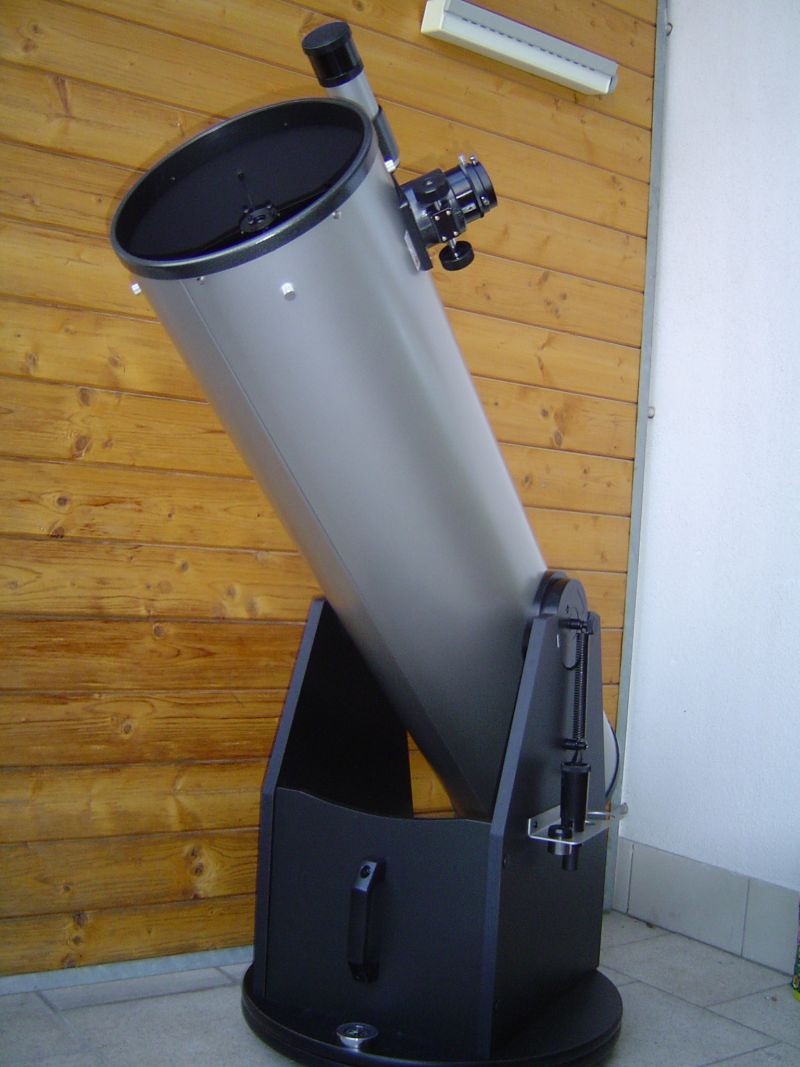
This category generally includes:
- Optical tube assemblies with focal lengths around 1,200 mm at f/6, and sometimes around 1,000 mm at f/5 for shorter, more portable variants.
- Sturdy, wood or composite bases with Teflon or similar bearing surfaces that glide smoothly under light pressure.
- Crayford-style focusers (1.25-inch or 2-inch), simple finders (red dot or optical), and a basic pair of eyepieces.
Because of their straightforward operation, 8-inch Dobsonians are often recommended as a first serious telescope for observers who want deep-sky reach without the complexity of equatorial mounts. The optical performance is significant—8 inches of aperture resolves globular clusters into stars, reveals structure in bright galaxies and nebulae, and provides sharp planetary views when atmospheric seeing cooperates.
To understand whether this is the right instrument for you, it helps to break down not just what a Dobsonian is, but how the choices you make on build, f/ratio, and accessories affect your observing. The sections below cover each of these elements in depth, from optical fundamentals to collimation and cooling, and even the value of push-to encoders for finding objects efficiently.
Why 8 Inches Is a Sweet Spot for Visual Astronomy
Many observers describe the 8-inch Dobsonian as a “sweet spot” because it balances aperture, cost, portability, and usability. Here’s why that balance works so well in practice:
- Light grasp vs. size: An 8-inch mirror collects roughly four times as much light as a 4-inch refractor and over two and a half times what a 5-inch reflector gathers. This translates into brighter, more detailed deep-sky views—but the instrument remains manageable in size and weight.
- Portability: Most 8-inch solid-tube Dobsonians break down into two main pieces: the base and the tube. Each component is carryable through doorways and into vehicles. Total system weight typically lands in the 18–25 kg (40–55 lb) range, though it varies by design and materials.
- Cost efficiency: Compared to larger apertures, an 8-inch is substantially more affordable in initial purchase and in accessories. Eyepieces, filters, and collimation tools are relatively standard and don’t require premium, oversized components to perform well.
- All-around performance: At common focal ratios near f/6, 8-inch Dobsonians deliver high-contrast planetary views while still offering a wide enough field for sweeping star fields and bright nebulae with 2-inch eyepieces.
Of course, the “sweet spot” depends on your observing preferences and constraints. If you value the faintest galaxies, a 10- or 12-inch might beckon. If you’re apartment-bound with limited storage, a 6-inch might be easier to manage. But for a substantial number of suburban stargazers, the 8-inch Dobsonian wins because the step up in capability over small telescopes is dramatic, while the step up in hassle is modest.
Another reason for its popularity: an 8-inch Newtonian at f/6 is forgiving. Coma (an off-axis aberration common to parabolic mirrors) is present but often subtle at the edge of the field with many eyepieces, especially at moderate magnifications. Collimation tolerances are not as tight as for faster (shorter f/ratio) scopes, and focusers and mounts tend to be less demanding about perfect alignment. For beginners, that means more time observing and less time fussing with mechanics.
Optics Explained: Aperture, Focal Length, and f/ratio
To choose wisely, it helps to understand the core optical parameters of an 8-inch Dobsonian and how those numbers translate into real-world performance.

Aperture (203 mm)
Aperture dictates light-gathering power and resolution. The 203 mm primary mirror collects more photons than smaller telescopes, making dim targets like galaxy groups and faint nebulae observable from dark skies. Resolution—your ability to see fine detail—improves with aperture, subject to atmospheric conditions. On steady nights, an 8-inch can support high magnification on lunar and planetary features, splitting close double stars and revealing belts, zones, and smaller storms on Jupiter and Mars.
Focal length and f/ratio
Most 8-inch Dobsonians are around 1,200 mm focal length, yielding an f/ratio of f/6. Variants exist at f/5 (~1,000 mm). The f/ratio affects several things:
- Field of view: Shorter focal length (f/5) telescopes can provide wider fields of view with a given eyepiece, beneficial for large nebulae and star fields.
- Eyepiece behavior: Fast scopes (lower f/ratios) demand better-corrected eyepieces to maintain sharpness near the edge. At f/6, many midrange eyepieces perform very well.
- Collimation tolerance: Faster scopes are more sensitive to misalignment. At f/6, collimation remains important but is somewhat more forgiving.
Magnification, exit pupil, and true field
Three practical quantities inform eyepiece selection and viewing expectations:
- Magnification (power): Magnification = Telescope focal length / Eyepiece focal length. For example, with a 1,200 mm scope: a 10 mm eyepiece gives 120×, a 30 mm gives 40×.
- Exit pupil: Exit pupil (mm) = Eyepiece focal length (mm) / f/ratio. In an f/6 scope, a 30 mm eyepiece produces a 5 mm exit pupil; a 5 mm eyepiece yields ~0.83 mm. Wide, bright views typically live in the 4–6 mm exit pupil range; planetary “sharpness” often sits near 1–2 mm exit pupil.
- True field of view (TFOV): A quick estimate uses AFOV (apparent field of view) and magnification: TFOV ≈ AFOV / Magnification. A more accurate method uses the eyepiece field stop: TFOV (degrees) ≈ (Field stop diameter [mm] / Telescope focal length [mm]) × 57.3.
Example: With a 1,200 mm telescope and an eyepiece with a 34 mm field stop, TFOV ≈ (34 / 1200) × 57.3 ≈ 1.62°. That’s enough to frame the Pleiades core or the Double Cluster from a dark site.
Central obstruction and contrast
Newtonian reflectors use a secondary mirror that obstructs a portion of the primary mirror. Typical 8-inch Dobsonians have a secondary obstruction between ~20–30% by diameter. This slightly reduces contrast compared to unobstructed designs (e.g., refractors), but the larger aperture of a Dob often more than compensates by resolving finer details and delivering greater brightness. On planets and the Moon, the performance is excellent when collimation and thermal equilibrium are dialed in.
For a deeper dive into maximizing sharpness through alignment and temperature control, see Collimation and Cooling.
Essential Features to Compare Before You Buy
All 8-inch Dobsonians share the same basic concept, but build quality and component choices vary. When comparing models, check these areas carefully:
Base and bearings
- Stability: The base should keep the scope steady at high magnifications. Look for wide altitude bearings and smooth azimuth motion.
- Motion feel: Bearings often use Teflon-like pads on laminate surfaces. Movements should be smooth but not so loose that the scope “drifts.” Adjustable tension can help dial in feel.
- Weight and build: Particle board is common and affordable; plywood or composite upgrades are lighter and more durable but cost more.
Focuser and drawtube
- Crayford vs. rack-and-pinion: Crayford focusers are typically smoother and more backlash-free. Many 8-inch Dobs include a single-speed Crayford; dual-speed (10:1) is a nice upgrade for fine focus control.
- 2-inch compatibility: A 2-inch focuser opens up wide-field eyepieces for panoramic views. Ensure it includes a 1.25-inch adapter with a compression ring to protect eyepiece barrels.
- Backfocus and travel: Most visual observers are fine with standard travel. If you plan on experimenting with cameras for lunar snapshots, consider whether you might need an extension tube.

Mirror cell, primary, and secondary
- Mirror quality: Many mass-market mirrors are quite good for visual use. While interferometric data are rare at this price point, experienced observers often report excellent views after proper collimation and cooling.
- Cell design: A well-ventilated cell supports faster cooling. Some cells include a rear fan to accelerate temperature equalization.
- Secondary holder and spider: Straight vanes are common; thinner vanes yield slightly less diffraction but can be more delicate. Collimation-friendly hardware is a plus.
Finders
- Red dot finder (RDF): Quick and intuitive for pointing. Best when paired with a zero-power reflex sight or a 50 mm Right-Angle Correct Image (RACI) finder.
- Optical finders: A 9×50 RACI finder shows fainter stars than an RDF, facilitating star-hopping. Many observers use both RDF and RACI for speed and precision.
Tube style: solid vs. collapsible/truss
- Solid tube: Simpler, generally better at holding collimation, and blocks stray light well. Can be bulkier for transport.
- Collapsible/truss: More compact for cars and storage, but may require more frequent collimation checks and a shroud to block light.
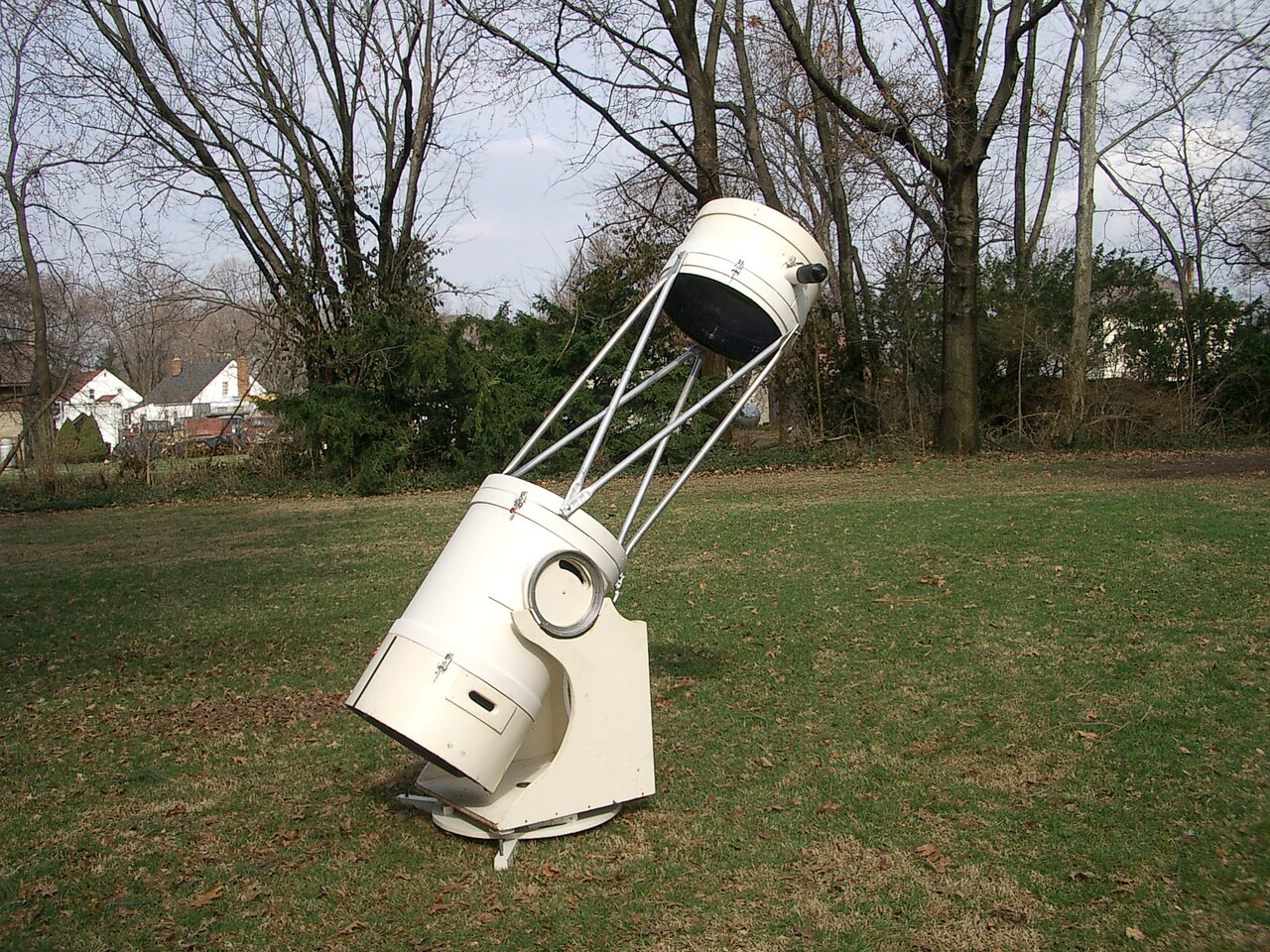
As you compare, visualize actual use: Will you carry the scope down stairs? Fit it into a compact car? Observe in a breezy backyard? Answers to these questions steer choices on base weight, tube format, and accessories. If your main site is an apartment balcony, a compact or collapsible tube can be a game changer.
Eyepieces, Finders, and Accessories that Matter
A telescope is only as enjoyable as the accessories you pair with it. The right eyepieces and finders transform your experience; a few small add-ons improve comfort and optical performance.
Eyepiece strategy: three focal lengths, plus a Barlow
Start with a coherent plan rather than a random assortment. Many observers are happy with a three-eyepiece set covering low, medium, and high power:
- Low-power (wide-field): 28–35 mm (2-inch) for sweeping Milky Way star fields and framing large nebulae. Aim for a 4–6 mm exit pupil.
- Medium-power: 12–18 mm for galaxies, clusters, and general-purpose viewing (~70–100× in a 1,200 mm scope).
- High-power: 5–8 mm for planets, lunar detail, and tight double stars (150–240×).
Add a 2× Barlow to effectively double your eyepiece collection. For example, a 24 mm behaves like a 12 mm with the Barlow, and a 10 mm behaves like a 5 mm.
Apparent field of view (AFOV) and eye relief
- AFOV: Wider fields (68°, 82°, or wider) help with manual tracking in a Dobsonian and provide an immersive view. Narrower fields (50°–60°) can still be sharp and comfortable.
- Eye relief: If you wear glasses to correct astigmatism at the eyepiece, choose long eye relief (typically 17–20 mm). Otherwise, many midrange eyepieces are fine.
Finders and aiming aids
- RDF or Telrad: Zero-power finders place a reticle in the sky for intuitive pointing.
- RACI finder: A 50 mm right-angle finder shows a star field aligned with atlas views and is gentler on the neck.
- Digital setting circles (DSC): Encoders plus a handset or app help you locate thousands of objects accurately while retaining manual motion—see Push-to and GoTo.
Filters
- UHC/nebula filter: Improves contrast on emission nebulae by passing oxygen and hydrogen lines while blocking much of the background light.
- O III: More aggressive than UHC; ideal for planetary nebulae and supernova remnants under dark skies.
- Neutral density or polarizing lunar filter: Reduces glare on the Moon to enhance comfort and perceived detail.
Comfort and utility
- Adjustable observing chair: Increases stability and detail perception by keeping you steady at the eyepiece.
- Dew control: Depending on climate, dew shields or gentle heat for the finder and secondary can prevent fogging.
- Red light lamp and charts/app: Maintain night vision while navigating star fields.
Accessories are synergistic. A well-chosen finder setup plus a comfortable chair and a couple of quality eyepieces can make a budget Dobsonian feel like a premium observing platform.
Collimation and Cooling: Getting Sharp Views
Two factors dominate image sharpness in reflectors: precise collimation and thermal equilibrium. Even excellent mirrors will underperform if misaligned or thermally turbulent.
Collimation essentials
Collimation aligns the primary and secondary mirrors with the focuser axis. Tools include a basic collimation cap, a Cheshire/sight tube, and sometimes a laser collimator. For an f/6 8-inch Newtonian, the process is manageable and quick with practice:
- Center the secondary under the focuser: Use a sight tube to ensure the secondary looks circular and centered. This step is mainly mechanical and usually infrequent.
- Align the focuser axis: Tilt the secondary so that the primary mirror’s center mark sits under the crosshairs of a Cheshire or the return dot of a well-calibrated laser.
- Align the primary: Use the primary mirror’s collimation knobs to bring the reflected center spot into the Cheshire’s bright ring or the laser’s target.

Good collimation should snap to focus at high power. If stars look like comets off-axis, that’s expected coma; on-axis, they should focus to tight Airy disks in steady seeing. If not, revisit alignment and check mechanical slop in the focuser or secondary holder.
Cooling the mirror
Large glass mirrors hold heat. As the mirror cools, rising warm air causes image-degrading currents. A small rear fan running at low speed helps the primary reach ambient temperature faster and keeps the boundary layer thin. On typical evenings, set the scope outside an hour before observing or run the fan during setup.
Other tips:
- Avoid setting up on warm concrete or asphalt if possible; grass radiates heat more evenly.
- Keep the tube oriented to allow airflow; avoid blocking the rear cell vents.
- Do not touch the primary with fingers; oils can damage coatings over time.
Quick star test
To verify collimation and optical health, perform a star test on a bright star at high magnification. Defocus slightly inside and outside of focus; the diffraction patterns should be concentric and similar. Minor asymmetries can be normal; gross differences may indicate collimation issues or tube currents. If the patterns change as the scope cools, patience and airflow usually resolve the issue.
Transport, Setup, and Storage Tips for Urban/Suburban Observers
Most 8-inch Dobsonians are designed to be friendly for backyard and car-portable use. A few techniques simplify life further:
Transport
- Two pieces: Move the tube and base separately. A carry strap or hand truck can help with longer distances.
- Vehicle fit: Solid tubes often fit across a back seat; truss/collapsible designs pack into smaller spaces but may need a light-blocking shroud.
- Protection: Use blankets or foam to prevent dings and protect collimation. Cap both ends of the tube to keep dust off mirrors.
Setup
- Level ground: A flat surface is ideal for smooth azimuth motion.
- Baffles and light shields: In bright urban yards, a simple screen or cloth shield reduces stray light and improves contrast.
- Temperature: Put the scope out ahead of time to cool while you prep charts and accessories. See Cooling the mirror.
Storage
- Dry, temperate location: Avoid damp basements or sheds where humidity can attack coatings and hardware.
- Dust covers: Cap the tube and focuser; a lightweight cloth cover over the base keeps sawdust and grit out of bearings.
- Quick-access staging: If you observe frequently, keep the scope assembled in an accessible spot to exploit short clear-sky windows.
For apartment observers, a collapsible 8-inch can be a strong alternative to a solid tube, especially if you want to combine it with push-to encoders for efficient balcony sessions between streetlight gaps.
Observing Performance: Deep-Sky, Planets, and Lunar
An 8-inch Dobsonian shines in many roles. While specific results depend on sky quality, seeing, and your experience, the following guidelines reflect common capabilities.
Deep-sky objects (DSOs)
- Nebulae: With a UHC or O III filter, bright emission nebulae such as the Orion Nebula and the Lagoon Nebula show structure, dark lanes, and brighter knots. Planetary nebulae pop at medium to high magnification with an O III filter.
- Galaxies: From dark skies, many Messier and NGC galaxies display halos and cores; some show hints of spiral arms with averted vision. Under urban light, stick to brighter targets and increase magnification moderately to darken the background.
- Star clusters: Globular clusters often resolve into swarms of stars at 150–200×. Open clusters benefit from wide fields at low power.
Planets
- Jupiter: Multiple belts, festoons, and Great Red Spot transits are common sights on steady nights. A 1–1.5 mm exit pupil often yields crisp detail.
- Saturn: The Cassini Division and several moons are regularly visible. Subtle banding appears in good seeing.
- Mars: During favorable oppositions, dark albedo regions and polar caps are within reach. Seeing stability is crucial.
The Moon
- High-resolution detail: At 200× and beyond, rilles, domes, and craterlets sparkle when the air is steady.
- Glare control: A neutral density or variable polarizing filter aids comfort and contrast.
Tip: Increase magnification gradually to find the sweet spot set by the atmosphere. If the image softens at higher powers, dial back. On many nights, 150–200× is the practical limit, but during rare “rock steady” conditions, 250–300× can be exquisite.
Remember that aperture and f/ratio set potential, but conditions and collimation determine how close you get to that potential on any given night.
Push-to and GoTo: Do You Need Electronics?
Dobsonians are famous for tactile, manual observing, but modern options add electronic assistance while preserving the core experience.
Push-to (digital setting circles)
Push-to systems pair encoders on the altitude and azimuth axes with a handset or smartphone app. You select an object from a database, then move the scope until on-screen arrows converge. Benefits include:
- Speed: Find faint targets quickly, even under light pollution where star-hopping is difficult.
- Simplicity: No motors or heavy batteries; manual motion remains smooth and quiet.
- Reliability: Alignment typically involves centering one or two bright stars. After that, the system guides your motion with surprising precision.
GoTo (motorized)
GoTo adds motors that slew the scope to selected targets. Advantages include fully automated pointing and tracking, which is helpful at high magnification and for sharing views with groups. Considerations include weight, power requirements, and added complexity. For many visual observers, push-to is the preferred middle ground that complements manual Dob motion without tying you to power and motors.
If the joy of discovery for you lies in star-hopping with charts and a Telrad or RACI finder, electronics are optional. If your sky is bright or your time is limited, push-to can be transformative.
Budget and Value: New vs. Used Dobsonians
One of the strengths of the 8-inch Dobsonian category is value. New models are competitively priced, and used markets can stretch your budget further.
Buying new
- Warranty and support: New scopes come with manufacturer support and clean optics.
- Known history: You avoid issues from rough handling or storage.
- Accessory bundles: Many packages include a couple of eyepieces and a finder—enough to start observing immediately.
Buying used
Used 8-inch Dobs are common and can offer excellent value. Inspect carefully:
- Mirror condition: Look for evenly reflective coatings. Fine dust is normal; severe haze, corrosion, or pinholes indicate aging coatings.
- Mechanical integrity: Bearings should move smoothly without binding; the focuser should be stable and free of slop.
- Hardware completeness: Verify that collimation knobs, finder brackets, and caps are present.
Coatings often last many years when stored dry. If recoating is ever needed, it’s a known service; weigh the cost against the value of the used scope. Whether new or used, plan a portion of your budget for a few essential eyepieces and a nebula filter.
Maintenance and Troubleshooting Over the Years
Dobsonians are robust. A little care keeps them performing well for decades.
Cleaning optics
- Primary mirror: Clean infrequently—only when dust and spots noticeably degrade views. Use distilled water rinse and gentle technique; avoid rubbing when possible. Dry with clean air or gentle blotting with lint-free material.
- Secondary mirror and eyepieces: Similar caution applies. Blow off dust first with a bulb blower; use appropriate lens cleaning solution sparingly.
Bearing care
- Debris removal: Keep bearings clean from grit and sawdust. If motion becomes sticky, inspect pads and laminate surfaces.
- Adjustment: Many bases allow tension tweaks to balance heavy eyepieces or finders.
Troubleshooting common issues
- Can’t reach focus: If you run out of inward or outward travel, you may need an extension tube or a low-profile adapter. Check whether a Barlow or diagonal (not used in Newtonians) is inadvertently in the optical path.
- Persistent soft views: Verify collimation and cooling first. Then consider seeing conditions and optical cleanliness.
- Balance issues: Heavy eyepieces can cause nose dive. Add a counterweight at the primary end or adjust tension friction.
Always protect your eyes—never point the telescope at the Sun without a proper, certified solar filter mounted securely over the front of the telescope. Side-mounted filters or eyepiece-only filters are not safe for solar observing.
Frequently Asked Questions
How much magnification can an 8-inch Dobsonian handle?
On nights of typical atmospheric steadiness, expect useful magnifications of 150–200×. During moments of excellent seeing, 250–300× is often achievable, particularly on the Moon and planets. The commonly cited “50× per inch” theoretical limit (about 400× for an 8-inch) is rarely practical because the atmosphere blurs the image first. Use exit pupil as a guide: around 1–2 mm often provides the best compromise of brightness and resolution for planetary and lunar viewing.
Is a coma corrector necessary for an f/6 8-inch Dobsonian?
Not usually for visual use. At f/6, coma at the edge of the field is mild with many eyepieces and often goes unnoticed during typical observing. If you use ultrawide eyepieces and are sensitive to off-axis performance, a coma corrector can sharpen edges. For f/5 variants, a corrector becomes more compelling, especially for wide-field views, but it’s still a personal preference for visual observers.
Final Thoughts on Choosing the Right 8-Inch Dobsonian
An 8-inch Dobsonian is a proven gateway to rich, rewarding visual astronomy. It offers enough aperture to reveal structure in deep-sky objects, impressive planetary detail when conditions allow, and easy, intuitive operation. By understanding the interplay of aperture, focal ratio, and accessories—and by paying attention to collimation and cooling—you can unleash the telescope’s full potential.
To recap the essentials:
- Choose a stable base and smooth bearings; they define the “feel” of the telescope.
- Prioritize a 2-inch Crayford focuser and a sensible eyepiece set to cover low, medium, and high powers.
- Invest in a UHC filter and a comfortable observing chair—both deliver big returns on enjoyment.
- Use push-to encoders if you observe under bright skies or want to maximize limited time.
- Practice collimation; it’s straightforward and boosts performance dramatically.
Whether you’re scanning the Milky Way, splitting doubles, or chasing shadow transits on Jupiter, an 8-inch Dobsonian pairs capability with simplicity better than almost any other telescope. If this guide helped, consider subscribing to our newsletter for future deep dives into optics, observing techniques, and gear tips—so your next clear night is your best one yet.
