
Table of Contents
- What Are Red Dwarf Stars (M-Type Main-Sequence)?
- Inside Red Dwarfs: Fusion, Convection, and Magnetic Dynamos
- Why Red Dwarfs Live Trillions of Years: Lifetimes and Evolution
- Flares, Starspots, and Space Weather on M Dwarfs
- Exoplanets Around Red Dwarfs and the Habitability Puzzle
- Key Red Dwarf Systems: TRAPPIST-1, Proxima Centauri, and More
- How We Discover and Characterize Red Dwarfs and Their Planets
- Backyard Observing of Red Dwarfs: Practical Tips and Citizen Science
- Frequently Asked Questions
- Final Thoughts on Choosing the Right Red Dwarf Observing Strategy
What Are Red Dwarf Stars (M-Type Main-Sequence)?
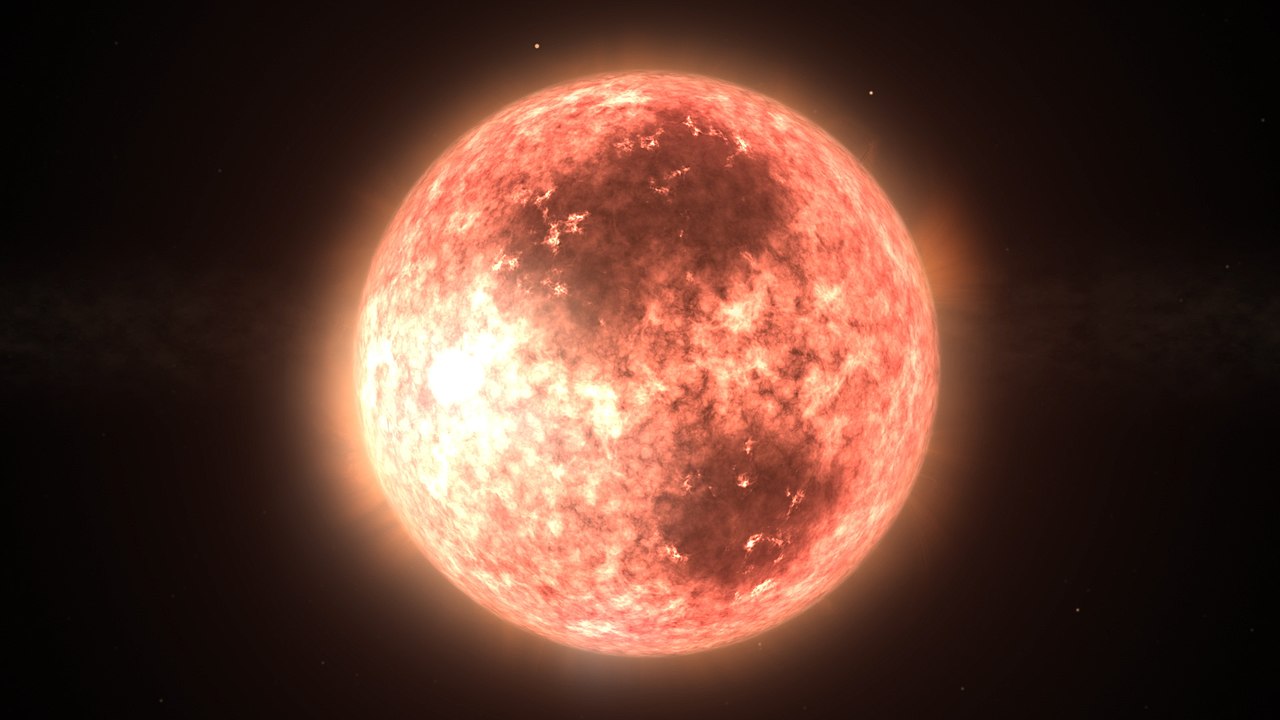
Red dwarfs—also known as M-type main-sequence stars—are the most common type of star in our galaxy. They are small, cool, and faint compared with the Sun, yet they dominate stellar demographics by number. In practical terms, if you randomly pointed to stars in the Milky Way, most of your selections would be red dwarfs. Their ubiquity makes them crucial to understanding the formation of stars, the chemical evolution of the Galaxy, and the prospects for life beyond Earth.

Artist: NASA, ESA and A. Feild (STScI)
By definition, red dwarfs are hydrogen-burning stars with masses roughly between about 0.08 and 0.6 times the mass of the Sun (M☉). At the low end of that range lies the hydrogen-burning limit—below it, objects become brown dwarfs that never ignite sustained hydrogen fusion. At the high end, the transition to early K-type stars begins, with higher temperatures and luminosities. The effective temperatures of red dwarfs span approximately 2,400–3,800 K, and their spectral class runs from M0 (the hottest, most massive red dwarfs) through late M types such as M7–M9 (the coolest that still qualify as stars). Their colors appear orange-red in telescopes, but to the naked eye (when bright enough) they mostly seem ruddy or simply faint because human night vision is less sensitive to red light.
Because red dwarfs are so faint, none are visible to the unaided eye under bright urban skies, and only a handful under dark skies. Yet they are cosmically significant. Their long lifetimes (often trillions of years for the lowest masses) mean that every red dwarf ever born is still shining today; none has yet had time to reach a true stellar death. As a result, they act as time capsules for stellar evolution and as prime targets for exoplanet habitability studies.
Two aspects of red dwarfs capture the imagination: their intense magnetic activity—leading to frequent, sometimes dramatic flares—and the high yield of exoplanets found in their compact, tightly bound planetary systems. The combination of stellar flares and close-in habitable zones makes red dwarfs laboratories for extreme space weather and climate science on alien worlds.
Inside Red Dwarfs: Fusion, Convection, and Magnetic Dynamos
Red dwarfs are powered by the same basic engine as the Sun: the fusion of hydrogen into helium in their cores. But the details—how energy moves through the star, and how that motion drives magnetism—differ in important ways because of their lower mass and temperature.
Hydrogen Fusion via the Proton–Proton Chain
At the temperatures typical of red dwarf cores, the proton–proton (p–p) chain dominates energy production. In this sequence, protons (hydrogen nuclei) collide, undergo beta decay steps, and eventually form helium-4, releasing energy in the form of gamma rays and neutrinos. In higher-mass stars, a different process known as the CNO cycle becomes more important, but red dwarfs are generally too cool and low-pressure for the CNO cycle to play a major role. The p–p chain is a slow, temperature-sensitive process; this is one reason red dwarfs burn fuel parsimoniously and live for extremely long timescales.
Convection and the Stellar Interior
Energy transport in stars proceeds by radiation (photons diffusing outward) and/or convection (bulk movement of hot gas). Red dwarfs differ from Sun-like stars in their interior structure:
- Fully convective regime: For masses below roughly 0.35 M☉, red dwarfs are fully convective. Hot plasma rises all the way from the core to the surface and cools, sinking again. This deep mixing continually cycles fresh hydrogen into the core and moves helium outward, allowing the star to use a larger fraction of its fuel compared with stars like the Sun.
- Partially convective regime: Above about 0.35 M☉ and up to ~0.6 M☉, red dwarfs develop a small radiative core with a convective envelope. Energy still moves mostly by convection near the surface, but the deep interior begins to transport energy radiatively.
This difference matters for longevity and magnetism: fully convective stars can more efficiently mix fuel, contributing to the extraordinarily long main-sequence lifetimes discussed in the next section.
Magnetic Dynamos in Low-Mass Stars
Stellar magnetic fields arise from dynamos—processes in which rotating, convecting, electrically conducting fluid amplifies magnetic fields. In solar-type stars, the tachocline (the shear region between the radiative core and convective envelope) is believed to play a major role in organizing magnetic fields. In fully convective red dwarfs, there is no tachocline, yet robust magnetic fields persist. This implies that an alternative, distributed turbulent dynamo operates throughout the convective interior.
Observationally, the strength of magnetic activity in red dwarfs correlates with rotation: young, fast-rotating stars tend to be more active, exhibiting stronger H-alpha emission, elevated X-ray luminosity, and frequent flares. As red dwarfs age, stellar winds remove angular momentum, causing rotation to slow and activity to decline. The activity–rotation relationship extends down to very low masses, although its exact functional form and timescales differ from solar analogs. A key practical outcome is that older, slowly rotating red dwarfs may provide calmer environments for planets than their younger, rapidly spinning siblings.
Mass–Luminosity and Temperature Relations
While a simple power law (L ∝ M^3.5) often approximates main-sequence stars, red dwarfs deviate: the luminosity rises steeply but with a smaller exponent for the lowest masses, roughly L ∝ M^2–3 in the M-dwarf regime. The cooler photospheres show strong molecular absorption bands, especially titanium oxide (TiO) and vanadium oxide (VO), which shape the spectrum and complicate the color–temperature relation. Spectral typing in the optical and near-infrared relies on these molecular features, and modern calibrations map them to effective temperature and metallicity.
In short: red dwarfs are small and cool, but their interiors are vigorous and magnetic. Their physics is simple in fuel source yet rich in dynamics.
Why Red Dwarfs Live Trillions of Years: Lifetimes and Evolution
One of the most striking properties of red dwarfs is their longevity. Whereas the Sun’s main-sequence lifetime is about 10 billion years, the smallest red dwarfs will continue fusing hydrogen for trillions of years—far longer than the current age of the universe (~13.8 billion years). No red dwarf has yet had time to evolve off the main sequence; every one of them is, in a sense, younger than its life expectancy by a huge margin.
Fuel Efficiency Through Full Convection
Two factors conspire to give red dwarfs stellar lifespans that approach the limits of cosmic patience:
- Low luminosity: They radiate energy slowly, burning fuel at a measured pace.
- Fuel mixing: Fully convective red dwarfs can cycle hydrogen from the outer layers into the core, using a larger fraction of their total mass for fusion. By contrast, the Sun is not fully convective and mainly burns hydrogen in its core, leaving a significant reservoir unburned in the envelope.
As a result, a 0.1 M☉ red dwarf can have a main-sequence lifetime exceeding 1 trillion years, and the absolute lower-mass stars last even longer. These numbers depend on metallicity and exact interior physics, but the overall conclusion is robust: red dwarfs are cosmic marathoners, not sprinters.
Evolutionary Tracks and End States
During most of their lives, red dwarfs change very slowly. Their luminosity increases modestly with age, and their radius and temperature evolve gently. Eventually—after exhausting hydrogen—they do not follow the Sun-like path of becoming a red giant with a helium flash. Instead, the smallest red dwarfs are predicted to avoid a classic red giant phase altogether, gradually transitioning to degenerate helium objects over unheard-of timescales. But this is all theoretical; the universe is not old enough for us to observe such endpoints in real time. For now, all known red dwarfs are still on the main sequence.
Pre–Main-Sequence Luminosity and Planetary Consequences
Before reaching the main sequence, young red dwarfs spend hundreds of millions of years contracting and radiating gravitational energy. During this time, they can be substantially more luminous than during their later, steady phase. For planets forming or migrating into the temperate zone, that early brightness can drive water loss and atmospheric escape, a key complication we revisit in the habitability section.
Flares, Starspots, and Space Weather on M Dwarfs
Magnetic activity is the signature drama of red dwarfs. While the average luminosity is low, their magnetic fields can unleash sudden energy releases—flares—orders of magnitude more energetic than typical solar flares relative to their quiescent output. These events, plus more persistent phenomena like starspots and coronal mass ejections (CMEs), define the space weather around M-dwarf planets.
Credit: NASA’s Goddard Space Flight Center/Chris Smith (USRA)
Artist: NASA’s Goddard Space Flight Center. Chris Smith (USRA): Lead Producer
Flare Phenomenology
Flares occur when magnetic field lines in the stellar atmosphere realign and reconnect, accelerating charged particles and heating plasma to tens of millions of degrees. The result is a burst of radiation across the spectrum: radio, optical (often noticeable as a blue/white enhancement), ultraviolet (UV), and X-rays. A single flare can increase a red dwarf’s brightness by a noticeable fraction, and in extreme cases by many magnitudes for minutes to hours.
Historically, highly active M dwarfs were called \”flare stars\” (UV Ceti-type). Modern time-domain surveys like TESS and Kepler have shown that flares are widespread among M dwarfs, particularly young and fast-rotating ones. The flare frequency distribution typically follows a power law: small flares are common, giant flares rarer but not negligible. Over long timescales, a planet in close orbit can be bombarded by frequent bursts of high-energy radiation.
Starspots and Rotational Modulation
Starspots—cooler, magnetically active regions on the stellar surface—cause periodic brightness variations as the star rotates. Measuring the periodicity yields the rotation period, while changes in the modulation amplitude trace the evolving spot coverage. Over time, spot patterns wax and wane in a manner analogous to the solar cycle, though the periodicity and amplitude can differ substantially among M dwarfs. Starspots are not just curiosities; they complicate the measurement of planetary signals in radial-velocity data and in transit light curves. Advanced modeling of stellar activity is essential for accurate exoplanet characterization around red dwarfs.
Space Weather: UV, X-rays, and Stellar Winds
Red dwarfs are proportionally bright in the ultraviolet and X-ray bands during active phases, even though their total (bolometric) luminosity is low. High-energy photons can heat and erode planetary atmospheres, especially for planets close to the star. Stellar winds and CMEs may also compress planetary magnetospheres and, in extreme cases, strip atmospheres over long timescales. The severity depends on the planet’s magnetic field, atmospheric composition, and distance from the star. We explore the implications in the habitability section, but the key point here is: around M dwarfs, close-in habitable zones coexist with harsh space weather.
Activity–Age–Rotation Connection
Red dwarfs spin down as they age because stellar winds carry away angular momentum. Slower rotation typically correlates with lower activity. This means older M dwarfs may provide more stable radiation environments for planets. However, the timescale for spin-down depends on mass and magnetic geometry. Some mid- and late-M dwarfs retain significant activity at gigayear ages. Interpreting activity thus requires considering stellar mass, rotation period, and indicators like H-alpha emission and X-ray flux.
Exoplanets Around Red Dwarfs and the Habitability Puzzle
Red dwarfs have become exoplanet discovery engines. Because these stars are small and light, small planets induce larger radial-velocity wobbles and deeper transits than they would around Sun-like stars. The result is a bounty of Earth-sized planets, including several in or near their stars’ temperate zones. Yet habitability is more than orbital distance. Around M dwarfs, it involves a complex interplay of climate physics, stellar activity, and planetary properties.
Why M Dwarfs Are Planet-Finding Sweet Spots
- Transit depth: The fractional dip in starlight during a transit scales as (Rp/Rs)^2. For the same planet radius, a smaller star produces a deeper transit, easing detection and atmospheric characterization via transmission spectroscopy.
- Radial-velocity amplitude: The stellar wobble induced by a planet is larger for lower-mass stars, boosting detectability of small planets.
- Shorter orbital periods: The habitable zone is close-in due to low luminosity, leading to shorter orbital periods (days to weeks) and more frequent transits or RV cycles, enabling faster confirmation and follow-up.
These advantages have delivered celebrated systems such as TRAPPIST-1 and Proxima Centauri, which we discuss in detail later.
The Habitable Zone Near Red Dwarfs
The habitable zone (HZ) is the range of orbital distances where a rocky planet with the right atmosphere could sustain liquid water on its surface. Because red dwarfs are dim, their HZ lies close-in—often at distances where orbital periods are just a few days to a few weeks. This proximity raises several issues:
- Tidal locking: Planets in the HZ often become tidally locked, with one hemisphere permanently facing the star. Without atmospheric or oceanic heat transport, this could create a hot day side and a frigid night side. However, climate models show that a sufficiently thick atmosphere (even a fraction of a bar) and/or oceans can redistribute heat and avoid atmospheric collapse on the night side.
- Pre–main-sequence irradiation: As described in the evolution section, young M dwarfs can be more luminous than later in life. A planet now in the HZ may have endured a long, brighter youth, potentially desiccating early oceans and altering atmospheric chemistry through photolysis and hydrogen escape.
- High-energy radiation and flares: Frequent UV and X-ray flares (see space weather) can erode atmospheres or produce complex photochemistry. The net effect depends on magnetic shielding, atmospheric composition, and replenishment processes (e.g., volcanic outgassing).
Atmospheric Retention and Composition
Whether M-dwarf planets can keep atmospheres is a central question. Factors include:
- Gravity and escape velocity: More massive planets bind gases more tightly, resisting thermal escape.
- Magnetospheres: Planetary magnetic fields may deflect stellar wind particles, reducing non-thermal escape. The generation of a magnetic field depends on internal convection and rotation; tidal locking does not preclude dynamos, but details remain under study.
- Outgassing and replenishment: Volcanoes and interior–atmosphere cycles can resupply volatiles. Atmospheres are dynamic systems, not one-shot inventories.
- Photochemistry: High UV flux can both destroy molecules and create protective layers (e.g., hazes) that alter climate and observables. In some cases, CO2-rich atmospheres might develop photochemical hazes that influence surface temperatures.
Observationally, for the closest and best-studied systems, early results from space telescopes have constrained atmospheres on the hottest inner planets. For example, inner worlds in the TRAPPIST-1 system show no evidence of extended hydrogen-dominated envelopes, consistent with rocky or thin atmospheres. The nature of temperate planets farther out remains an open question, and ongoing observations continue to refine constraints on possible atmospheres and compositions.

In the first model (left), the interior of the planet is composed of rock mixed with iron bound to oxygen. There is no solid iron core, which is the case with Earth and the other rocky planets in our own solar system.
The second model shows an overall composition similar to Earth’s, in which the densest materials have settled to the center of the planet, forming an iron-rich core proportionally smaller than Earth’s core.
A variation is shown in the third panel, where a larger, denser core could be balanced by an extensive low-density ocean on the planet’s surface. However, this scenario can be applied only to the outer four planets in the TRAPPIST-1 system. On the inner three planets, any oceans would vaporize due to the higher temperatures near their star, and a different composition model is required. Since all seven planets have remarkably similar densities, it is more likely that all the planets share a similar bulk composition, making this fourth scenario unlikely but not impossible.
The high-precision mass and diameter measurements of the exoplanets in the TRAPPIST-1 system have allowed astronomers to calculate the overall densities of these worlds with an unprecedented degree of accuracy in exoplanet research. Density measurements are a critical first step in determining the composition and structure of exoplanets, but they must be interpreted through the lens of scientific models of planetary structure.
Artist: NASA/JPL-Caltech
Climate Modeling on Tidally Locked Worlds
Global climate models (GCMs) of tidally locked planets orbiting M dwarfs indicate that habitable conditions are plausible under a range of circumstances. With modest atmospheric pressures, day–night circulation patterns can move heat to the night side, preventing atmospheric freeze-out. Cloud feedbacks over the substellar point may increase albedo, stabilizing temperatures and potentially widening the habitable zone inward. Oceans add additional heat capacity and transport. Nevertheless, the severity of flares and pre–main-sequence irradiation complicate long-term habitability scenarios. Biochemistry might also need to adapt to different stellar spectra; for example, photosynthesis optimized for redder light or intermittent UV flashes.
Interpreting Biosignatures in M-Dwarf Systems
Searching for biosignatures (e.g., gases like O2, O3, CH4) in the atmospheres of M-dwarf planets is a high priority for next-generation telescopes. However, photochemistry around active M dwarfs can produce or destroy these gases abiotically. For instance, water photolysis coupled with hydrogen escape can build up oxygen without life. Thus, interpreting future detections requires careful modeling, multi-gas context, and attention to stellar activity history. Co-detection of multiple, thermodynamically incompatible gases may still offer robust indicators, but disentangling biotic from abiotic processes is an ongoing challenge.
Key Red Dwarf Systems: TRAPPIST-1, Proxima Centauri, and More
Several nearby and well-studied red dwarf systems have become touchstones for exoplanet science. Here are a few highlights, each illustrating different aspects of M-dwarf astrophysics and planetary environments.
TRAPPIST-1: A Compact System of Seven Earth-Sized Planets

This image represents an updated version of PIA21422, which was created in 2017. The planets’ appearances were re-imagined based on a 2018 study using additional observations from NASA’s Spitzer and Kepler space telescopes, in addition to previous data from Spitzer, the ground-based TRAPPIST (TRAnsiting Planets and PlanetesImals Small Telescope) telescope and other ground-based observatories. The system was named for the TRAPPIST telescope.
The new analysis concludes that the seven planets of TRAPPIST-1 are all rocky, and some could contain significant amounts of water. TRAPPIST-1 is an ultra-cool dwarf star in the constellation Aquarius, and its planets orbit very close to it.
The form that water would take on TRAPPIST-1 planets would depend on the amount of heat they receive from their star, which is a mere 9 percent as massive as our Sun. Planets closest to the star are more likely to host water in the form of atmospheric vapor, while those farther away may have water frozen on their surfaces as ice. TRAPPIST-1e is the rockiest planet of them all, but still is believed to have the potential to host some liquid water.
Artist: NASA/JPL-Caltech
TRAPPIST-1 is an ultracool M dwarf roughly 40 light-years away. It hosts seven known planets, all approximately Earth-sized, packed into a resonant orbital chain. The star’s mass is about a tenth of the Sun’s, and its radius is about a tenth to an eighth of the Sun’s, making planetary transits deep and frequent. Several planets receive insolation levels comparable to those of Venus, Earth, and Mars, placing them at or near the habitable zone by stellar flux. The tight architecture provides ideal conditions for transit timing variation (TTV) analyses that constrain masses and densities.
Early atmospheric observations of the innermost planets have found no signs of thick, hydrogen-dominated envelopes. For the more temperate planets, the presence, thickness, and composition of atmospheres remain under active investigation. TRAPPIST-1 also shows stellar activity including flares, and understanding its space weather is central to assessing long-term planetary climates. This system exemplifies the opportunity and difficulty: exquisite exoplanet measurements alongside complex host-star variability. For observational methods used here, see detection and characterization.
Proxima Centauri: Our Nearest Stellar Neighbor

Proxima Centauri lies in the constellation of Centaurus (The Centaur), just over four light-years from Earth. Although it looks bright through the eye of Hubble, as you might expect from the nearest star to the Solar System, Proxima Centauri is not visible to the naked eye. Its average luminosity is very low, and it is quite small compared to other stars, at only about an eighth of the mass of the Sun.
However, on occasion, its brightness increases. Proxima is what is known as a “flare star”, meaning that convection processes within the star’s body make it prone to random and dramatic changes in brightness. The convection processes not only trigger brilliant bursts of starlight but, combined with other factors, mean that Proxima Centauri is in for a very long life. Astronomers predict that this star will remain middle-aged — or a “main sequence” star in astronomical terms — for another four trillion years, some 300 times the age of the current Universe.
These observations were taken using Hubble’s Wide Field and Planetary Camera 2 (WFPC2). Proxima Centauri is actually part of a triple star system — its two companions, Alpha Centauri A and B, lie out of frame.
Although by cosmic standards it is a close neighbour, Proxima Centauri remains a point-like object even using Hubble’s eagle-eyed vision, hinting at the vast scale of the Universe around us.
Artist: ESA/Hubble & NASA
Proxima Centauri, a late M dwarf about 4.24 light-years away, is the Sun’s closest stellar neighbor. It hosts at least one confirmed planet, Proxima b, with a minimum mass near Earth’s and an orbital period of about 11 days, receiving Earth-like levels of stellar flux. The planet lies within the star’s nominal habitable zone. However, Proxima is a flare star—its frequent and energetic flares add uncertainty to the planet’s atmospheric retention and surface habitability. Observations have reported large flares across the electromagnetic spectrum, emphasizing the importance of high-energy radiation in shaping exoplanet environments around active M dwarfs. Discussions of atmospheric loss and magnetic shielding for such close-in worlds appear in the habitability section.
Barnard’s Star: A Fast-Moving Old Red Dwarf
Barnard’s Star is a well-known, high proper-motion M dwarf located about 6 light-years away. It is considered relatively old and has been the subject of extensive planet searches. While candidate signals have been reported historically, robust confirmation of an Earth-sized planet in its temperate zone remains elusive. Regardless, Barnard’s Star serves as a benchmark for studying low-activity, older M dwarfs and refining stellar parameters, rotation, and activity diagnostics in the low-mass regime.
LHS 1140: A Promising Temperate Super-Earth
LHS 1140 is a nearby mid-M dwarf hosting at least one super-Earth/mini-Neptune in or near the habitable zone. Planet LHS 1140 b has been of particular interest due to its size, density constraints, and transit geometry, which together make it a candidate for atmospheric characterization. Various studies have suggested possibilities ranging from a rocky world to a water-rich composition. Ongoing and future observations continue to refine its properties and assess the likelihood and nature of an atmosphere.
Kepler-186: A Pioneering Earth-Sized Planet in the HZ
Kepler-186, a slightly cooler-than-Sun star on the K–M boundary, hosts Kepler-186f, one of the first Earth-sized planets discovered in the habitable zone of another star. Although it is much farther away than the very nearby systems, making detailed atmospheric characterization difficult with current technology, it illustrates the power of transit surveys in identifying targets of interest and expanding the sample of potentially temperate terrestrial planets.
How We Discover and Characterize Red Dwarfs and Their Planets
Finding planets around red dwarfs—and understanding the stars themselves—draws on a comprehensive toolkit of astronomical techniques. The small size and low luminosity of M dwarfs are both a help and a hindrance, depending on the method. This section summarizes the most important approaches and the kind of information they provide.
Transit Photometry
Transit surveys measure the tiny dimming when a planet crosses the face of its star. For an Earth-sized planet around a Sun-like star, the signal is under 0.01%. Around an M dwarf with a tenth the Sun’s radius, the same planet would yield a ~1% drop—orders of magnitude easier to detect. Missions like Kepler, K2, and TESS have been especially productive for M-dwarf planets, and ground-based arrays using small telescopes have also contributed significantly.

The Jupiter-sized planet orbits an unnamed red dwarf star that lies in the direction of the Galactic Centre; the exact stellar distance is unknown. Hubble detected the planet in a survey that identified 16 Jupiter-sized planets in short-period, edge-on orbits (as viewed from Earth) that pass in front of their parent stars. Hubble could not see the planets, but measured the dimming of starlight as the planets passed in front of their stars.
This illustration presents a purely speculative view of what such a \”hot Jupiter\” might look like. It could have a powerful magnetic field that traps charged particles from the star. These particles create glowing auroral rings around the planet’s magnetic poles. A powerful magnetic flux tube links the planet and star. This enhances stellar activity and triggers powerful flares. A powerful stellar wind creates a bow shock around the planet. The planet’s atmosphere seethes at 1,650 degrees Celsius.
Artist: NASA, ESA and A. Schaller
A simple way to estimate the transit depth is with the formula below:
# Transit depth (fractional)
# Rp: planet radius;  Rs: stellar radius (same units)
# Example: 1 Earth radius transiting a 0.12 R_sun M dwarf
# Earth radius in solar radii ~ 0.009157
Rp = 0.009157
Rs = 0.12
transit_depth = (Rp/Rs)**2
print(transit_depth)  # ~0.0058, or 0.58%
Beyond detection, multi-wavelength transit observations can probe atmospheric composition via transmission spectroscopy, where different molecules imprint wavelength-dependent variations in the transit depth. For the closest compact systems, space telescopes have begun to place limits on the presence of light gases and to search for heavier atmospheres.
Radial Velocities (RVs)
RVs measure the star’s line-of-sight velocity wobble due to orbiting planets. The technique is very sensitive for M dwarfs because a given planet mass induces a larger velocity signal around a less massive star. The challenge is that M dwarfs are spectrally complex: their optical spectra are crowded with molecular features, and stellar activity can mimic or mask planetary signals. Modern instruments increasingly observe in the near-infrared, where M dwarfs are brighter and activity indicators can be disentangled.
Transit Timing Variations (TTVs)
In multi-planet systems like TRAPPIST-1, gravitational interactions among planets cause small deviations from perfectly periodic transits. These TTVs encode planetary masses and eccentricities. The combination of transits and TTVs has provided precise densities for several Earth-sized planets that would otherwise be hard to weigh.
Direct Imaging and Astrometry
Direct imaging of rocky planets around M dwarfs is challenging with current instruments because planets lie close to the star and are faint. However, direct imaging is effective for wider-orbit giant planets and substellar companions in young systems. Astrometry—measuring the star’s position changes on the sky—is another pathway for detecting planets around nearby M dwarfs, with sensitivity to longer-period companions. With future missions and larger telescopes, these methods will play growing roles in discovering and characterizing M-dwarf systems.
Spectroscopic and Photometric Stellar Characterization
Accurate stellar parameters are essential for interpreting planetary data. Determining effective temperature, radius, and metallicity allows robust estimates of planet size and insolation. For M dwarfs, near-infrared spectroscopy offers metallicity diagnostics using atomic lines (e.g., Na, Ca) and molecular indices. Empirical mass–radius relations, calibrated by eclipsing binaries and interferometry, further refine stellar and planetary properties. Photometric monitoring tracks rotation periods via spot modulation, anchoring the age–activity–rotation connection discussed in the activity section.
Backyard Observing of Red Dwarfs: Practical Tips and Citizen Science
Although most red dwarfs are too faint to impress visually in small telescopes, there is a surprising amount that dedicated observers can do—from star-spot and flare monitoring to exoplanet transit timing. Below are practical suggestions for amateurs and students interested in contributing useful data to the community, with care to avoid overlap with professional observatories and to ensure high-quality results.
Choosing Targets
- Bright, nearby M dwarfs: Catalogs like the RECONS and various bright M-dwarf lists provide targets accessible to small telescopes. Many have known rotation periods and activity levels, making them ideal for follow-up monitoring.
- Known transiting systems: Shallow but detectable transits around bright M dwarfs are feasible with well-calibrated equipment. Community networks often coordinate transit observations to refine ephemerides.
- Flare stars: Time-series photometry on active M dwarfs can capture flares. Coordinated multi-longitude coverage increases the chance of catching events and constraining flare frequency distributions.
Instrumentation and Filters
Even modest telescopes (e.g., 6–10 inches) paired with modern CMOS or CCD cameras can achieve millimagnitude precision under good conditions. Use standard photometric filters (e.g., Johnson–Cousins or Sloan) to place your measurements on a system that others can compare. Unfiltered observations risk color-dependent systematics because M dwarfs are very red; consistent filter use improves scientific value.
Observing Strategy
- Differential photometry: Measure your target’s brightness relative to stable comparison stars in the same field to cancel out atmospheric variations.
- Cadence and duration: For flares, high cadence (seconds to a minute) is valuable; for rotation and spot modulation, nightly sampling over many weeks is more important. For transits, cover at least 1–2 hours before and after predicted mid-transit times.
- Calibration: Apply bias, dark, and flat-field corrections. Accurate time stamping (e.g., GPS-based) is crucial, especially for transit timing.
Data Reduction and Reporting
Many amateur-friendly software packages can perform aperture photometry, track comparison stars, and compute light curves with error estimates. Share results with citizen-science programs and variable-star organizations, which curate and disseminate data to professionals. Detailed logs—weather, seeing, airmass, equipment settings—make your data easier to interpret and reuse.
Safety Note
Red dwarfs are faint, but safety in nighttime observing remains paramount: ensure dark-adaptation-friendly lighting, avoid trip hazards, and share observing plans if working at remote sites.
For deeper scientific context on what your observations reveal about magnetic activity and planetary environments, revisit Space Weather on M Dwarfs and How We Discover and Characterize Red Dwarfs and Their Planets.
Frequently Asked Questions
Are red dwarfs good hosts for life-bearing planets?
They are promising in terms of numbers—most stars are red dwarfs—and they host many small planets, some in the nominal habitable zone. However, two major challenges exist: early pre–main-sequence brightness that can drive water loss, and ongoing high-energy activity (UV/X-ray flares and potentially strong winds) that may erode or alter atmospheres. Climate models suggest tidally locked planets can maintain temperate conditions with modest atmospheres, and magnetic fields plus outgassing may help retention, but definitive answers will come from atmospheric detections and comparative studies. In short: plausible, but not guaranteed—evidence is still accumulating.
Why are astronomers so focused on TRAPPIST-1 and Proxima b?
Both systems are nearby, enabling high signal-to-noise observations. TRAPPIST-1 has multiple Earth-sized transiting planets with resonant orbits, making them ideal for precise mass–radius measurements and atmospheric searches. Proxima b, though non-transiting, is the nearest confirmed Earth-mass planet in the habitable zone, offering an unparalleled laboratory for studying a planet under an active M-dwarf host. The combination of accessibility and scientific payoff makes them priority targets for current and future telescopes.
Final Thoughts on Choosing the Right Red Dwarf Observing Strategy
Red dwarfs concentrate some of the most important questions in modern astronomy: How do magnetic dynamos work without a tachocline? Can planets thrive under relentless space weather? What atmospheric chemistries emerge under redder light and episodic UV bursts? Because M dwarfs are so numerous, the answers will heavily influence estimates of life’s prevalence in the Galaxy.
For observers selecting targets and strategies, align your goals with the star–planet system’s characteristics:
- To study flares and activity: Choose young, rapidly rotating M dwarfs; observe at high cadence; coordinate multi-wavelength campaigns if possible; and monitor over months to track activity cycles.
- To refine exoplanet properties: Focus on known transiting systems with bright hosts. Provide precise transit times and high-quality light curves to complement professional spectroscopy and TTV analyses.
- To characterize older, quieter hosts: Target slowly rotating mid-M dwarfs, measure stable rotation periods, and build long-baseline light curves to constrain low-level variability that affects radial-velocity work.
As new instruments continue to expand our reach—probing atmospheric compositions, temperature structures, and perhaps even biosignature candidates—the role of red dwarfs will only grow. We encourage readers to explore related topics in stellar magnetism, exoplanet climate modeling, and time-domain astronomy. If you find this deep dive useful, consider subscribing to our newsletter to receive future articles on stars, planets, and the evolving techniques that bring them into focus.