
Table of Contents
- What Is a Dobsonian Telescope and Why It Matters
- Dobsonian Design: Mount, Optics, and Mechanics
- Choosing Aperture, Focal Ratio, and Optical Quality
- Solid-Tube vs Truss Dobsonians, Classic vs GoTo
- Portability, Ergonomics, and Observing Comfort
- Collimation and Cooling: Getting Sharp Views
- Eyepieces, Finders, and Filters for Dobsonians
- What You Can See: Deep Sky, Planets, and the Moon
- Star Hopping, Setting Circles, and Digital Aids
- Maintenance, Care, and Upgrades
- Buying Guide: Budget Picks and Feature Checklists
- Dobsonian vs Refractor vs Schmidt-Cassegrain
- Frequently Asked Questions
- Final Thoughts on Choosing the Right Dobsonian Telescope
What Is a Dobsonian Telescope and Why It Matters
The Dobsonian telescope is a simple, powerful combination: a Newtonian reflector optical tube riding on a wooden alt-azimuth base. It was popularized in the 1960s–1970s by John Dobson, whose sidewalk-astronomy ethos emphasized affordability and aperture over complexity. In practical terms, a Dobsonian is the easiest way to put a large light bucket under dark skies, which is why it remains one of the most recommended designs for beginners and veterans alike.
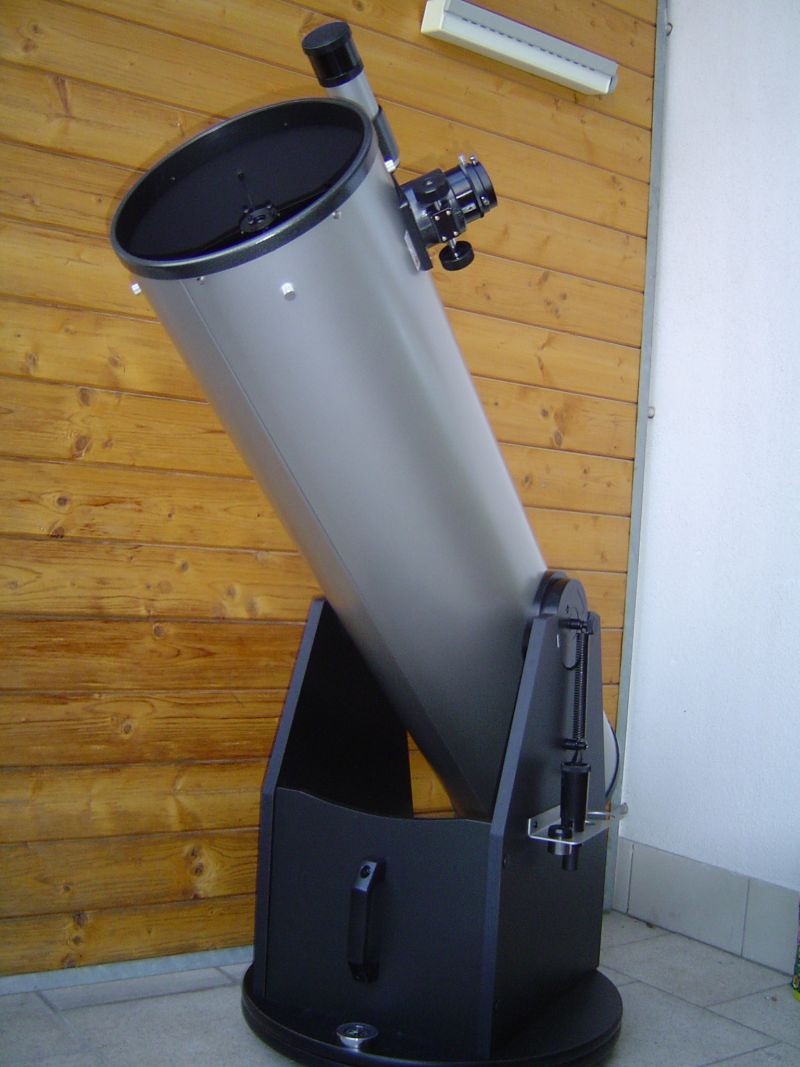
Dobsonians excel at visual observing—especially deep-sky objects like galaxies, nebulae, and star clusters—because they maximize aperture per dollar and per kilogram. The mount moves in altitude (up/down) and azimuth (left/right) with buttery smoothness, allowing you to nudge along objects at the sky’s apparent drift. Their simplicity also makes setup fast and maintenance straightforward. If you’ve heard the advice “buy the biggest telescope you will actually use,” it often points you toward a Dobsonian.
This guide expands the essentials: how a Dobsonian works, how to choose aperture and focal ratio, how to collimate and cool the optics, what accessories matter, how to observe more effectively, and how Dobsonians compare to other designs. Along the way, you’ll find practical tips, long-tail search questions like “best beginner Dobsonian telescope,” and pointers to related sections (for example, see Collimation and Cooling and Eyepieces, Finders, and Filters).
Dobsonian Design: Mount, Optics, and Mechanics
A Dobsonian marries a Newtonian reflector to a minimal, low-friction alt-az mount. Understanding each piece helps you get the most from the whole system.
Alt-azimuth base and motions
Dobsonian mounts use two axes:
- Azimuth: The ground board rotates horizontally on Teflon or similar bearings against a laminate or polymer surface, offering smooth 360° panning.
- Altitude: Semi-circular or cylindrical side bearings ride on Teflon pads, letting the tube sweep from horizon to zenith.
Friction and balance are tuned so the scope stays put when you swap eyepieces but still moves with a fingertip push. Many modern Dobsonians add spring tensioners, adjustable clutches, or larger altitude bearings to stabilize heavier accessories like a finder scope or heavy eyepiece. If movements feel jerky, check the bearing surfaces for dirt and consider upgrading to better laminate (e.g., textured countertop laminates were historically used for their favorable friction characteristics) as discussed in Maintenance, Care, and Upgrades.
Newtonian reflector optics
The optical tube is a Newtonian reflector with a primary parabolic mirror at the bottom and a flat secondary mirror at the top sending light out to a focuser on the side. The key parameters are:

- Aperture: Diameter of the primary mirror (e.g., 150 mm/6″, 200 mm/8″, 254 mm/10″). Light gathering power scales with the area, proportional to aperture squared, so going from 6″ to 8″ roughly doubles the light.
- Focal length: Distance from the primary mirror to the focal plane (e.g., 1200 mm). It sets image scale and interacts with eyepiece focal length to determine magnification.
- Focal ratio: f/number = focal length ÷ aperture (e.g., 1200 mm ÷ 200 mm = f/6). Faster scopes (smaller f/number) are shorter and wider-field but more demanding on eyepieces and collimation.
Newtonians show coma off-axis—stars stretch into tiny comets toward the field edge, more apparent at faster focal ratios. This inherent aberration can be mitigated by a coma corrector (see Eyepieces, Finders, and Filters), or simply by using narrower apparent-field eyepieces and keeping targets centered.
Bearings, balance, and damping
Dobsonians rely on dry friction for stability. Ideally the static friction (to start motion) is close to the dynamic friction (to continue motion), yielding smooth “stiction-free” tracking at high power. Practical tips:
- Balance: Keep the tube balanced with your heaviest eyepiece inserted. Add a magnet counterweight, adjustable springs, or move the altitude bearings if necessary.
- Damping: Heavier bases can damp vibrations faster, but add weight. Stiffer rocker boxes and wider stance ground boards enhance stiffness without too much mass.
- Friction tuning: Too little friction can cause drift; too much makes tracking jumpy. Small tweaks—cleaning pads, adding a smooth laminate, or adjusting clutches—often fix the feel.
Choosing Aperture, Focal Ratio, and Optical Quality
Picking the right Dobsonian means matching aperture to your observing goals, site, and transport. Focal ratio and mirror quality then refine performance.
Aperture: The engine of performance
Aperture determines both light gathering and resolution:
- Light gathering scales with the mirror’s area. An 8″ mirror collects roughly 1.8× the light of a 6″; a 10″ collects about 1.6× more than an 8″. This matters for faint galaxies and nebulae.
- Angular resolution improves as aperture increases, allowing tighter double stars and finer planetary detail when the atmosphere cooperates (“good seeing”).
However, bigger isn’t always better if it stays in a closet. Consider:
- Portability: A 6–8″ solid-tube Dob is easy for most observers to carry in two pieces. A 10–12″ may fit in many cars, but weight and bulk increase. Truss scopes improve transport for 12″+.
- Cool-down time: Larger mirrors take longer to reach ambient temperature, impacting image steadiness if not managed (see Collimation and Cooling).
- Storage and doorway size: Measure before you buy.
For many, an 8-inch Dobsonian hits a sweet spot of capability and convenience. If you have reliable dark skies and physical capacity, 10–12 inches can be transformative on deep-sky targets.

Focal ratio: f/4 to f/8 and what it means
The focal ratio affects eyepiece behavior, field of view, and tolerance to miscollimation:
- f/4–f/5 (fast): Compact tubes and wide true fields. Demands better eyepieces to control astigmatism and field curvature; coma is more obvious. Collimation needs to be precise.
- f/5–f/6 (moderate): Balanced performance for beginners. Most eyepieces perform well; coma is present but manageable.
- f/7–f/8 (slow): Longer tubes, narrower maximum field for a given eyepiece, but very forgiving of eyepieces and collimation—excellent for lunar/planetary work.
If you prioritize rich-field views of large nebulae and Milky Way star clouds, a faster scope pairs well with a 2″ low-power eyepiece. If your interest leans planetary and double stars, a slower scope may be preferable. Remember you can expand field of view with 2″ focusers and long focal length eyepieces; see Eyepieces, Finders, and Filters.
Optical quality, substrates, and coatings
Most commercial Dobsonians use borosilicate or plate glass mirrors with aluminum coatings. Key considerations:
- Figure quality: A well-figured parabolic primary mirror with good surface smoothness is more important than substrate brand names. Quality control varies by maker, but many modern scopes deliver solid performance.
- Substrate: Borosilicate (often called Pyrex generically) has lower thermal expansion than plate glass, helping with cool-down. Fused quartz has even lower expansion but is more costly, more common in premium mirrors.
- Coatings: Standard aluminum with a protective overcoat is typical; enhanced aluminum boosts reflectivity modestly. Over time (often many years), recoating may be needed (see Maintenance, Care, and Upgrades).
You don’t need lab-grade specs to enjoy crisp star fields and planetary detail. Proper collimation, sufficient cooling, and good eyepieces often matter more than chasing premium numbers on paper.
Solid-Tube vs Truss Dobsonians, Classic vs GoTo
Dobsonians come in several flavors, each with trade-offs in portability, collimation stability, and user experience.
Solid-tube Dobsonians
Solid-tube scopes (typical up to 10–12″) are the most common beginner-friendly option. Pros and cons:
- Pros: Faster setup, stable collimation, fewer parts to assemble, good light control in suburban settings, often more affordable.
- Cons: Bulky at 10–12″; tube can be long to store and transport; wind sensitivity can be higher than a compact truss with shroud.
Truss and collapsible Dobsonians
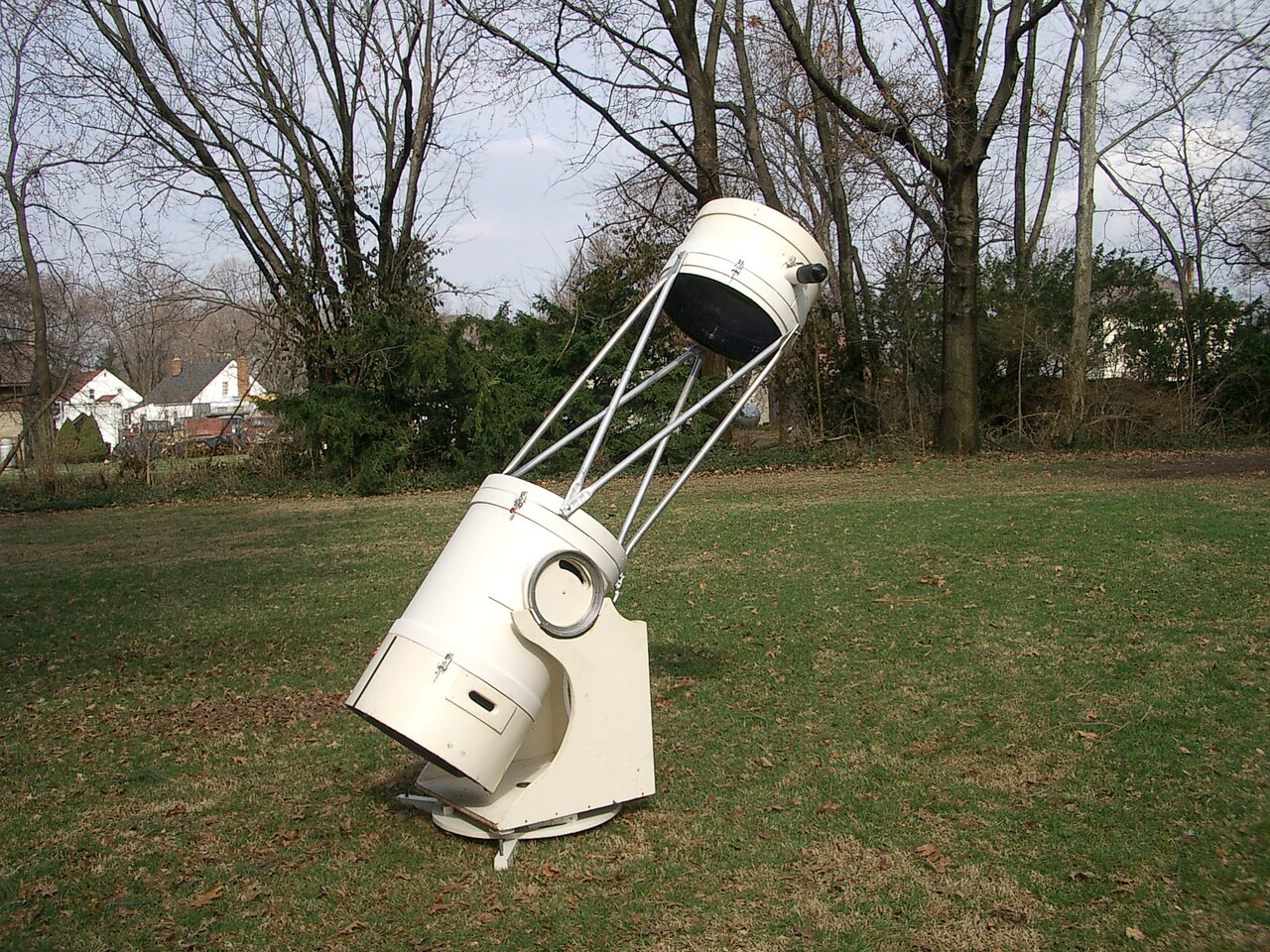
Truss-tube or collapsible designs break down into smaller pieces for transport. Pros and cons:
- Pros: Excellent portability at 12″ and above; easier to fit into cars; lighter to carry in parts; scalable to very large apertures (16″+).
- Cons: Longer setup and teardown; collimation may need fine touch each session; requires a light shroud to block stray light and dew; cost typically higher.
Classic push-to vs GoTo and tracking
Classic Dobsonians are manually pointed and tracked. Many modern variants add:
- Push-to encoders: Digital setting circles with a hand controller or app guide you to targets by showing where to push. This preserves the manual feel while speeding object acquisition.
- GoTo and tracking: Motorized bases can slew to objects and track Earth’s rotation. Great for outreach and high-power planetary work. They add complexity, weight, and cost—see Portability and Digital Aids.
For a first scope in light-polluted areas, push-to can be a big quality-of-life improvement, helping you find faint targets quickly while you learn star hopping skills.
Portability, Ergonomics, and Observing Comfort
Comfort is performance. An observer who is relaxed, warm, and well-seated will see more. Consider:
- Weight and handles: Check the weights of base and tube separately. Many 8″ bases weigh around 9–14 kg (20–30 lb); tubes around 8–12 kg (18–26 lb). Weights vary by model—verify before buying.
- Eyepiece height: At zenith, eyepiece height grows with aperture and focal ratio. Many 8–10″ f/6 scopes are comfortable while seated; 12″+ may require a small step for some observers.
- Observing chair: An adjustable-height astronomy chair dramatically improves stability and detail seen at the eyepiece.
- Dew and wind: A simple light/dew shield or shroud reduces stray light and dew on optics. Choosing a sheltered spot can help with wind shake.
Ergonomic tips that pay off:
- Place the base on even ground; use vibration suppression pads if your deck bounces.
- Organize eyepieces on a tray near hand level to avoid awkward reaching.
- Keep red lights dim; maintain dark adaptation to tease out faint galaxy details.
Collimation and Cooling: Getting Sharp Views
Dobsonians are capable of razor-sharp images when aligned and thermally stable. Two essentials are collimation (mirror alignment) and cooling (thermal equilibrium).
Collimation tools and workflow
Collimation aligns the optical axes of the primary and secondary mirrors with the focuser. Common tools:
- Collimation cap or sight tube: A simple peep-hole aligns the secondary under the focuser and centers the primary’s center mark.
- Cheshire: Enhances the return image for primary alignment at low cost, insensitive to focuser slop.
- Laser collimator: Speeds alignment; a Barlowed laser technique is effective for primary alignment because it reduces sensitivity to laser collimator misalignment.
Typical steps:
- Square the secondary mirror under the focuser (shape and centering), then adjust secondary tilt to aim at the primary’s center mark.
- Adjust the primary mirror tilt to center the return shadow or Cheshire reflection.
- Verify at high power on a defocused star (a star test) if seeing allows.
Fast scopes (f/4–f/5) require tighter tolerances. If planetary detail seems mushy or stars don’t snap to focus, recheck collimation before blaming the optics.
Cooling and thermal management
Warm mirrors produce simmering images. To stabilize:
- Set the scope outside early to equalize with ambient temperature.
- Primary mirror fans help clear the boundary layer and hasten cool-down. Even a small, quiet fan can improve contrast.
- Ventilation: Open back cells and side vents facilitate airflow. Avoid body heat and breath near the light path on cold nights.
Thermal equilibrium can take from minutes to over an hour depending on mirror thickness and temperature drop. Large mirrors benefit from continuous gentle airflow while observing.
Eyepieces, Finders, and Filters for Dobsonians
The right accessories maximize what your Dobsonian can show. Understanding magnification, exit pupil, and field of view is central to performance.
Magnification, exit pupil, and coma correction
Basic formulas:
Magnification = Telescope focal length ÷ Eyepiece focal lengthExit pupil (mm) = Eyepiece focal length ÷ Telescope f/ratio
Guidelines:
- Low power (3–6 mm exit pupil) for sweeping star fields and framing large nebulae.
- Medium power (2–3 mm exit pupil) for galaxies, clusters, and globulars—often the most-used range.
- High power (0.5–1.5 mm exit pupil) for planetary and double stars; limited by seeing and collimation.
Rule of thumb: maximum useful magnification is often around 2× per millimeter of aperture (about 50× per inch) in excellent seeing, but many nights top out lower.
At f/5 and faster, edge-of-field coma becomes more apparent. A coma corrector can tighten off-axis stars, particularly noticeable with wide apparent-field eyepieces (68°–100°). It’s optional for beginners but appreciated by many deep-sky enthusiasts.
Finders: RACI, reflex sights, and Telrad
You must aim the telescope before you can see. Common finders:
- Reflex sights (e.g., simple red-dot): Super intuitive for pointing at bright stars. Great for urban skies and initial alignment.
- Telrad/rigel-type unity finders: Project calibrated circles; excellent for star hopping with printed charts that show Telrad rings. A favorite on Dobsonians.
- RACI optical finders (Right-Angle Correct-Image): Show a correct, magnified star field for precise aiming while keeping a comfortable head position.
Many observers mount both a reflex sight for coarse pointing and a RACI finder for precision. This combination speeds acquisition of faint objects—especially when combined with the techniques in Star Hopping, Setting Circles, and Digital Aids.
Filters: UHC, O III, and lunar
Narrowband and line filters selectively pass emission lines from nebulae while suppressing light pollution and skyglow:
- UHC (Ultra High Contrast): A versatile nebula filter that improves many emission nebulae by boosting contrast.
- O III: Very effective on planetary nebulae and supernova remnants; can be dramatic on the Veil Nebula under dark skies.
- H-beta: Specialized for objects like the Horsehead Nebula; requires dark skies and moderate aperture.
- Moon filter: Not essential, but a neutral density filter can make the Moon more comfortable to view at low power.
Filters don’t brighten objects; they enhance contrast. For galaxies and star clusters, filters generally don’t help; use aperture, dark skies, and careful observing technique instead.
What You Can See: Deep Sky, Planets, and the Moon
Dobsonians are generalists that shine on a wide range of targets. The experience depends strongly on sky quality, seeing, and your skill at the eyepiece.
Deep-sky objects: light pollution vs dark skies
Under suburban skies, bright showpieces like the Orion Nebula (M42), Pleiades (M45), Andromeda Galaxy (M31), and several globular clusters (M13, M3) are rewarding in a 6–8″ Dob. A UHC or O III filter can bring out nebular structure. However, the faint outer arms of galaxies and low-surface-brightness objects are dramatically better under darker sites.
In dark skies, a 10–12″ Dob opens up hundreds of galaxies in Virgo-Coma, resolves globulars into stars, and reveals delicate dust lanes and nebula filaments. Patience and averted vision (looking slightly off-center to engage more light-sensitive retinal cells) can unveil structure you won’t notice at first glance.
- Tip: Observe extended nebulae at large exit pupils (3–5 mm) with a UHC or O III filter; ramp up to medium power for planetary nebulae to darken the background sky and enhance detail.
- Tip: For galaxies, try medium exit pupils (2–3 mm) to balance contrast and resolution; gently nudge the scope to exploit motion sensitivity in your vision.
Planets and the Moon: seeing and collimation matter
Dobsonians can deliver exquisite lunar and planetary detail when the atmosphere steadies. Keys to success:
- Collimation: High-power work demands precise alignment (see Collimation and Cooling).
- Thermal stability: Ensure mirrors are at ambient temperature; tube currents blur fine detail.
- Seeing: Nights with steady air are more important than raw aperture. Planetary detail can pop in brief moments of clarity—wait for the seeing.
- Filters and color: Subtle color filters can help on planets for some observers, though not essential. More impactful is simply using the right magnification: 0.5–1.5 mm exit pupil.
The Moon is richly rewarding at all apertures. Use low power to frame the entire disk and medium-to-high power to explore rilles, domes, and craterlets. A neutral density filter can reduce glare at low power if you find it too bright.
Double stars, comets, and more
A properly collimated Dobsonian splits many classic doubles, and shows color contrasts beautifully. Comets can be spectacular in wide-field views; use low power to reveal their full extent. Open and globular clusters reward medium powers to frame context and resolve cores, respectively.
Star Hopping, Setting Circles, and Digital Aids
Finding objects is part of the fun. Dobsonians invite hands-on navigation with both analog and digital aids.
Star hopping with charts and apps
Star hopping uses bright naked-eye stars and the patterns between them to step your way to a target. Tools:
- Printed atlases: Offer context and scale; many show Telrad circles that match unity finders. Laminated pages handle dew well.
- Planetarium apps: Real-time sky maps on phones or tablets with night mode; be mindful to dim brightness to preserve dark adaptation.
- Finder synergy: Use a reflex sight to jump to the first “hop,” then a RACI finder to star-hop the final steps. See Eyepieces, Finders, and Filters for finder options.
As your skills grow, you’ll learn to estimate angular distances using your finder’s field of view, and to use averted vision even in the finder to spot faint smudges.
Altitude-azimuth setting circles and angle gauges
An inexpensive hybrid approach combines analog azimuth circles on the base with a digital angle gauge for altitude. With your phone or a star app providing the real-time alt-az coordinates of a target, you can mechanically dial-in positions:
- Level the base reasonably well.
- Zero the digital angle gauge on the rocker box, attach to the tube, and set altitude to the target’s value.
- Rotate the base until the azimuth scale matches the target’s azimuth.
This method is fast, cheap, and effective, especially under light pollution where star hopping is hard. It preserves the tactile joy of a manual Dob while offering near push-to efficiency.
Digital setting circles (DSC) and GoTo aids
Encoder-based DSC systems track the telescope’s pointing and display it on a hand controller or app. After a quick alignment on a couple of stars, you can scroll a catalog and push to objects with on-screen guidance. Full GoTo adds motors for slew and tracking. See Classic vs GoTo for trade-offs and Portability for weight impacts.
Maintenance, Care, and Upgrades
Dobsonians are rugged and forgiving, but a little care extends their performance for years.
Mirror cleaning and recoating
Primary mirrors don’t need frequent cleaning. Dust has surprisingly little effect on views. Clean only when necessary (e.g., pollen film or fingerprints). General approach:
- Blow off loose dust with a bulb blower.
- Rinse gently with distilled water; a mild soapy solution and clean fingertips can lift grime; rinse thoroughly and let water sheet off.
- Avoid wiping when dry; it can scratch. Protect the coating from harsh chemicals.
Recoating may be needed after many years if reflectivity drops or pinholes spread. Professional services can strip the old coating and apply new aluminum with protective overcoat.
Flocking, shrouds, and light control
Stray light reduces contrast, especially in suburban environments. Upgrades:
- Flocking: Adding dark, non-reflective material opposite the focuser in the tube can suppress internal reflections.
- Shrouds: For truss scopes, a well-fitted shroud blocks stray light and reduces dew deposition.
- Light shields: Extensions around the focuser or the tube mouth block off-axis light and your neighbor’s porch lamp.
Bearings, motion, and balance tweaks
Small mechanical upgrades can transform the feel:
- Replace or augment bearing surfaces with premium laminates to get smoother motion.
- Add adjustable tension or clutches if swapping from light to heavy eyepieces.
- Use magnetic counterweights for quick balance changes.
These tweaks are optional. Many stock Dobsonians already move nicely, but tuning motion can make high-power tracking more precise.
Buying Guide: Budget Picks and Feature Checklists
Choosing a first Dobsonian involves balancing cost, size, and features. While specific models change over time, the following aperture tiers and common features provide a grounded framework.
Common aperture tiers and expectations

- 6-inch (150 mm): Compact and budget-friendly. Great for lunar, planetary, brighter deep-sky objects, and double stars. Extremely portable; fits most cars and small spaces.
- 8-inch (200 mm): The “best beginner Dobsonian” for many. Substantial step up in light gathering; still manageable to carry in two pieces. A lifetime scope for casual observers.
- 10-inch (254 mm): Noticeably more deep-sky performance; base and tube become bulkier. Consider vehicle size and stairs.
- 12-inch (305 mm) and up: Deep-sky powerhouse under dark skies. Consider truss or collapsible designs for portability. Cool-down and storage needs grow.
Typical features to look for:
- 2-inch dual-speed focuser: Smoother focusing and compatibility with wide-field eyepieces.
- Finder combo: A reflex sight plus a RACI finder is ideal.
- Adjustable altitude tension: Helps balance heavy accessories.
- Mirror cell cooling: Fan-ready or included fans aid thermal control.
- Decent starter eyepieces: Don’t expect premium glass; budget for at least one good low-power and one medium-power eyepiece as upgrades.
Before purchasing, think through how you’ll use and transport the scope. Try lifting a floor model if possible. Read user reports about base weight, eyepiece height, and overall feel of the motions. And remember: a well-used 8″ often beats a rarely used 12″.
Must-have and nice-to-have accessories
- Must-have: Adjustable observing chair, red flashlight, collimation cap/Cheshire, printed atlas or app, dew control for finders.
- Nice-to-have: UHC filter, O III filter, quality 2″ low-power eyepiece, medium-power eyepiece, coma corrector (for fast scopes), digital angle gauge, Telrad.
These accessories complement core skills like star hopping and collimation, helping you see more with the same aperture.
Dobsonian vs Refractor vs Schmidt-Cassegrain
Each telescope design has strengths. Understanding differences helps set expectations and informs an upgrade path.
- Dobsonian (Newtonian on alt-az): Best aperture per dollar and per kilogram. Quick setup, simple maintenance, manual or push-to/GoTo options. Requires collimation; off-axis coma at fast f/ratios; manual tracking unless motorized.
- Refractor: Great contrast and low maintenance; excellent wide fields (short focal length) or planetary (longer focal length, apochromatic). Aperture is expensive; large refractors are heavy and costly.
- Schmidt-Cassegrain (SCT): Compact folded optics, long focal length, versatile with mounts that track well for high-power and imaging. More expensive per aperture; cool-down can be significant; narrow native fields without reducers.
For visual deep-sky observing, Dobsonians are exceptionally compelling. A small refractor pairs well as a grab-and-go or wide-field complement. SCTs offer seated comfort and easy tracking for planets and lunar work, but an 8–10″ Dob often shows fainter deep-sky detail thanks to its larger unobstructed aperture cost advantage.
Frequently Asked Questions
Can you do astrophotography with a Dobsonian?
Dobsonians are optimized for visual use. Long-exposure deep-sky astrophotography requires precise equatorial tracking, which alt-az Dob mounts lack due to field rotation. That said, you can still capture:
- Moon and planets: Short-exposure or video-based “lucky imaging” using high-speed cameras can yield excellent results, especially with tracking Dobsonians or manual nudging at high frame rates.
- Bright snapshots: Simple phone-to-eyepiece adapters can capture the Moon, bright planets, and very bright star clusters as souvenirs.
If deep-sky imaging is a primary goal, consider a tracking equatorial mount with a small refractor or Newtonian designed for imaging. You can still keep a Dobsonian for visual enjoyment—many observers run both setups depending on the night.
How often should I collimate a Dobsonian?
Check collimation each session. Solid-tube scopes often hold alignment well and may need only a quick tweak of the primary mirror’s knobs. Truss scopes typically require a short collimation routine after assembly. Fast focal ratios (f/4–f/5) demand tighter tolerances than slower scopes. A 2–3 minute check with a Cheshire or laser becomes second nature and pays dividends at the eyepiece.
Final Thoughts on Choosing the Right Dobsonian Telescope
A Dobsonian telescope puts serious aperture within reach, delivering bright, contrasty views of deep-sky showpieces and fine lunar/planetary detail when the atmosphere steadies. The design’s magic lies in its simplicity: a stable, low-friction base; a capable Newtonian optical tube; and a set of accessories tailored to your observing style.

To choose well, start with your reality: where you observe, how far you carry the scope, how much weight you comfortably lift, and what you most want to see. For many, an 8-inch f/6 solid-tube Dobsonian with a 2-inch focuser remains the best all-around beginner’s telescope. If your skies are dark and you’re comfortable transporting larger gear, 10–12 inches elevate deep-sky performance significantly. Complement the scope with a good eyepiece set, reliable finding method, and consistent collimation and cooling practice.
Above all, get outside and observe. Skills grow with time at the eyepiece, and every clear night teaches something new—about optics, the sky, and your own preferences. If you found this guide helpful, consider subscribing to our newsletter so you’ll never miss future deep dives on telescope technique, gear upgrades, and observing strategies. Clear skies and happy hunting!